

First period tracking, known clinically as menstrual cycle monitoring, is the practice of recording the start date, duration, and symptoms of each menstrual cycle from the very first period onward. It gives young girls and their caregivers a clear, calm picture of what is happening in the body during one of puberty’s biggest transitions. The goal is not perfect data. The goal is comfort, awareness, and confidence. A simple wall calendar, a dedicated notebook, or a beginner-friendly period tracking app can all get the job done. Starting early builds a habit that supports lifelong reproductive health.
First period tracking explained: how to start simply
The most important step in tracking is also the simplest. Mark the first day of bleeding as Day 1 and note how many days the bleeding lasts. That single action is the foundation of every tracking method, whether analog or digital.
From there, you build. Here is what to log from the very beginning:
- Start date: The first day of visible bleeding, labeled Day 1
- Duration: How many days the period lasts, typically 2–7 days in early cycles
- Flow intensity: Light, medium, or heavy, noted each day
- Physical symptoms: Cramps, bloating, headaches, and breast tenderness
- Mood changes: Irritability, sadness, or low energy in the days before or during the period
- End date: The last day of bleeding before the next dry stretch begins
For first-time trackers, a wall calendar or a simple spiral notebook works beautifully. Physical tracking tools transform the menstrual cycle into something visible and tangible, which reduces anxiety and removes the pressure of navigating a new app. A colored marker on a calendar is enough to start.
When your daughter is ready for a digital step up, period tracking apps offer automatic cycle predictions and symptom logs. Apps like Belle App provide cycle predictions and symptom tracking that build menstrual health literacy over time. Many apps also include privacy settings, which matter for young girls who want to feel in control of their own information.
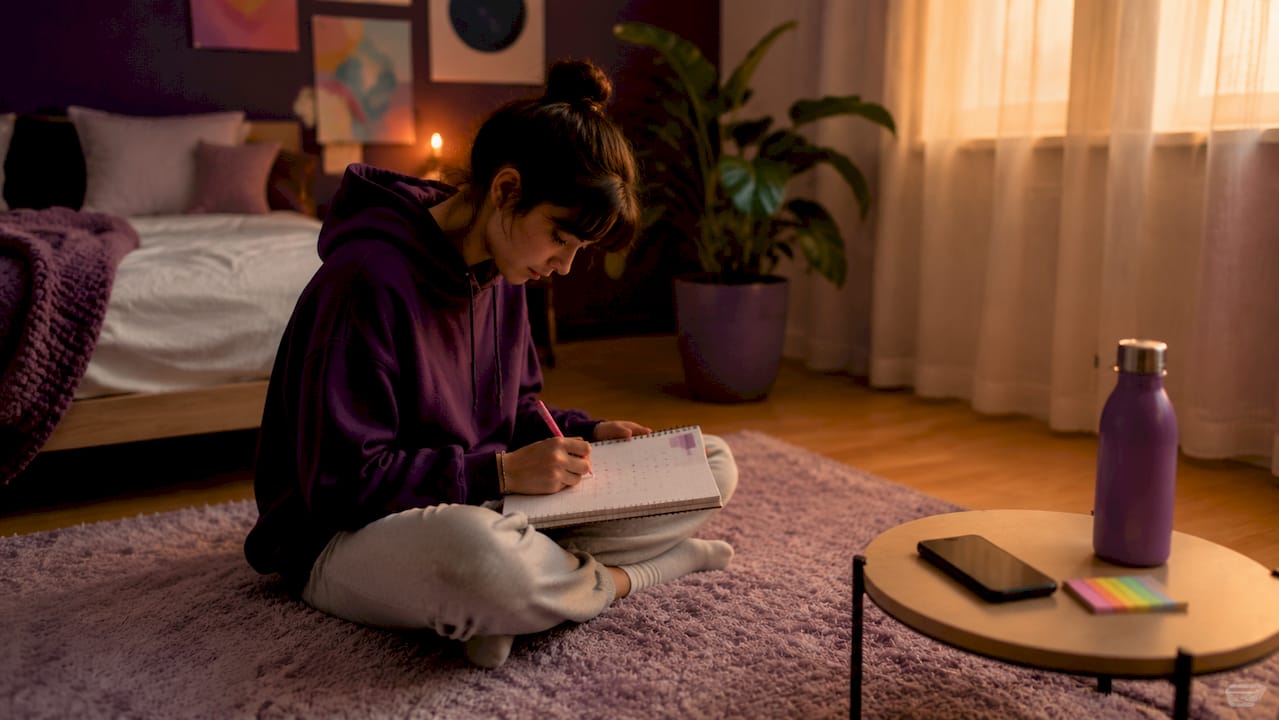
Pro Tip: Missing a log entry is completely normal and not a reason to quit. Early tracking is about building familiarity, not achieving a perfect record. Celebrate every entry as a win, and let go of any missed ones without guilt.
What to expect in your daughter’s early cycles
Early menstrual cycles are not like the textbook 28-day cycle most adults reference. Cycles may range from 21 to 45 days and bleeding may span 2 to 7 days with variable flow. That wide range is completely normal and expected in the first few years after menarche.
The first period usually occurs around age 12 but can start anywhere between ages 10 and 14. Most girls get their first period about 2 to 3 years after breast development begins. Knowing this timeline helps parents anticipate the conversation and prepare without panic.
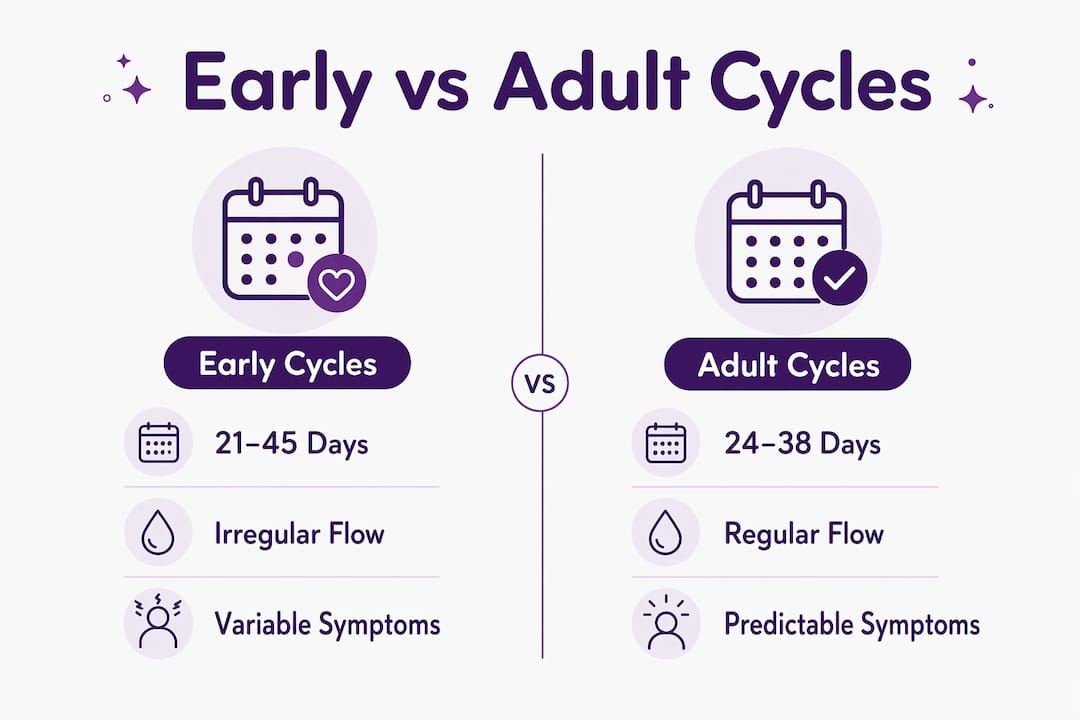
Flow patterns in early cycles often start light or spotty, then shift to heavier flow in later cycles as the body settles into its rhythm. Symptoms such as cramps, mood swings, breast tenderness, bloating, and headaches often accompany early periods. Tracking these symptoms helps your daughter recognize her own patterns and feel less caught off guard each month.
Here is a quick comparison of what early cycles typically look like versus adult cycle norms:
| Feature | Early Cycles (First 1–2 Years) | Adult Cycle Norms |
|---|---|---|
| Cycle length | 21–45 days | 24–38 days |
| Bleeding duration | 2–7 days | 3–7 days |
| Flow intensity | Light to variable | More consistent |
| Symptom severity | Unpredictable | More predictable |
| Regularity | Often irregular | Generally regular |
Tracking these early variations helps you and your daughter recognize what is normal for her, which is far more useful than comparing her cycle to a generic average. You can also learn more about why early cycles vary and what drives those changes.
Common questions parents have about period tracking
Parents often come to period tracking with a mix of concern and uncertainty. These are the questions that come up most often, along with honest, grounded answers.
Is it normal for cycles to stay irregular for years?
Yes. Irregular cycles are common during the first few years after menarche and can take up to 6 years to fully regulate. This is not a sign of a health problem. The body is still calibrating its hormonal rhythm.
How do I talk about mood changes without making my daughter feel judged?
Frame mood shifts as physical, not personal. Saying “your body is adjusting its hormones right now” is more supportive than “you seem moody lately.” Tracking mood alongside physical symptoms helps your daughter see the connection herself, which builds self-awareness rather than shame. Themonthliesbox has a helpful guide on talking to your daughter about periods with confidence and care.
When should I call a doctor?
A visit to a healthcare provider after the first period is recommended for personalized guidance, not necessarily a full exam. Seek medical advice sooner if bleeding is extremely heavy (soaking more than one pad per hour), if cycles have not appeared by age 15, or if pain is severe enough to disrupt daily life.
What if my daughter refuses to track?
Respect her pace. The goal of early tracking is habit formation and comfort, not precision. Early tracking reduces anxiety by framing menstruation as a normal biological function rather than a mysterious event. If a full log feels like too much, start with just circling the first day of each period on a calendar. That alone is enough.
Pro Tip: Tracking mental health alongside physical symptoms can reveal patterns that are easy to miss. Resources on mental health tracking show that teens who monitor mood alongside physical health develop stronger self-awareness and coping skills over time.
Analog tracking vs. period tracking apps: which is better for beginners?
The honest answer is that the best tool is the one your daughter will actually use. That said, the two approaches have real differences worth knowing.
| Feature | Analog (Calendar/Notebook) | Period Tracking Apps |
|---|---|---|
| Ease of start | Very easy, no setup | Requires download and account |
| Privacy | Fully private, no data shared | Varies by app; check privacy settings |
| Cycle predictions | Manual calculation | Automatic predictions |
| Symptom logging | Flexible, freeform | Structured, with prompts |
| Best for | First-time trackers | Girls comfortable with technology |
| Cost | Free or minimal | Free to paid tiers |
Analog methods outperform apps with first-time trackers because of their low cognitive load and tactile engagement with cycle awareness. There is no password to remember, no app to update, and no algorithm to trust. A notebook is always available and always private.
Apps become genuinely useful once a girl has tracked two or three cycles manually. At that point, she has enough baseline knowledge to understand what the app is predicting and why. Apps also shine for symptom tracking, offering structured prompts that make it easier to spot patterns in mood, energy, and physical comfort.
Caregiver involvement matters here. Younger girls benefit from tracking alongside a parent or trusted adult, at least at first. That shared practice normalizes the conversation and makes menstruation feel like something to talk about openly, not hide. You can also explore a pre-teen self-care routine that pairs well with any tracking method.
Key takeaways
Early period tracking builds lifelong body awareness by starting simple, logging consistently, and prioritizing comfort over precision from the very first cycle.
| Point | Details |
|---|---|
| Start with Day 1 | Mark the first day of bleeding and build from there using any tool that feels comfortable. |
| Expect cycle variability | Early cycles range from 21–45 days and may take up to 6 years to regulate. |
| Track symptoms, not just dates | Logging cramps, mood, and flow intensity reveals personal patterns that dates alone cannot show. |
| Analog tools work best first | Calendars and notebooks reduce anxiety and privacy concerns for first-time trackers. |
| Comfort beats precision | Missing entries is normal. The goal is habit and familiarity, not a perfect record. |
Why i believe low-pressure tracking changes everything
Here is something most period guides get wrong. They treat tracking like a data project. They focus on cycle length averages, ovulation windows, and app accuracy ratings. For adult women managing fertility or health conditions, that precision matters. For a 12-year-old experiencing her first period, it is the wrong frame entirely.
What I have seen, and what the research supports, is that personalized guidance after the first period normalizes wide variations in menstrual experience and reduces parental worry. The same principle applies to tracking. When a young girl marks a calendar and sees her own cycle taking shape over a few months, something shifts. Menstruation stops being something that happens to her and starts being something she understands.
That shift is the whole point. Not the data. Not the prediction accuracy. The confidence that comes from knowing your own body.
Parents play a bigger role here than they often realize. The way you frame tracking sets the tone. If you approach it as a chore or a medical necessity, it feels clinical and heavy. If you approach it as a simple, normal habit, like brushing teeth or drinking water, it becomes exactly that. Ordinary. Manageable. Even interesting.
The girls who grow into women with strong body literacy almost always had someone in their corner early on who said, “This is normal, and you can understand it.” That is the real gift of starting early.
— Themonthliesbox
Tools and support to make the first period easier
Getting prepared before the first period arrives makes all the difference. Themonthliesbox designs products specifically for this moment, combining practical supplies with education and emotional support.
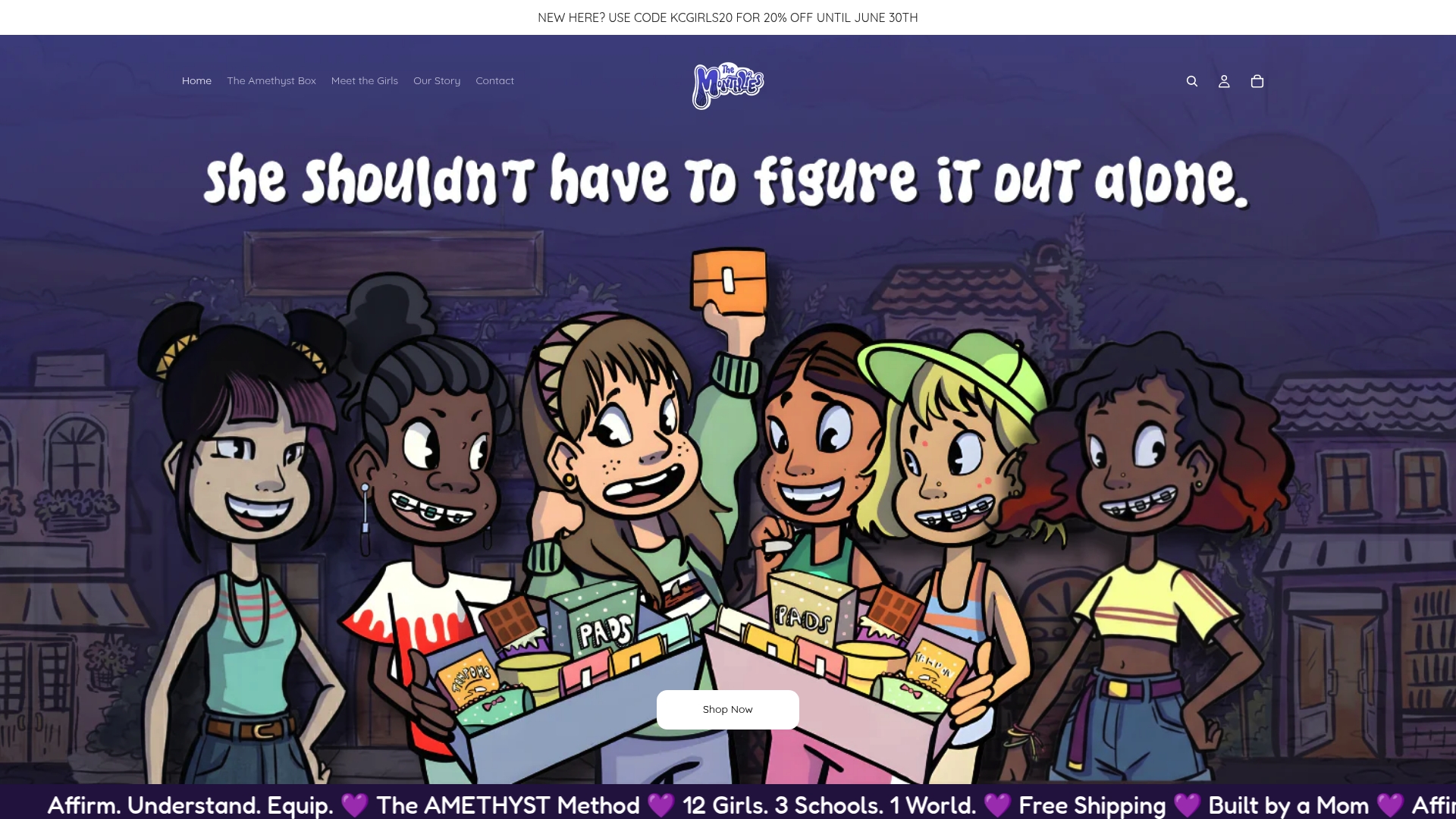
The Amethyst Box is a curated first period experience built around the Amethyst Method: Affirm, Understand, and Equip. It includes affirmations, educational materials, and practical period supplies, everything a young girl needs to feel ready and supported. For families who want something to carry day to day, the On-The-Go Kit keeps period essentials close at hand. Both are designed to make the first period feel like a milestone worth celebrating, not a moment to get through.
FAQ
What does first period tracking mean?
First period tracking is the practice of recording the start date, duration, and symptoms of each menstrual cycle beginning with the very first period. The goal is to build awareness and comfort, not to achieve perfect data.
How do i know when my daughter’s first period has started?
The first period typically appears as light spotting or a small amount of blood in underwear. You can learn more about recognizing the signs of the first period to feel prepared when it arrives.
How long are early menstrual cycles?
Early cycles commonly range from 21 to 45 days and may take up to 6 years to regulate after menarche. This wide range is normal and not a cause for concern in most cases.
Should i use an app or a calendar to track my daughter’s period?
Start with a wall calendar or notebook. Physical tracking tools are easier for beginners and carry no privacy risks. Introduce a period tracking app once your daughter has tracked two or three cycles manually and feels comfortable with the basics.
When should a young girl see a doctor about her period?
A healthcare provider visit after the first period is recommended for general guidance and reassurance. Seek medical advice promptly if bleeding is extremely heavy, if the first period has not arrived by age 15, or if pain is severe enough to interfere with daily activities.
0 comments