

Getting your daughter ready for her first period at school is one of those parenting moments that feels bigger than it sounds. Here’s a surprising truth: 14% of girls didn’t know what was happening when their first period arrived, and the result was real fear and trauma. With first period at school explained clearly and practically, you can make sure your daughter isn’t one of them. This guide covers the biology, the prep, the emotional side, and exactly what to do if her period shows up unexpectedly between classes.
Table of Contents
- Key takeaways
- First period at school explained: the biology basics
- Building the school period kit
- Emotional support and open communication
- What to do if her period starts unexpectedly
- Tracking and managing early cycles
- What I’ve learned from watching families navigate this
- Ready to make first period prep easy?
- FAQ
Key takeaways
| Point | Details |
|---|---|
| Start conversations early | Girls can get their first period as early as age 8, so don’t wait for middle school to begin talking. |
| Build a school period kit | A small pouch with pads, spare underwear, and wipes gives your daughter confidence and independence. |
| Normalize the experience | Framing menstruation as a healthy milestone reduces shame and makes your daughter more likely to ask for help. |
| Expect irregular cycles | Early cycles are often unpredictable for the first one to two years, and that is completely normal. |
| Coach her on school resources | Make sure she knows exactly who to go to at school if her period starts unexpectedly. |
First period at school explained: the biology basics
Understanding what is actually happening in your daughter’s body is the foundation of everything else. When you can explain it simply and confidently, she feels less afraid.
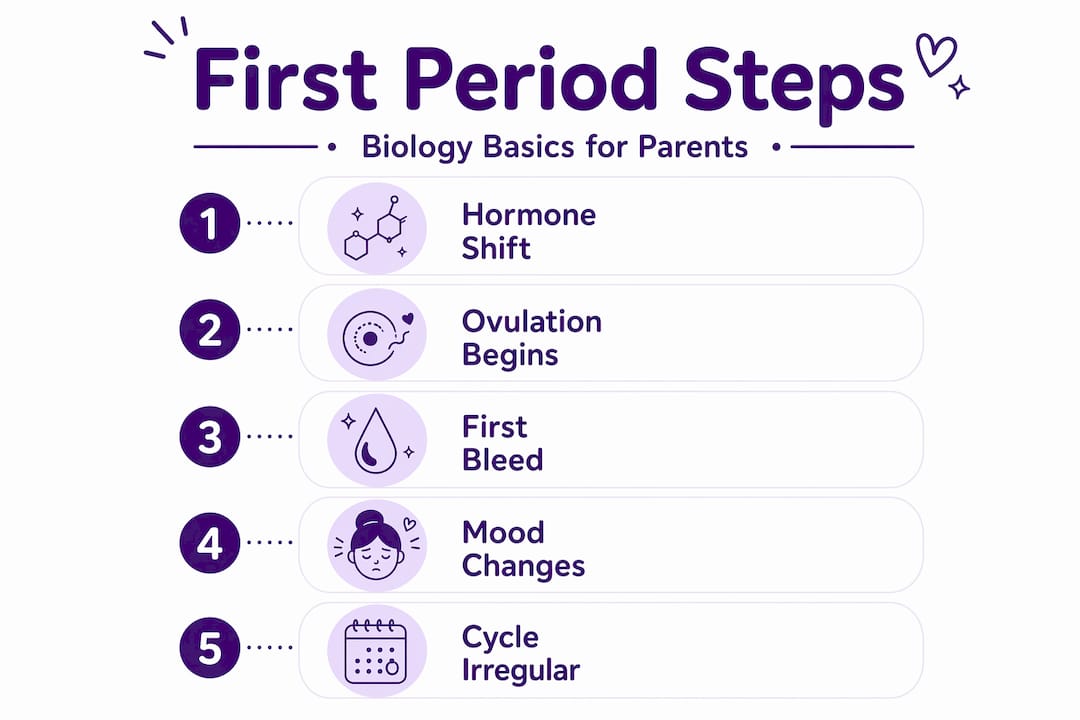
Menstruation is the monthly shedding of the uterine lining. It happens when an egg released during ovulation is not fertilized. The body releases that lining through the vagina over several days. That’s it. Nothing is wrong. Nothing is broken. It’s the body working exactly as it should.
Here’s what the numbers look like in practice:
- First period age: Most girls get their first period between ages 12 and 13, but onset can begin as early as age 8
- Cycle length: A typical menstrual cycle runs 21 to 35 days, measured from the first day of one period to the first day of the next
- Bleeding duration: Most periods last 3 to 7 days, though early periods are often shorter or lighter
- Common symptoms: Cramps in the lower abdomen, bloating, mood shifts, breast tenderness, and fatigue are all normal
- Cycle irregularity: Early cycles are frequently irregular for the first one to two years, which is completely expected
One thing many parents don’t realize: ovulation can actually precede the first period, meaning fertility begins before menstruation does. This is worth knowing so you can have broader conversations about puberty at the right time.
Also worth addressing: mood swings are real, not dramatic. Hormonal shifts during the menstrual cycle genuinely affect how a girl feels emotionally. Validating that experience early means she won’t feel like something is wrong with her when she feels tearful or irritable without a clear reason.
Building the school period kit
The most practical thing you can do right now is put together a small, discreet period kit that lives in your daughter’s backpack. This is where first period school preparedness tips get concrete.
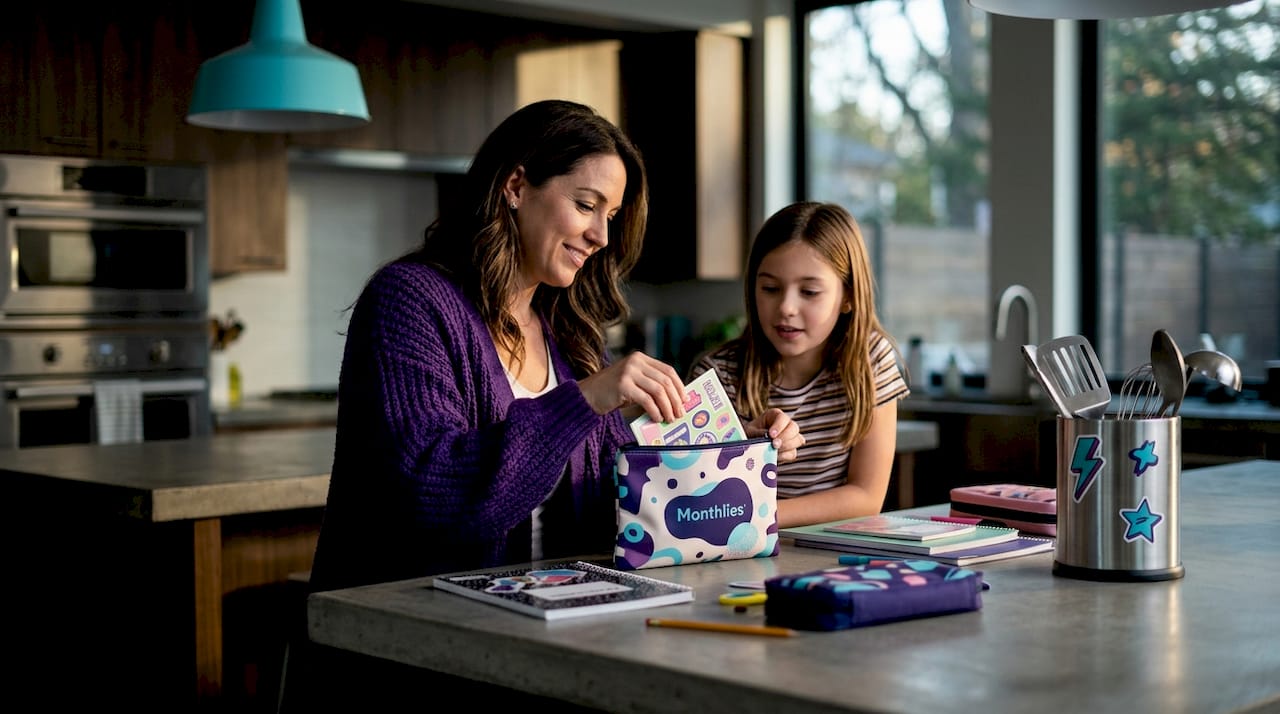
A well-stocked kit removes the panic from the unexpected. According to 2026 health guidelines, a standard first period kit should include:
- 2 to 3 pads (regular absorbency for lighter early periods)
- One pair of spare underwear in a small zip bag
- Fragrance-free wet wipes for clean-up
- A small stain removal spray or wipe
- A discreet pouch or pencil case to hold everything
Pads should be changed every 4 to 6 hours to prevent odor and irritation. Walk your daughter through this before she ever needs it at school. Practicing with the kit at home reduces the anxiety of figuring it out for the first time in a school bathroom.
Pro Tip: Consider adding period panties to her kit as a backup or primary option. They offer 360° coverage and can be worn 8 to 12 hours without repositioning, which makes them far less intimidating for first-time users than traditional pads.
| Option | Wear time | Best for |
|---|---|---|
| Regular pad | 4 to 6 hours | Everyday use, easy to find |
| Period panties | 8 to 12 hours | Backup protection, beginners |
| Cloth pad | 4 to 6 hours | Reusable, eco-conscious families |
On the clothing side, encourage her to wear darker bottoms on days when she thinks her period might be close. Loose, comfortable waistbands also help with cramps. These are small choices that make a real difference in how she feels during the school day.
Emotional support and open communication
Practical prep matters. But how you talk about menstruation shapes how your daughter experiences it for years. This is the part of the first period at school guide that most articles skip over too quickly.
Framing menstruation as a normal, positive milestone is one of the most powerful things you can do as a parent. When the first conversation is calm and even celebratory, she learns that this is something to grow through, not hide from.
Here’s how to build that foundation:
- Talk early and often. Don’t save the conversation for when signs of puberty appear. Start small and casual well before age 10.
- Use real words. Saying “period” and “menstruation” instead of vague terms reduces shame and builds comfort with the topic.
- Acknowledge the hard parts. Cramps hurt. Mood shifts are confusing. Telling her that honestly builds trust.
- Celebrate the milestone. Some families mark the first period with a small gift, a special meal, or a heartfelt note. It doesn’t have to be a big production. It just needs to say: this is good, and you are supported.
- Coach her on asking for help. Make sure she knows she can go to the school nurse, a trusted teacher, or the front office if she needs supplies or a moment to regroup.
“Most girls do not receive sufficient education on the social and emotional aspects of menstruation at school. Earlier and better education at home helps reduce trauma and improves the overall experience.” Menstrual experiences of adolescent girls in schools
One thing worth naming directly: inadequate bathroom privacy at school often pushes girls to hide their period or use unreliable methods. A discreet, well-stocked kit gives her a way to handle things privately and confidently, without depending on what the school bathroom may or may not have.
What to do if her period starts unexpectedly
Even with all the preparation in the world, the first period can still arrive as a surprise. Knowing the plan ahead of time makes all the difference.
Walk your daughter through these steps before she ever needs them:
- Stay calm. A period is not an emergency. It can feel overwhelming in the moment, but it is manageable.
- Check her kit. If she has her backpack kit, she can handle it herself in the bathroom.
- Use a makeshift option if needed. Folded toilet paper held in place works as a short-term solution until she can get a pad.
- Go to the school nurse or front office. Most schools keep period supplies on hand. She should know exactly where to go and feel comfortable asking.
- Tell a trusted adult. Whether that’s a teacher, a counselor, or the nurse, she should have at least one person at school she feels safe approaching.
- Address any staining. Cold water removes blood from fabric. Remind her of this so a stain doesn’t become a source of embarrassment.
Pro Tip: At the start of each school year, consider putting a small period kit in her locker as well as her backpack. That way she has a backup no matter where she is when her period starts.
If she comes home distressed, resist the urge to minimize it. Let her talk. Then remind her that she handled it, and that’s something to feel proud of.
Tracking and managing early cycles
Once the first period has arrived, the next step is learning what to expect going forward. This is where tips for managing first period become a longer-term practice.
Early cycles are almost always irregular. That’s not a problem. It’s just how the body settles into its rhythm. Here’s a general picture of what normal looks like in the first year or two:
| Cycle feature | Normal range | When to check in with a doctor |
|---|---|---|
| Cycle length | 21 to 35 days | Consistently shorter than 21 or longer than 45 days |
| Bleeding duration | 3 to 7 days | Bleeding that lasts longer than 7 days |
| Flow heaviness | Light to moderate | Soaking through a pad every hour for several hours |
| Pain level | Mild to moderate cramps | Pain that doesn’t respond to over-the-counter relief |
Tracking periods helps your daughter build body awareness and gives you useful information if you ever need to talk to a doctor. A simple paper calendar works. There are also apps designed for teens that track cycle length, symptoms, and mood without the adult features found in standard period apps.
Encourage her to share how she’s feeling during her period. Not every month, not as a formal check-in. Just a casual “how are you doing this week?” opens the door. The goal is for her to see her body as something she understands, not something that happens to her.
Some symptoms do warrant a call to your pediatrician. These include extremely heavy bleeding, periods that stop for more than three months after starting, or pain severe enough to miss school regularly. Menstrual pain that disrupts school attendance is not something to push through without support. A heating pad, rest, and ibuprofen help with typical cramps. Anything beyond that deserves a conversation with a healthcare provider.
What I’ve learned from watching families navigate this
I’ve seen what happens when parents wait too long to have this conversation. The girls who arrive at their first period without any preparation carry that fear longer than they should. It shapes how they feel about their bodies for years.
What actually works is starting early and keeping it low-key. You don’t need one big talk. You need ten small ones. Mentioning periods casually while watching a show, answering questions without making them feel heavy, and treating the topic like it belongs in everyday life. That’s what normalizes it.
I’ve also seen the difference a prepared kit makes. Not just for hygiene, but for confidence. A girl who knows what’s in her bag and how to use it walks into school differently. She’s not waiting for something scary to happen. She’s ready.
The families who do this best aren’t the ones who have everything figured out. They’re the ones who stay open, keep talking, and treat their daughter’s body as something worth understanding together.
— The Monthlies
Ready to make first period prep easy?
You’ve done the reading. Now let’s make sure your daughter has everything she needs, in one place, ready to go.
Themonthliesbox was built exactly for this moment. The Amethyst Box brings together practical period supplies, affirmations, and educational materials in one beautifully curated package. It’s designed around the Amethyst Method: affirm, understand, and equip. So your daughter doesn’t just have products. She has confidence.
For school-day readiness specifically, the On-The-Go Kit is a discreet, portable option that fits right in a backpack. And if you want to share the experience with a friend or get a second kit for home, the Bestie Bundle saves you $40 while doubling the support. Welcome to LavenHaven. We’ve been waiting for you.
FAQ
What age should I start preparing my daughter for her first period?
Start the conversation by age 8 or 9, since first periods can begin as early as age 8. Early, casual conversations reduce fear and build comfort before the first period actually arrives.
What should be in a first period kit for school?
A school period kit should include 2 to 3 pads, a spare pair of underwear, fragrance-free wipes, and a stain removal option, all packed in a discreet pouch that fits in a backpack.
Is it normal for periods to be irregular at first?
Yes. Early cycles are frequently irregular for the first one to two years after the first period. A cycle anywhere between 21 and 35 days is considered within the normal range.
What should my daughter do if her period starts unexpectedly at school?
She should check her backpack kit first, then visit the school nurse or front office if she needs supplies. Remind her that cold water removes blood from fabric, and that asking for help is always the right move.
How do I talk to my daughter about periods without making it awkward?
Keep it casual and ongoing rather than one formal conversation. Normalizing menstruation at home through small, relaxed conversations reduces stigma and makes your daughter more likely to come to you with questions.
0 comments