

Getting your first period can feel confusing, even a little scary, if no one has explained what to expect. So let’s start simply. A period is a natural part of growing up, and understanding it makes all the difference. This guide breaks down what a period is, what happens during menstruation, what symptoms are normal, and how to feel confident and prepared. Whether you’re a parent, an educator, or a teen reading this on your own, you’re in the right place.
Table of Contents
- Key takeaways
- What is a period, really?
- What to expect during your first period
- Normal variation and when to ask for help
- Practical tips for managing periods
- My honest take on why this conversation matters
- You do not have to figure this out alone
- FAQ
Key takeaways
| Point | Details |
|---|---|
| A period is normal | Menstruation is the body shedding its uterine lining and happens monthly as part of a healthy cycle. |
| Cycles vary widely | A normal cycle ranges from 21 to 35 days, and early cycles are often irregular. |
| First periods differ | The first period may be light, short, or unpredictable, and that is completely expected. |
| Symptoms are manageable | Cramps, bloating, and mood changes are common and can be eased with simple self-care. |
| Tracking helps | Recording cycle dates and symptoms builds self-awareness and supports overall health. |
What is a period, really?
A period, also called menstruation, is when the body sheds the lining of the uterus. This lining, called the endometrium, builds up each month in preparation for a possible pregnancy. When pregnancy does not occur, the body releases that lining through the vagina as menstrual blood. Menstrual blood flows from the uterus through the cervix and out of the body.
This is the definition of a menstrual period at its most basic. It is not an injury or an illness. It is the body doing exactly what it is designed to do.
The menstrual cycle phases
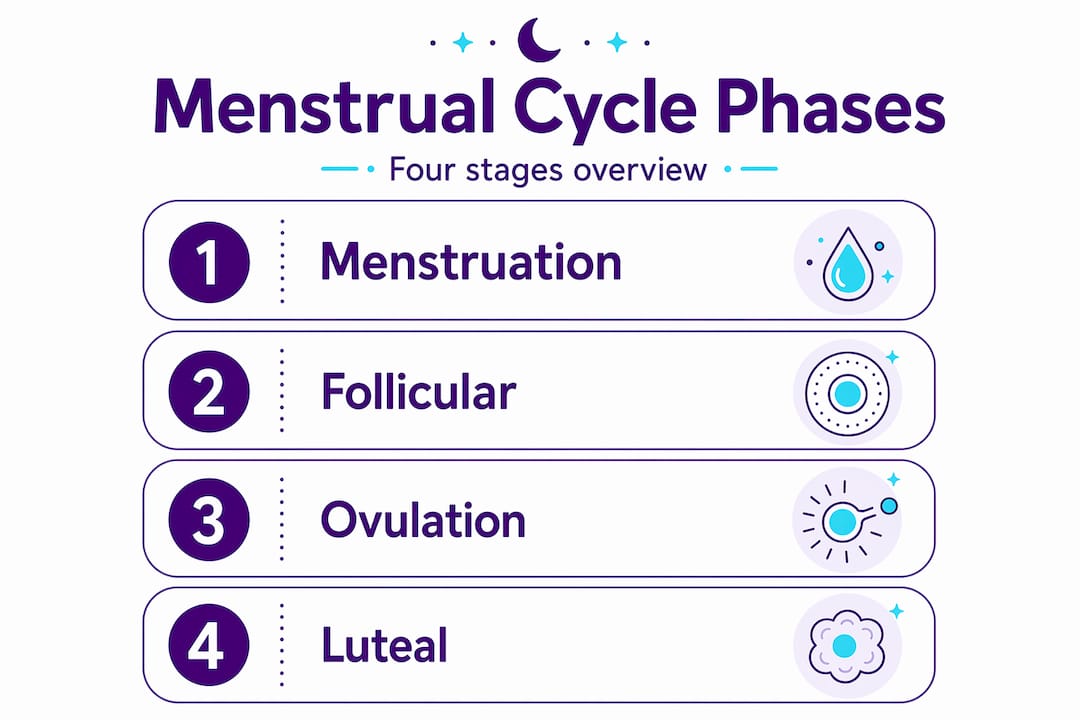
Understanding the menstrual cycle helps put everything in context. The cycle has four main phases:
- Menstruation: The period itself. The uterine lining sheds and bleeding occurs.
- Follicular phase: After bleeding stops, the body prepares to release an egg. Estrogen rises.
- Ovulation: An egg is released from the ovary, usually around the middle of the cycle.
- Luteal phase: The body prepares for a possible pregnancy. If no pregnancy occurs, the cycle starts again.
The menstrual cycle is measured from the first day of bleeding to the day before the next period begins. Most cycles fall within a 21 to 35 day range, with an average of about 28 days.
When does menstruation begin?
Most girls get their first period between ages 11 and 14. Some girls start as early as 9, and others not until 16. Both ends of that range can be completely normal. The body moves at its own pace, and that is worth remembering.
Pro Tip: If you are a parent, start conversations about periods before your daughter turns 10. Early, calm conversations reduce anxiety and help her feel prepared rather than surprised.
What to expect during your first period
The first period is rarely dramatic, even though it might feel that way in the moment. Knowing the signs and what to expect takes a lot of the fear out of it.
Signs a period is starting
The body often gives signals before bleeding begins. These are some of the most common signs of a period starting:
- Cramping or aching in the lower belly. This is caused by the uterus contracting to shed its lining.
- Bloating. Many girls feel puffy or uncomfortable in the abdomen a day or two before bleeding starts.
- Breast tenderness. Hormonal shifts can make the chest feel sore or sensitive.
- Mood changes. Feeling more emotional, irritable, or tired than usual is very common.
- Light spotting. Some girls notice a small amount of pinkish or brownish discharge before full bleeding begins.
- Lower back ache. The same contractions that cause cramps can radiate to the back.
Not every girl experiences all of these. Some have very mild symptoms, and others feel them more strongly. Both experiences are normal.
What the first period actually looks like
The first period is often lighter than expected. Bleeding may start as spotting, brownish in color, before becoming red. Flow tends to be heaviest in the first two days and then lightens. A typical period lasts about 2 to 7 days, with most lasting around 5 days.
The color can range from bright red to dark brown or even nearly black. Darker blood simply means it took longer to leave the body. It is not a sign that something is wrong.
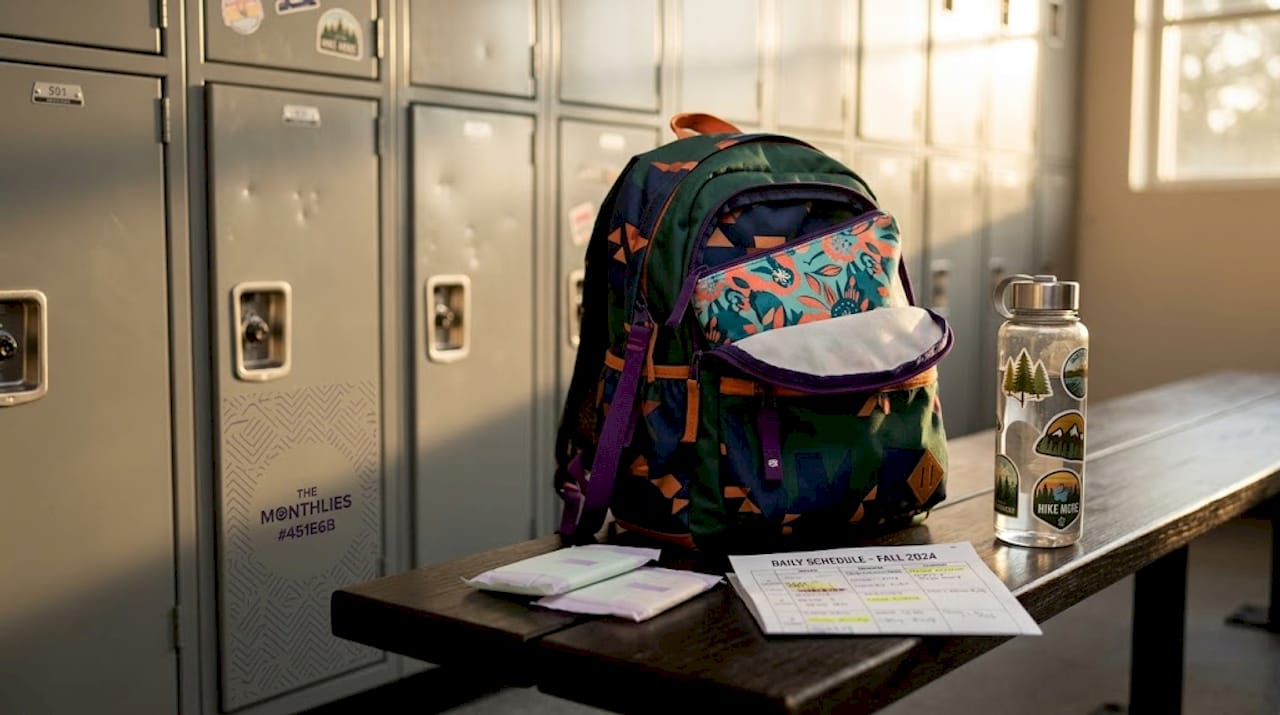
Pro Tip: Keep a small pouch with a pad or two in your backpack or locker. Being prepared means a surprise period stays a minor inconvenience, not a stressful event. The Monthlies On-The-Go Kit is a great option for exactly this kind of everyday readiness.
Normal variation and when to ask for help
One of the biggest sources of worry for teens and parents is not knowing what counts as normal. The honest answer is that normal covers a wide range, especially in the first few years.
What normal variation looks like
Here is a quick comparison to help set realistic expectations:
| Feature | Typical range | Possible concern |
|---|---|---|
| Cycle length | 21 to 35 days | Shorter than 21 or longer than 45 days |
| Period duration | 2 to 7 days | Lasting more than 7 days consistently |
| Flow heaviness | Light to moderate, heaviest day 1 or 2 | Soaking through a pad every hour for 4+ hours |
| Color | Bright red to dark brown | Gray or unusual tissue discharge |
| Cramping | Mild to moderate | Severe pain that disrupts daily life |
Early menstrual cycles are often irregular, and that is well documented and expected. The body’s hormonal system is still maturing, and ovulation does not always happen like clockwork in the first year or two. Irregular cycles in adolescence are normal, not a red flag.
How to track your cycle
Tracking is one of the most useful habits a young person can build. It does not need to be complicated. A simple notebook or a free app works well. Record:
- The first day of bleeding (this is day 1 of your cycle)
- How many days the period lasts
- Flow heaviness on each day
- Any symptoms like cramps, mood changes, or fatigue
Over time, patterns emerge. Tracking cycles provides valuable health information and builds real self-awareness. Doctors also use menstrual patterns as a health indicator in teens, so having records is genuinely useful at checkups.
When to see a doctor
Some signs deserve a conversation with a healthcare provider. Reach out if you notice:
- Soaking through a pad or tampon every hour for more than four hours in a row
- Periods that stop for more than three months without pregnancy
- Severe cramps that do not respond to over-the-counter pain relief
- Bleeding that lasts longer than seven days regularly
- Any sudden change in your usual pattern
Doctors view menstruation as a vital sign in adolescents. Changes in menstrual patterns can be early signals of conditions worth addressing. You are not overreacting by asking questions.
Practical tips for managing periods
Once you understand what a period is, the next step is knowing how to handle it comfortably. Managing a period well comes down to three things: the right supplies, simple self-care habits, and open communication.
Hygiene and product options
There are several period products available, and it helps to know your options:
- Pads: Worn inside underwear, easy to use, and a great starting point for first-time users.
- Tampons: Inserted internally, useful for active days or swimming. Best introduced once a girl feels comfortable with her body.
- Period underwear: Absorbent underwear that can be worn alone or as backup. Reusable and eco-friendly.
- Menstrual cups or discs: Reusable options that collect rather than absorb blood. More common among older teens and adults.
For most girls starting out, pads are the simplest choice. Change pads every 4 to 6 hours to stay comfortable and prevent odor.
Self-care during your period
Physical comfort matters. A few things that genuinely help:
- A heating pad on the lower belly eases cramps better than most people expect.
- Staying hydrated reduces bloating and fatigue.
- Light movement like walking or gentle stretching can actually relieve cramp pain.
- Getting enough sleep is more important during the luteal phase and during bleeding.
Emotional well-being matters just as much. Mood shifts are real and are caused by hormonal changes, not weakness or overreacting. Giving yourself permission to rest, feel your feelings, and ask for support is part of good period health.
How caregivers can help
Parents and guardians play a huge role in how a girl experiences her first period. Open communication reduces stigma and anxiety around menstruation significantly. Some practical ways to support a young person:
- Talk about periods before they happen, calmly and matter-of-factly.
- Keep period supplies stocked and accessible at home.
- Ask how she is feeling without making it a big deal.
- Normalize the conversation so she knows she can come to you with questions.
The goal is for her to feel supported, not embarrassed.
My honest take on why this conversation matters
I have seen what happens when girls enter their first period without any preparation. The fear, the confusion, the shame that comes from not knowing what is happening to their own body. It stays with them longer than it should.
What I have learned is that information is not enough on its own. The way information is delivered matters just as much. A clinical explanation handed over without warmth does not build confidence. What actually works is combining clear facts with genuine emotional support, so a girl walks away feeling capable and normal, not just informed.
I also think we underestimate how much teens pick up on the energy adults bring to this topic. If a parent is uncomfortable or rushed, the girl notices. She learns that periods are something to be embarrassed about, even if no one says that out loud. But when a caregiver approaches this with calm openness, the message shifts. Periods become something to grow through, not hide from.
The other thing I want to say plainly: irregular cycles in the early years are not a problem to fix. They are the body learning. Patience here is not passive. It is the right response.
— Themonthliesbox
You do not have to figure this out alone
Knowing what a period is and what to expect is a great start. Having the right tools makes everything easier.
At Themonthliesbox, we built the Amethyst Box specifically for this moment. It is a first period preparation box filled with practical period supplies, affirmations, and educational materials designed to make a girl feel ready and supported, not caught off guard. It follows our Amethyst Method: Affirm, Understand, and Equip. For girls who are already managing their cycle and want everyday confidence, the On-The-Go Kit keeps everything they need in one portable place. Because every girl deserves to feel prepared, not just informed.
FAQ
What is the definition of a menstrual period?
A menstrual period is the monthly shedding of the uterine lining, which causes vaginal bleeding lasting typically 2 to 7 days. It is a normal part of the menstrual cycle and usually begins between ages 11 and 14.
How long does a period last?
Most periods last between 2 and 7 days, with an average of about 5 days. Flow is usually heaviest in the first one or two days and then gradually lightens.
What are the signs a period is starting?
Common signs include lower abdominal cramping, bloating, breast tenderness, mood changes, and light spotting or discharge before full bleeding begins. Not every girl experiences all of these symptoms.
Is it normal to have irregular periods at first?
Yes. Irregular cycles are very common in the first one to two years after menstruation begins, as the body’s hormonal system is still maturing. Tracking your cycle over several months helps reveal your personal pattern.
When should you see a doctor about your period?
See a doctor if you are soaking through a pad or tampon every hour for more than four hours, if your period lasts longer than seven days regularly, or if you experience severe pain that disrupts daily activities.
0 comments