

Most parents feel a quiet wave of anxiety when they realize their daughter’s first period could arrive any day now. You want to say the right things, have the right supplies ready, and somehow make the whole experience feel less scary for her. A solid practice period self-care routine gives you a real plan to follow, so when the moment comes, neither of you is caught off guard. This guide walks you through everything: what to expect, how to prepare, and how to build daily self-care habits that support your daughter physically and emotionally.
Table of Contents
- Understanding menstruation and what to expect
- Preparing for the first period: early conversations and supplies
- Building a practice period self-care routine
- Troubleshooting common challenges and when to seek help
- Nurturing independence and health ownership during puberty
- Support your daughter with ready-made self-care kits
- Frequently asked questions
Key Takeaways
| Point | Details |
|---|---|
| Menstrual basics | First periods usually start between ages 10 and 15 with irregular cycles at first. |
| Early preparation | Start open conversations, teach hygiene, and assemble an emergency kit before menstruation begins. |
| Practice routine | Develop a phase-based self-care routine with rest, nutrition, and mild activity to manage symptoms. |
| Recognize red flags | Seek medical help if periods are very heavy, highly painful, or absent by age 15. |
| Empower independence | Involve your daughter gradually in managing her self-care to build confidence and health ownership. |
Understanding menstruation and what to expect
Before anything else, it helps to know the basics. Menstruation, also called a period, is the monthly shedding of the uterine lining when a pregnancy has not occurred. For most girls, it starts somewhere between ages 10 and 15, and early cycles are often irregular for the first two to three years. That unpredictability is completely normal, and knowing that ahead of time takes a lot of pressure off both of you.
Physical symptoms vary from girl to girl. Some barely notice their period. Others deal with cramps, bloating, fatigue, and mood shifts. Within one to two years of their first period, 50 to 75% of teens begin experiencing painful menstrual cramps. That is not a small number. It means your daughter will very likely need practical comfort strategies in place early.
Here is a quick overview of what falls within the typical range versus what warrants a doctor’s visit:
| Sign | Typical | See a doctor |
|---|---|---|
| Cycle start age | 10 to 15 years | No period by age 15 |
| Cycle length | 21 to 45 days (teens) | Gaps longer than 3 months |
| Period duration | 2 to 7 days | Longer than 7 days |
| Flow heaviness | Light to moderate | Soaking a pad every 1 to 2 hours |
| Cramp intensity | Mild to moderate | Severe, disrupts daily life |
Knowing these ranges helps you stay calm and confident. You are not looking for perfection. You are looking for patterns that fall way outside the norm.
Common symptoms to prepare for:
- Cramping in the lower abdomen or back
- Bloating and breast tenderness
- Fatigue and low energy
- Mood changes or irritability
- Headaches
With a foundation in what to expect from the menstrual cycle, the next step is preparing your daughter physically and emotionally before her first period arrives.
Preparing for the first period: early conversations and supplies
The single most powerful thing you can do is start talking early. Not one big talk, but many small, casual conversations that normalize periods as a healthy, natural part of growing up. Parents who start conversations early and normalize periods without shame, teach hygiene basics, and prepare a school emergency kit raise daughters who feel far less afraid when their period actually starts.
Here is a simple sequence to follow:
- Start the conversation before signs of puberty appear, ideally around ages 8 to 10. Keep it factual and calm.
- Explain what a period is using clear, simple language. A period is the body’s way of preparing for the possibility of pregnancy each month. When pregnancy does not happen, the lining sheds.
- Teach practical hygiene skills: how to use a pad, how often to change it (every 3 to 4 hours), how to wrap and dispose of it, and always wash hands after.
- Practice together. Let her open a pad, place it in underwear, and fold and wrap a used one for disposal. Familiarity reduces panic.
- Assemble a school emergency kit she can keep in her backpack or locker.
What to include in a school emergency kit:
- Two to three individually wrapped sanitary pads
- One pair of extra underwear in a small zip bag
- Unscented wipes or tissues
- A small, discreet pouch or cosmetic bag
- A note from you with a few reassuring words
Pro Tip: Talk to your daughter about who her trusted adult at school is, whether that is a school nurse, a counselor, or a teacher she feels comfortable with. Knowing she has a go-to person reduces anxiety enormously.
A first period preparation kit can also make this process easier and more exciting for her. Having something tangible to hold, explore, and call her own turns preparation into something she looks forward to rather than dreads.
Once your daughter is emotionally and physically prepared, you can build a practice period self-care routine to support her during menstruation.
Building a practice period self-care routine
This is where preparation becomes a real, repeatable habit. A practice period self-care routine is not about doing everything perfectly. It is about building a rhythm your daughter can eventually own herself. Think of it as teaching her a skill set, not just managing a symptom.
Self-care during puberty should include sleep, nutrition, physical activity, and symptom planning as part of building healthy lifestyle habits. These are not extras. They are the foundation.
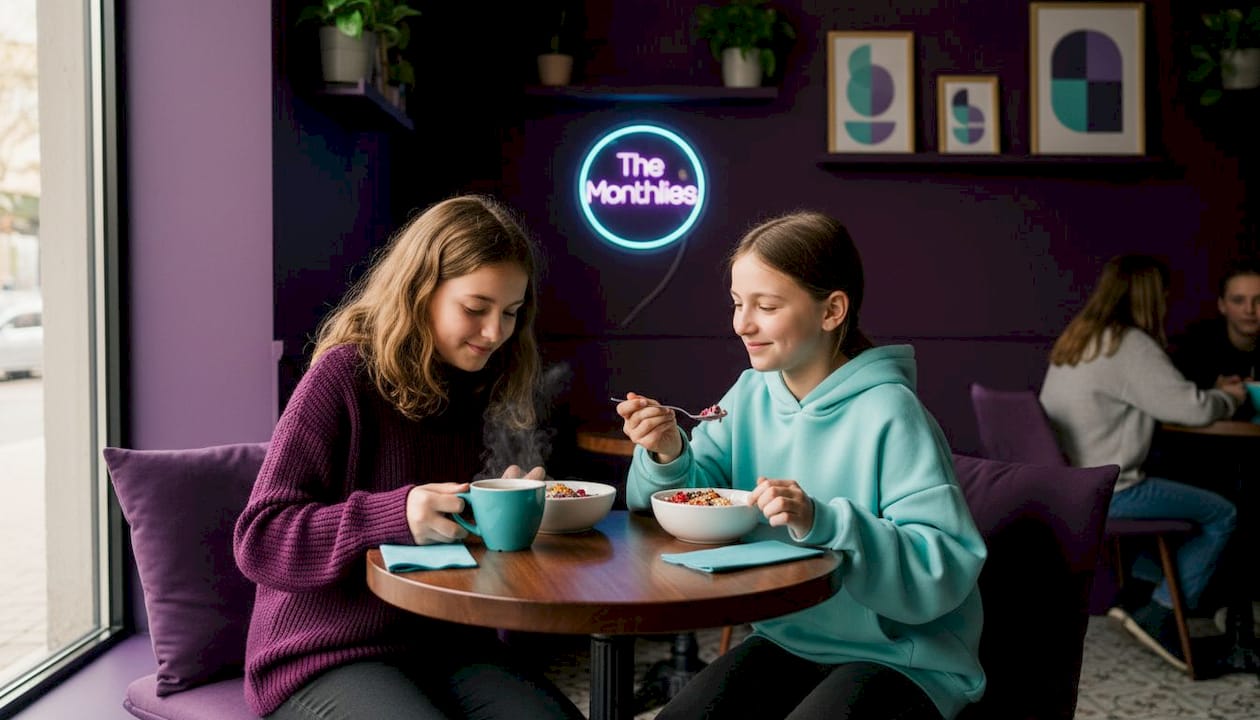
A good routine also shifts with the menstrual cycle. Organizing self-care by cycle phase means emphasizing rest and gentle nourishment in the early days when flow is heaviest, then gradually expanding activity as energy returns later in the cycle.
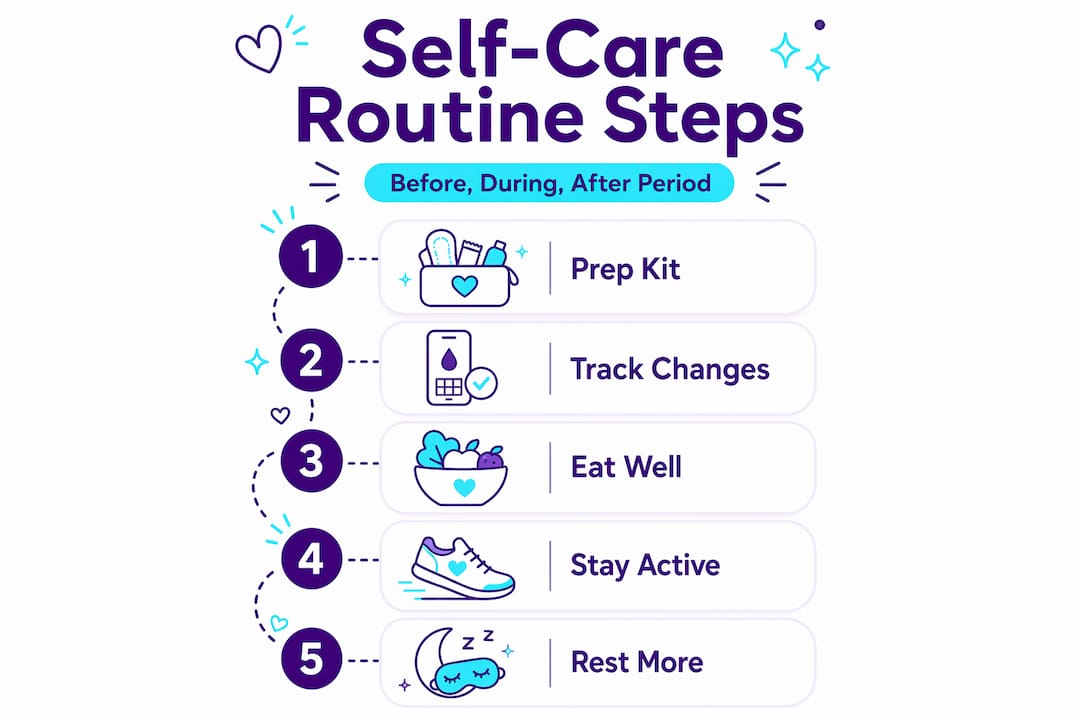
Here is what a practical daily self-care routine looks like during menstruation:
Days 1 to 3 (heaviest flow, most discomfort):
- Prioritize 8 to 10 hours of sleep. This is non-negotiable. Fatigue makes cramps feel worse.
- Eat warm, nourishing foods: soups, whole grains, leafy greens, and foods rich in iron to replace what is lost.
- Use a heating pad or warm water bottle on the lower abdomen for 15 to 20 minutes to ease cramps.
- Drink plenty of water throughout the day. Dehydration worsens bloating and headaches.
- Keep activity gentle: a short walk, light stretching, or yoga rather than intense exercise.
- Change pads regularly, every 3 to 4 hours, even on lighter days.
Days 4 to 7 (lighter flow, energy returning):
- Gradually reintroduce normal activities as she feels ready.
- Continue good sleep and hydration habits.
- Check in emotionally. Ask how she is feeling, not just physically.
| Routine element | Why it matters | How to make it easy |
|---|---|---|
| Sleep (8 to 10 hours) | Reduces fatigue and pain sensitivity | Set a consistent bedtime during her period |
| Warm foods and iron-rich meals | Replenishes nutrients lost during bleeding | Prep simple meals together |
| Heat therapy | Relaxes uterine muscles and eases cramps | Keep a heating pad in her room |
| Hydration | Reduces bloating and headaches | Keep a water bottle visible and filled |
| Gentle movement | Releases endorphins that ease pain | Short walks or stretching videos |
| Symptom tracking | Builds awareness and helps predict next cycle | Use a simple journal or app |
Pro Tip: Start symptom tracking before her first period by noting physical and emotional changes she notices each month. This builds the habit early and gives you both useful information when her period does arrive.
A practice period essentials kit designed specifically for on-the-go comfort can make sticking to this routine much easier, especially on school days.
Troubleshooting common challenges and when to seek help
Even with the best routine in place, challenges come up. Knowing how to handle them calmly keeps your daughter feeling supported rather than scared.
Irregular cycles in the first two to three years after her first period are completely normal. However, if there is no period by age 15 or gaps stretch beyond three months, that warrants a conversation with her doctor.
Common challenges and what to do:
- Irregular timing: Remind her this is normal early on. Use a tracking journal so she starts to notice her own patterns.
- Painful cramps: Start heat therapy and hydration at the first sign of discomfort, not after it peaks. Over-the-counter pain relief like ibuprofen, taken with food, can help if cramps are significant.
- Heavy bleeding: If she is soaking through pads overnight or needs to change every one to two hours, contact her doctor.
- Emotional changes: Mood swings, irritability, and sadness before or during her period are common. Acknowledge them. Tell her they are real, they are temporary, and she is not alone.
- Missing school: If period pain regularly keeps her home, that is a red flag worth discussing with a healthcare provider.
“The goal is not to eliminate every uncomfortable moment. It is to make sure your daughter knows what is normal, what to do about it, and that you are always in her corner.”
Keep communication open. Ask her regularly how she is feeling during her cycle. The more she talks about it, the less overwhelming it becomes. And if something feels off to you, trust that instinct and reach out to her doctor.
Nurturing independence and health ownership during puberty
Here is something most period prep guides miss entirely: the goal is not for you to manage your daughter’s period. The goal is for her to manage it, with your support in the background.
There is a real difference between a parent who handles everything and a parent who teaches. When you hand your daughter a pad and say “here, use this,” you solve today’s problem. When you show her how, practice with her, and then step back and let her do it herself, you build something that lasts her whole life.
Adolescence is the time for girls to become more independent by establishing good health habits and understanding their bodies with parent support. Your job is to be the guide, not the manager.
This looks like:
- Letting her choose her preferred products when she is ready
- Asking “what do you think would help?” instead of always telling her what to do
- Celebrating small wins, like when she handles a pad change at school on her own for the first time
- Respecting that she may want privacy as she gets more comfortable
The building health ownership kit from The Monthlies is built around exactly this philosophy. It is not just supplies. It is affirmations, education, and tools that help her feel capable and confident, not just taken care of.
Self-care planning done this way becomes something she owns. It becomes part of how she sees herself: as someone who knows her body, takes care of it, and asks for help when she needs it. That is a gift that goes far beyond puberty.
Support your daughter with ready-made self-care kits
You do not have to figure all of this out from scratch. The Monthlies has done the work for you.
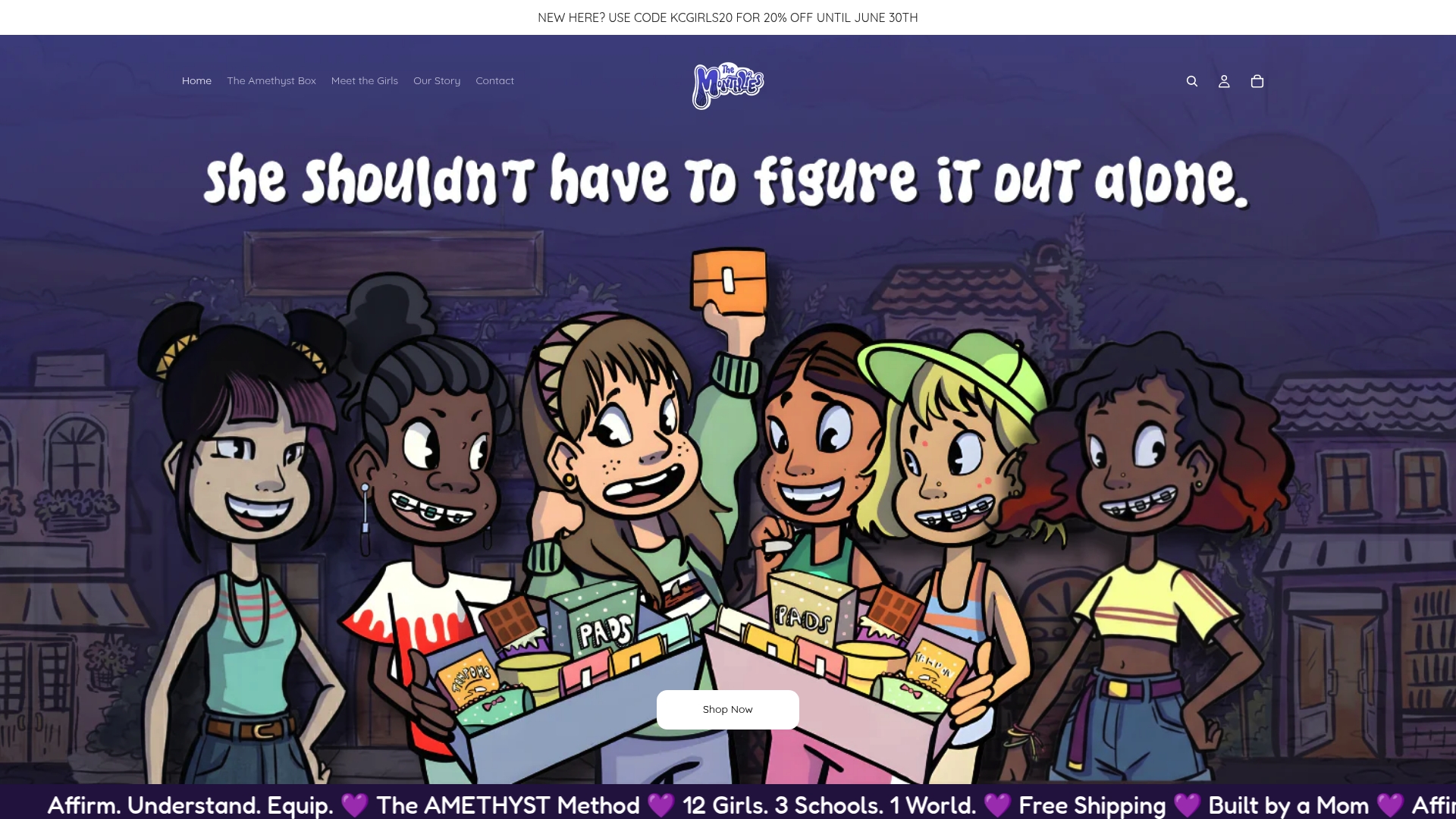
The Monthlies Amethyst Box is a thoughtfully curated first period kit built around the Affirm, Understand, and Equip method. It includes period essentials, educational materials, and affirmations designed to make her feel ready and confident. For everyday use and school days, The Monthlies On-The-Go Kit keeps her prepared wherever she is. And for a fuller self-care experience, The Monthlies Deluxe Box adds wellness items that support the whole routine. These kits are designed to put your practice period self-care routine into action right away, with everything already gathered and ready to go.
Frequently asked questions
At what age should I start preparing my daughter for her first period?
Start conversations and preparations between ages 8 and 10, since puberty may begin around ages 10 to 12 and having supplies and knowledge ready ahead of time builds real comfort and confidence.
How can I help my daughter manage painful menstrual cramps?
Teach her to start heat therapy, hydration, and rest at the very first sign of discomfort, since 50 to 75% of teens experience painful cramps and early action makes a meaningful difference.
What items should be included in a school emergency period kit?
A kit should have sanitary pads, extra underwear, unscented wipes or tissues, and a small discreet pouch, since having these ready items reduces stress during an unexpected first period at school.
When should I contact a doctor about my daughter’s periods?
Contact a doctor if she has not started her period by age 15, if she has heavy bleeding requiring frequent changes every one to two hours, or if severe cramps disrupt her daily life on a regular basis.
0 comments