

Most parents want to get this right. When your daughter’s first period arrives, or when you sense it’s coming soon, the pressure to say the right thing can feel overwhelming. Knowing how to help your daughter tell mom about her first period, and how to respond with warmth and confidence, shapes how she will feel about her body for years to come. This guide gives you the practical tools, the right words, and the emotional framework to make this milestone one she remembers with comfort, not embarrassment.
Table of Contents
- Key takeaways
- Signs your daughter’s first period is coming
- How to start the first period conversation with mom
- How to respond when she tells you about her first period
- Preparing practical support beyond day one
- My perspective on getting this conversation right
- How Themonthliesbox can help you prepare
- FAQ
Key takeaways
| Point | Details |
|---|---|
| Start the conversation early | Begin talking about menstruation at ages 8 to 9 so your daughter feels prepared, not caught off guard. |
| Watch for physical signs | Breast development and vaginal discharge signal that a first period is likely within 6 to 12 months. |
| Respond with calm and warmth | Your emotional tone in the first moments sets the foundation for her long-term body confidence. |
| Prepare a period kit together | Assembling supplies together builds readiness and turns a potentially scary moment into a shared experience. |
| Keep the conversation going | One talk is not enough. Ongoing, open dialogue builds the trust your daughter needs to come to you. |
Signs your daughter’s first period is coming
One of the most reassuring things you can do as a parent is learn to read the signs. When you know what to look for, you can start preparing your daughter before her first period arrives, rather than scrambling after the fact.
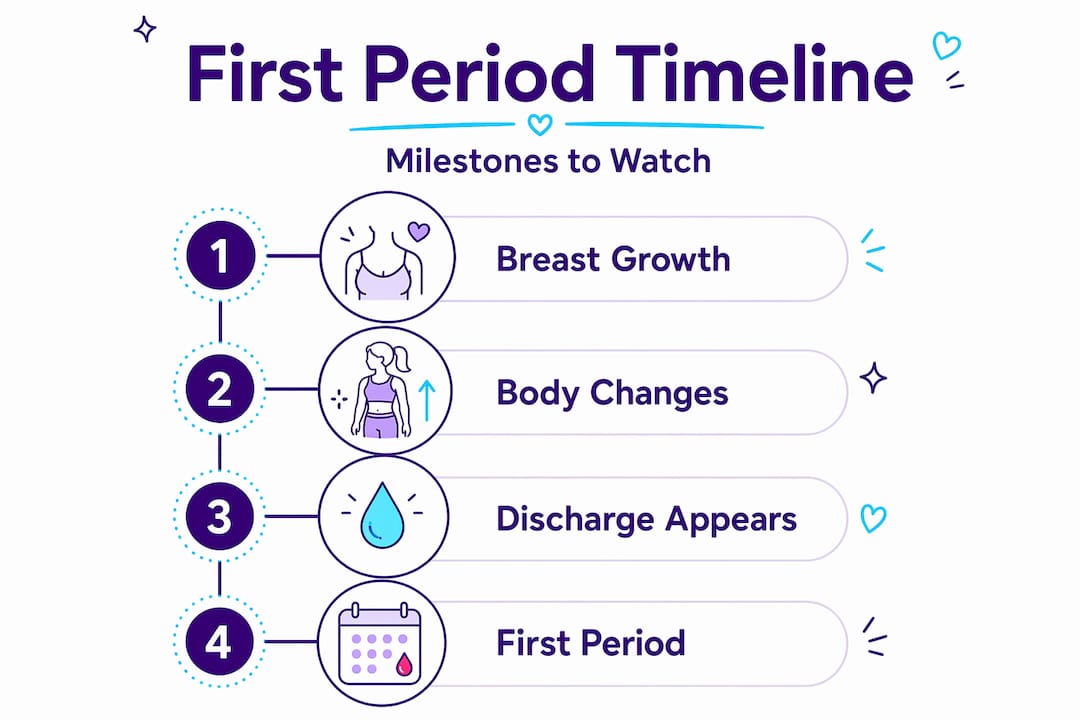
Breast development typically starts two to three years before a girl’s first period, and vaginal discharge usually appears six to twelve months before menarche. These are your clearest physical indicators that the conversation needs to happen now, not later.
Here is what to watch for:
- Growth spurt. A noticeable jump in height often happens in the year or two before a first period.
- Body hair. Hair appearing under the arms and in the pubic area is a reliable sign of puberty progressing.
- Breast development. Even the earliest budding is worth noting as a timeline marker.
- Vaginal discharge. Clear or whitish discharge appearing in underwear typically signals the period is about six to twelve months away.
- Mood shifts. Hormonal changes can bring emotional sensitivity, irritability, or tearfulness before any physical signs appear.
The age range for a first period is wider than most parents expect. Most girls start somewhere between 10 and 15 years old, but both earlier and later are completely normal. Genetics play a role, but each girl’s experience is unique and should not be measured against a family script. If your own period arrived at 11, your daughter may not follow the same timeline. Reassure her of that. Reassure yourself too.
| Sign | What it means | Typical timing before first period |
|---|---|---|
| Breast development begins | Puberty has started | 2 to 3 years before |
| Pubic and underarm hair | Mid-puberty progression | 1 to 2 years before |
| Vaginal discharge | Period is approaching | 6 to 12 months before |
| Growth spurt peaks | Body preparing for menarche | 6 to 18 months before |
| Mood and emotional shifts | Hormonal activity increasing | Variable, can be months before |
You can explore more about why first period age varies to feel more confident in what is normal for your daughter specifically.
How to start the first period conversation with mom
The single biggest mistake parents make is waiting too long. Medical professionals recommend starting conversations about menstruation at ages 8 to 9, using accurate, simple medical terms. Words like “uterus,” “menstruation,” and “ovaries” normalize the topic. When you use euphemisms exclusively, you signal to your daughter that this subject is something to be hidden or ashamed of.
Here is a step-by-step approach for opening the conversation:
- Choose a low-pressure moment. A car ride, a walk, or a quiet evening at home works better than a formal sit-down. Casual settings reduce anxiety for both of you.
- Start with what she already knows. Ask what she has heard at school or from friends. This tells you what to clarify and what to build on.
- Use clear, simple language. Say something like, “Your body is going to start changing, and one of those changes is called a period. It means your uterus is healthy and growing up.”
- Normalize the physical experience. Explain that some cramping and bloating is normal, and that you will always have what she needs on hand.
- Leave the door open. End every conversation with, “You can always come to me with questions, no matter what.”
Pro Tip: If you feel nervous starting the conversation, say so. Telling your daughter “This feels a little awkward for me too, but I want you to know everything” actually builds trust. It shows her that vulnerability is okay and that you are a safe person to talk to.
Addressing myths matters too. Many girls arrive at their first period believing it will be painful every month, that it will be immediately heavy, or that something is wrong with them. A calm, fact-based first period conversation with mom can dismantle those fears before they take root. Read through what to expect on the first period day together so she knows what is coming.
How to respond when she tells you about her first period
This is the moment that matters most. When your daughter comes to you and says her period has started, your first response will stay with her. The emotional tone you set in the first 48 hours after menarche significantly shapes her future body confidence and self-view. That is a real responsibility, and you are ready for it.
Here is how to respond in a way that makes her feel supported:
- Stay calm. Even if you are surprised, take a breath before you speak. Your calm is contagious.
- Validate her feelings. Whether she is excited, scared, embarrassed, or all three at once, say “That makes complete sense. All of those feelings are okay.”
- Avoid comparisons. Do not say “I got mine at your age too” or “Your aunt had it worse.” Avoid critical or comparative comments about her experience. Her story belongs to her.
- Offer practical help immediately. Ask if she needs a pad or tampon, help her get comfortable, and check in on her pain level.
- Discuss pain management. Let her know that mild cramping is normal and that a heating pad or over-the-counter pain relief can help. If pain is severe or she misses school because of it, that is worth a doctor’s visit.
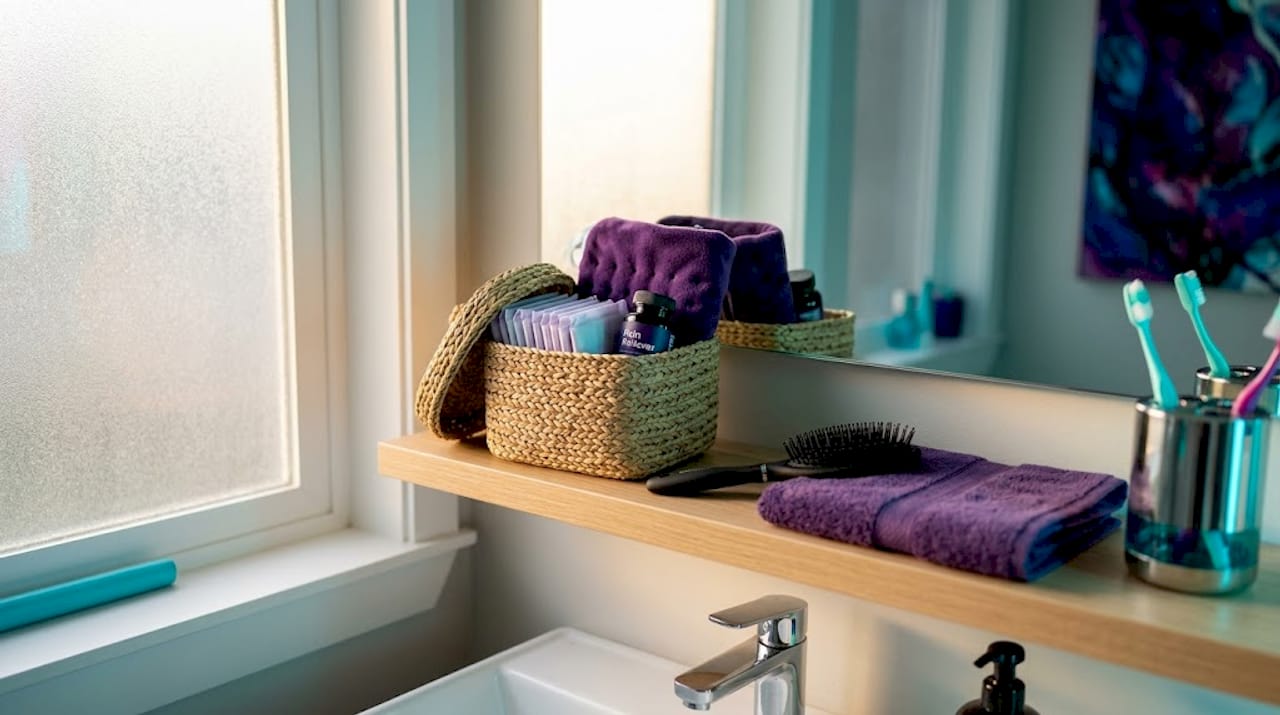
Pro Tip: Keep a small period kit in the bathroom she uses most. When she finds it already there, it sends a message louder than any conversation: “I was thinking about you. I prepared for you. You are not alone.”
One thing that consistently creates negative memories around a first period is handing over products without explanation. Many women recall their mothers simply leaving pads under the sink with no guidance. That silence communicates shame. Walk her through how to use each product. Show her, if she is comfortable with that. The goal is confidence, not confusion.
Dads and other guardians matter here too. Dads can support their daughters by educating themselves and collaborating with mom or a trusted adult. If mom is not in the picture, a trusted aunt, older sister, or school counselor can fill that role with the same warmth.
Preparing practical support beyond day one
Getting through the first day is one thing. Building long-term confidence is another. Here is how to set your daughter up for every cycle going forward.
Building her first period kit
Assemble the kit together rather than just handing it to her. Make it a moment of preparation, not a transaction. A solid starter kit includes:
- Pads in different absorbencies (light, regular, overnight)
- A pair of period underwear as a backup option
- Mild pain relief like ibuprofen or acetaminophen
- A heating pad or heat patches for cramps
- Wipes for freshening up at school
- A small pouch she can carry in her backpack discreetly
Walk her through each item. Explain what it does, when to use it, and why it is there. That clear, empathetic guidance paired with products is what turns a confusing experience into a confident one.
Teaching cycle tracking
Tracking her cycle from the very first period builds body awareness that will serve her for life. Cycle tracking from the first period helps young girls anticipate symptoms and care for themselves with confidence. A simple period tracking app or even a paper calendar works well. Show her how to mark the first day of her period each month. Over time, she will start to recognize her own patterns, her energy shifts, her emotional rhythms, and her body’s signals.
Keeping the conversation open
One talk is not a finish line. Check in with her after her second and third cycles. Ask how she is feeling, whether her supplies are running low, and whether she has questions. A consistent self-care routine for pre-teens built around her cycle helps normalize menstruation as just another part of her life, not something to dread.
Some families choose to mark a first period with a small celebration. A favorite meal, a new book, a meaningful piece of jewelry, or a special outing can honor the milestone without making it feel clinical. Keep her comfort level in mind. Some girls want to celebrate. Others want to keep it private. Follow her lead.
My perspective on getting this conversation right
I have seen what happens when parents get this moment right, and I have heard from too many women about what it felt like when their parents got it wrong. The difference is almost never about the words chosen. It is about the feeling behind them.
What I have learned is that parents’ own anxieties and unspoken myths about menstruation can unintentionally pressure a child. If you grew up in a house where periods were whispered about or treated as an inconvenience, that energy shows up in how you respond to your daughter. The good news is that awareness of this is enough to change it.
In my experience, the parents who do this best are not the ones with the most information. They are the ones who stay present, stay calm, and say “I am here” more than they say anything else. Your daughter does not need a perfect speech. She needs to know that you are not embarrassed by her body. That is the whole message.
I also think we underestimate how much a thoughtful first period gift communicates. When a girl receives something prepared with care, it tells her that her body is worth celebrating, not hiding. That belief, planted early, grows into something powerful.
Start before you think you need to. Stay calm when the moment comes. And keep showing up after.
— Themonthliesbox
How Themonthliesbox can help you prepare
You do not have to figure out all of this alone. At Themonthliesbox, we built something specifically for this moment in your daughter’s life.
The Amethyst Box is a curated first period and self-care experience designed to affirm, educate, and equip your daughter for menarche. It combines practical period supplies with affirmations, educational materials, and confidence-building tools, all built around our Amethyst Method. It is the kind of thing that turns a scary first day into a supported one.
If you want to go bigger, the Deluxe Box adds comfort products and accessories for an even more complete experience. And if you have a daughter who is always on the move, the On-The-Go Kit keeps her prepared wherever she is.
Every box is designed to send one clear message to your daughter: you are ready, you are supported, and you belong here. Welcome to LavenHaven. We have been waiting for you.
FAQ
When should I start talking to my daughter about her period?
Medical professionals recommend starting conversations about menstruation at ages 8 to 9, using simple and accurate medical terms. Starting early means she will not be caught off guard when her period actually arrives.
What are the signs that my daughter’s first period is close?
Breast development starting two to three years before menarche and vaginal discharge appearing six to twelve months prior are the clearest physical indicators. A growth spurt and the appearance of body hair are also reliable signs.
What should I say when my daughter tells me her period started?
Stay calm, validate her feelings, and offer immediate practical help with supplies. Prioritizing validation and reassurance over technical information in the first moments makes the biggest difference for her confidence and comfort.
What should a first period kit include?
A good starter kit includes pads in multiple absorbencies, period underwear as a backup, mild pain relief, a heating pad, and a discreet pouch for school. Walking her through how to use each item is just as important as having the supplies ready.
What if my daughter’s first period timing is different from mine?
Every girl’s timeline is her own. Each girl’s experience is unique and should not be compared to a mother’s or sister’s experience. The normal age range is 10 to 15 years old, and genetics are only one factor among many.
0 comments