

First period anxiety is defined as the intense nervousness, fear, and worry many preteens experience as their bodies prepare for menarche. It is not a clinical diagnosis, but it is very real. The more accurate clinical term is anticipatory menstrual anxiety, and it shows up in girls as young as 8 or 9 when puberty signs first appear. Research shows that 66.6% of adolescent females report moderate to severe PMS-related symptoms, which means the anxiety surrounding that first period is far more common than most parents realize. Understanding what is first period anxiety, and knowing how to respond to it, is one of the most practical things you can do for your daughter right now.
What is first period anxiety and what causes it?
First period anxiety is the fear and uncertainty that builds before a girl’s first menstrual cycle begins. It is triggered by a combination of physical changes, emotional shifts, and social worries that all arrive at once during puberty.
The physical triggers are real and measurable. Hormonal changes, specifically rising levels of estrogen and progesterone, directly affect the brain’s mood-regulating systems. Girls experience breast tenderness, vaginal discharge, bloating, and cramping before their period ever arrives. These sensations are unfamiliar and can feel alarming without context. Understanding what causes the first period helps parents explain these changes clearly rather than letting a daughter’s imagination fill in the gaps.

The psychological and social triggers are often stronger than the physical ones. Fear of social embarrassment at school, of being “discovered,” or of bleeding through clothing frequently drives more anxiety than fear of pain itself. Girls worry about what their friends will think, whether they will know what to do, and whether they will be able to handle it alone.
The key causes of first period anxiety include:
- Hormonal shifts that directly increase emotional sensitivity and mood swings
- Physical symptoms like cramping and discharge that arrive before the period and feel confusing
- Unpredictability of when the first period will actually start
- Social fear of embarrassment in public or at school
- Lack of information, which turns a normal biological event into something that feels frightening
- Pre-existing anxiety, since anxiety increases PMS risk by 51%, creating a cycle where worry makes symptoms feel worse
Common signs of first period anxiety parents should watch for
Recognizing menstruation anxiety early gives you the chance to step in with support before it grows. The signs fall into two categories: emotional and physical.
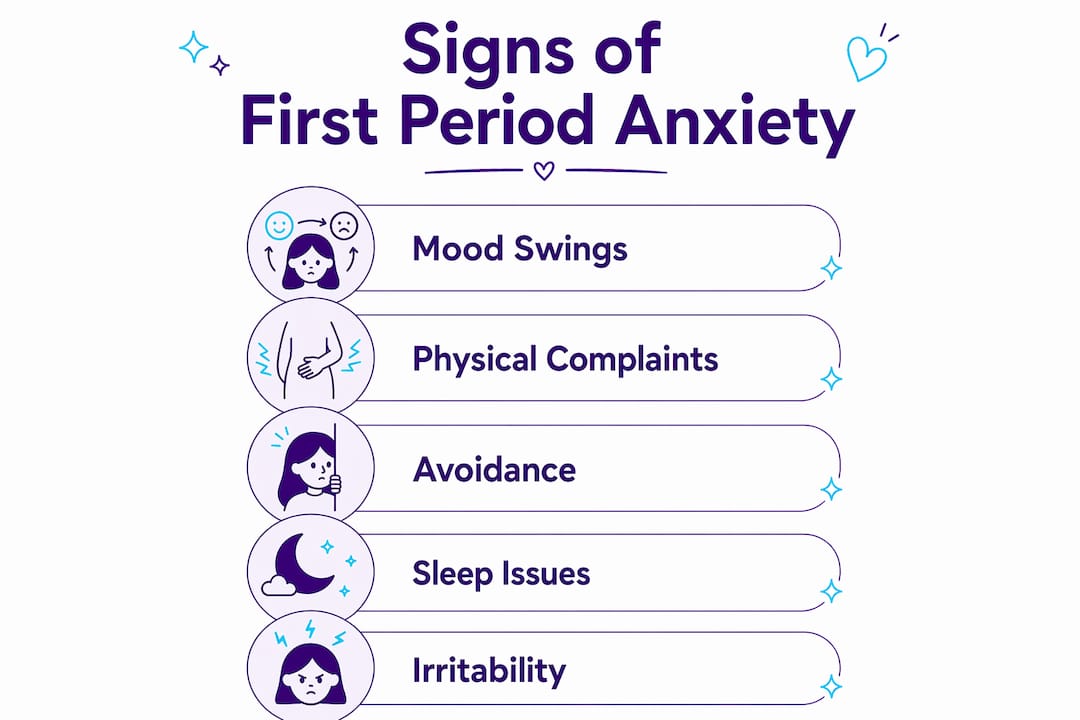
Emotional signs include increased tearfulness, irritability, mood swings that seem out of proportion, and withdrawal from friends or family. Your daughter may become unusually quiet or clingy. She may express worry about going to school or ask repeated questions about what her period will feel like.
Physical signs include fatigue, headaches, bloating, breast tenderness, and light cramping. These often appear in the week or two before the first period arrives and can cause real discomfort even before any bleeding occurs.
- Notice a “period mood” pattern. A predictable shift in mood before menstruation, such as increased tearfulness or irritability, is one of the clearest early signals. When you recognize this pattern, you can offer comfort at exactly the right moment.
- Watch for social withdrawal. If your daughter starts avoiding sleepovers, gym class, or outings with friends, social fear around her period may be the reason.
- Listen for repeated “what if” questions. Questions like “What if it happens at school?” or “What if I don’t know what to do?” signal anticipatory anxiety, not just curiosity.
- Track the timing. If mood changes and physical symptoms appear on a rough monthly cycle, her body is likely preparing for menarche.
- Distinguish anxiety from distress. Some nervousness is completely normal. If symptoms are interfering with sleep, school attendance, or friendships, that warrants a closer look.
Pro Tip: Keep a simple notes app or journal where you track your daughter’s mood and physical complaints each week. Patterns become visible quickly, and that information is useful for both you and her pediatrician.
How to help your daughter cope with first period anxiety
The most effective strategy for coping with first period anxiety is starting honest, factual conversations before puberty signs appear. Waiting until symptoms arrive increases stress. Proactive education shifts menstruation from a frightening emergency into a manageable, expected event.
Start the conversation early and keep it simple
Use accurate words. Say “period” and “menstruation,” not “the thing” or “becoming a woman.” Euphemisms signal that the topic is shameful or scary, which is the opposite of what your daughter needs. The Child Mind Institute recommends that parents act as calm, steady information sources who normalize the conversation rather than dramatize it. Short, regular check-ins work better than one big “talk.”
Build a practical period kit together
An emergency kit is one of the most effective tools for reducing first period fears. Providing a kit with supplies substantially reduces the social anxiety tied to unexpected bleeding. Pack a small pouch with pads or liners, a spare pair of underwear, wipes, and a pain reliever. Keep one in her school bag and one at home. When she has the supplies, she has a plan. That alone lowers anxiety significantly.
Involve a therapist when needed
If your daughter has a pre-existing anxiety disorder, collaborating with a therapist before puberty is a smart move. Therapists can help create personalized “period comfort plans” that turn menarche into a concrete, manageable event rather than an ambiguous fear. You can also explore online therapy for teens as a flexible option if in-person sessions are not accessible.
Pro Tip: Role-play the school scenario with your daughter. Walk through exactly what she would do if her period started during class: who she would tell, where the nurse’s office is, and what she has in her bag. Practicing the scenario out loud removes the “unknown” that feeds anxiety.
How first period anxiety differs from PMDD
First period anxiety and premenstrual dysphoric disorder (PMDD) are not the same thing, and knowing the difference helps you decide when to seek professional support.
| Feature | First period anxiety | PMDD |
|---|---|---|
| Timing | Before menarche begins | Cyclically, in the luteal phase of each cycle |
| Severity | Mild to moderate nervousness | Severe emotional distress, often disabling |
| Duration | Temporary, resolves after first period | Ongoing, recurring every cycle |
| Prevalence | Very common among preteens | Affects up to 5% of women of childbearing age |
| Impact on daily life | Some worry and avoidance | Significant disruption to school, work, and relationships |
| Treatment needed | Parental support, education, preparation | Medical and psychological intervention |
Anticipatory anxiety before the first period is normal and expected. PMDD is a clinical condition that requires diagnosis and treatment. Severe mood symptoms that interfere with school attendance, friendships, or sleep are a signal to consult a pediatrician or mental health professional, not just a sign to wait it out.
Preparing your daughter for her first period at school
The fear of a first period starting at school is one of the most common first period fears parents hear about. The good news is that preparation almost entirely eliminates that fear.
- Talk through the school scenario directly. Name the school nurse, identify the bathroom nearest to her classroom, and confirm she knows she can ask any trusted adult for help. Specifics replace vague worry with a real plan.
- Build and maintain a discreet kit. A small zip pouch in her backpack with two pads or liners, a spare pair of underwear, and wipes covers most situations. Refresh it every few months so supplies stay current.
- Teach her to advocate for herself. She should feel confident saying “I need to go to the nurse” without shame or hesitation. Practice the words with her at home.
- Normalize asking for help. Remind her that school nurses handle this every single day. She will not be the first, and she will not be the last.
- Connect her to a trusted adult at school. Whether it is a counselor, a coach, or a favorite teacher, knowing there is one specific person she can go to reduces the feeling of being alone.
For more detailed guidance, the first period at school resource from Themonthliesbox walks through common scenarios step by step.
Key takeaways
First period anxiety is a normal, manageable response to puberty that parents can significantly reduce through early, honest communication and practical preparation.
| Point | Details |
|---|---|
| Definition matters | First period anxiety is anticipatory menstrual anxiety, not a clinical disorder, but it is real and common. |
| Social fear drives anxiety | Fear of embarrassment at school is often a stronger anxiety driver than fear of pain or bleeding. |
| Early conversations work | Starting factual, calm conversations before puberty signs appear is the most effective prevention strategy. |
| Kits reduce fear | A discreet emergency kit with pads, wipes, and spare underwear gives girls a concrete plan and lowers anxiety. |
| Know when to get help | Symptoms that disrupt school, sleep, or friendships may indicate PMDD or an anxiety disorder requiring professional evaluation. |
What I’ve learned from watching parents navigate this moment
Most parents I talk with make the same mistake. They wait. They assume their daughter will ask when she is ready, or that school health class will cover it, or that it is too early to bring it up. By the time they start the conversation, their daughter has already spent months quietly worrying.
The other thing I see is parents accidentally making periods feel like a secret. They whisper. They use vague language. They look uncomfortable. And their daughter reads every single one of those signals. She learns that this topic is something to be embarrassed about before she has ever experienced it herself.
What actually works is the opposite. It is calm, specific, and repeated. Not one big talk, but many small ones. It is saying “periods are normal, here is what happens, and here is what you will do.” It is building a kit together and putting it in her bag like it is no big deal, because it is not a big deal. It is letting her see you treat her body as something worthy of practical care, not hushed concern.
The parents who do this well are not the ones who have all the answers. They are the ones who stay curious, stay open, and stay consistent. Their daughters still feel nervous sometimes. But they feel supported, and that changes everything.
— Themonthliesbox
How Themonthliesbox helps ease first period anxiety
When you are ready to take that next step from conversation to preparation, Themonthliesbox has everything you need in one place.

The Amethyst Box is designed specifically for first periods. It combines practical supplies with affirmations and educational materials built around the Amethyst Method: affirm, understand, and equip. It is not just a period kit. It is a confidence-building experience that helps your daughter feel ready, not scared. For on-the-go preparedness, the On-The-Go Kit is the perfect discreet school bag companion. Both are thoughtfully curated to turn the first period from something to dread into something to grow through. Welcome to LavenHaven. We have been waiting for you.
FAQ
What is first period anxiety in simple terms?
First period anxiety is the nervousness and fear a preteen feels as her body prepares for her first menstrual cycle. It is driven by unfamiliar physical changes, unpredictability, and social worries, and it is very common.
Is period anxiety normal for preteens?
Yes. Research shows that the majority of adolescent girls report moderate to severe PMS-related symptoms, and anticipatory anxiety before the first period is a typical part of puberty for many girls.
How can I ease my daughter’s first period fears?
Start honest, factual conversations early, use accurate language, and build a practical period kit together. The Child Mind Institute recommends involving a therapist if your daughter has a pre-existing anxiety disorder.
When does first period anxiety become a bigger concern?
If your daughter’s anxiety is disrupting sleep, school attendance, or friendships on a recurring monthly cycle, it may indicate PMDD or a generalized anxiety disorder. A pediatrician or mental health professional can help evaluate and treat those symptoms.
How do I talk to my daughter about her first period without scaring her?
Use clear, calm language and avoid euphemisms. Short, regular conversations work better than one overwhelming discussion. Themonthliesbox offers a step-by-step guide on how to talk to your daughter about periods to help you get started.
0 comments