

If you’re watching your daughter grow and wondering what’s happening inside her body, you’re asking exactly the right questions. Understanding what causes first period is one of the most useful things a parent can know. Most people assume menstruation marks the start of puberty. It doesn’t. The first period is actually closer to the finish line of a hormonal journey that began years earlier. Knowing this changes how you prepare, what you look for, and how you talk to your daughter before that day arrives.
Table of Contents
- Key Takeaways
- What causes first period: the biology behind menarche
- Environmental and lifestyle factors that shift the timing
- How to recognize first period signs before it arrives
- Why first period causes cramps and what you can do
- My honest take on what parents get wrong
- How Themonthliesbox helps you prepare together
- FAQ
Key Takeaways
| Point | Details |
|---|---|
| First period is puberty’s final stage | Menstruation is not the start of puberty but its culmination, beginning years after puberty starts. |
| Hormones are the primary trigger | The HPG axis activates estrogen and other hormones that prepare the uterus for its first cycle. |
| Signs appear 6 to 12 months before | Discharge, breast development, and mood shifts signal menarche is approaching within the year. |
| Environment plays a real role | Stress, body weight, nutrition, and screen habits can all shift the timing of a first period earlier. |
| Irregular cycles are normal at first | First cycles are often anovulatory; it can take up to five years for a regular pattern to develop. |
What causes first period: the biology behind menarche
The first period doesn’t just happen on its own. It is the result of a precise hormonal sequence that begins years before any visible signs appear. Understanding this process gives you a clear picture of what your daughter’s body is doing and why.
The HPG axis: the body’s hormonal command center
The central trigger is the activation of the hypothalamic-pituitary-gonadal (HPG) axis. Think of it as a messaging chain. The hypothalamus in the brain sends a signal. The pituitary gland receives it and releases two key hormones: follicle-stimulating hormone (FSH) and luteinizing hormone (LH). These hormones then prompt the ovaries to produce estrogen. Rising estrogen levels cause the uterine lining to build up. When the lining sheds for the first time, that is the first period.
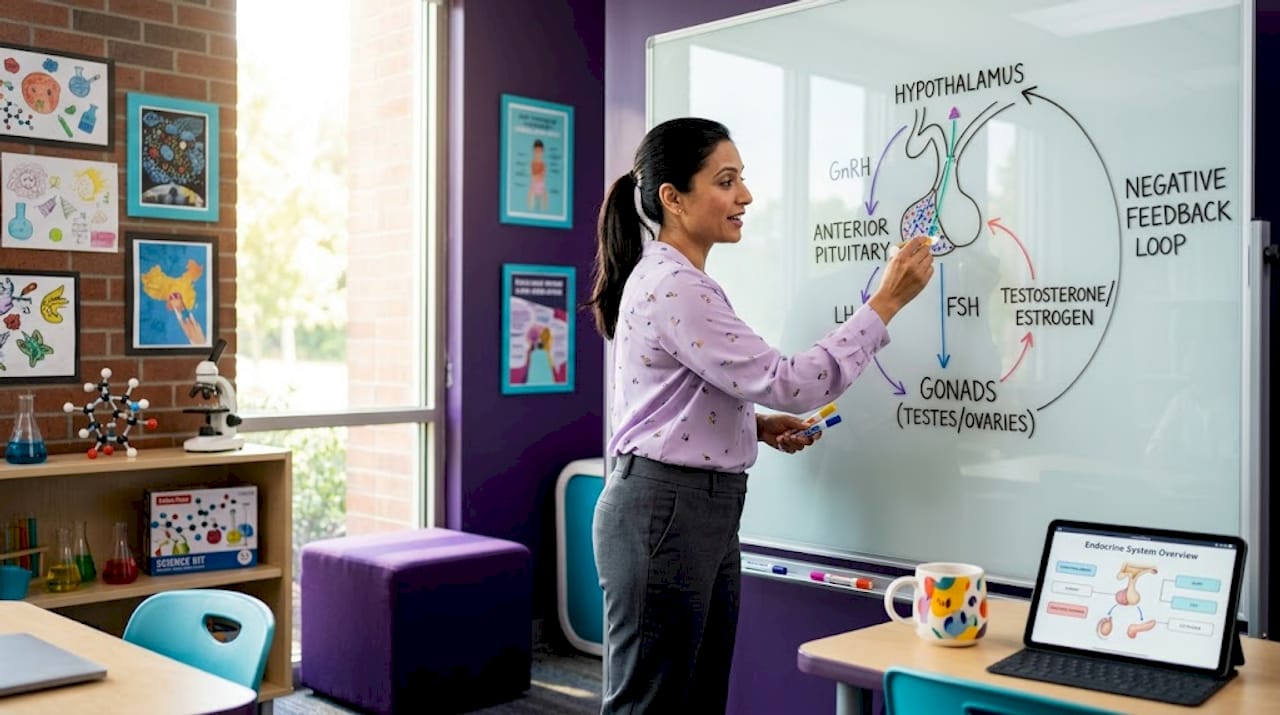
This process unfolds slowly. Puberty typically begins between ages 8 and 15, and the first period usually arrives two to five years after the first signs of puberty appear. The median age for a first period in the United States is around 11.9 years.
The physical changes that come first
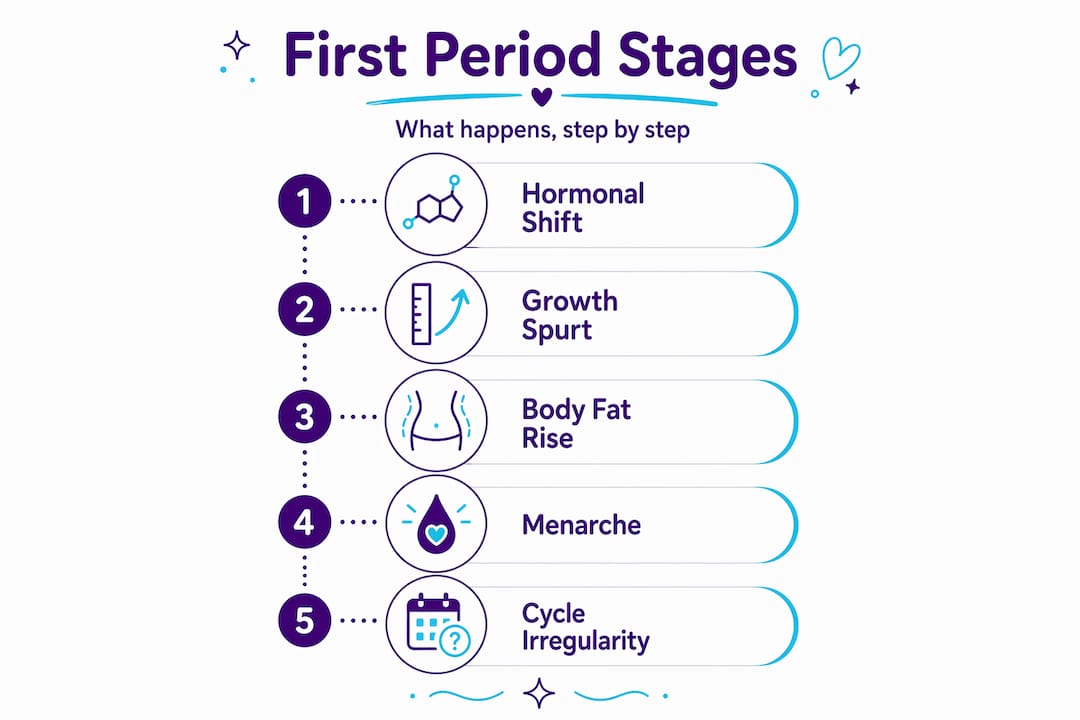
Before the first period arrives, the body sends out a series of clear signals. These changes follow a predictable sequence:
- Breast budding. This is usually the first visible sign, appearing about two to three years before menarche.
- Pubic and underarm hair. Body hair growth follows shortly after breast development begins.
- Growth spurt. Most girls experience their fastest height increase before their first period, not after.
- Body shape changes. Hips widen and body fat redistributes, particularly around the hips and thighs.
Pro Tip: The growth spurt tends to slow significantly after menarche. If your daughter is concerned about her height, that window before her first period matters most for growth.
Body fat percentage also plays a meaningful role in first period onset causes. A certain level of body fat is required for the body to sustain a menstrual cycle. Genetics are equally influential. A daughter’s timing often mirrors her mother’s closely.
What to expect from early cycles
Here is something many parents do not know: first menstrual cycles are often anovulatory, meaning the ovaries do not release an egg during every cycle. This is completely normal. The reproductive axis is still maturing. It can take up to five years for cycles to become regular and predictable.
| Stage | What is happening |
|---|---|
| Year 1 after menarche | Cycles often irregular, anovulatory, flow may vary greatly |
| Years 2 to 3 | Cycles begin to lengthen and become more consistent |
| Years 4 to 5 | Regular ovulatory cycles typically establish themselves |
Environmental and lifestyle factors that shift the timing
Biology sets the framework for the menstrual cycle beginnings, but environment fills in the details. Several lifestyle and external factors can push the timing of menarche earlier or later than genetics alone would predict.
Research links early puberty to increased body fat, poor nutrition, stress, and industrial exposures. Here is what the evidence shows:
- Body weight and nutrition. Higher body fat increases estrogen production, which can accelerate the HPG axis. Conversely, extreme thinness or malnutrition from intense athletic training can delay the first period significantly.
- Chronic stress. Ongoing stress disrupts hormone regulation and has been associated with earlier onset of puberty in some girls.
- Endocrine disruptors. Chemicals found in certain plastics, pesticides, and personal care products can mimic estrogen in the body, potentially triggering earlier puberty.
- Screen time and blue light. Digital habits matter more than most parents realize. Extended exposure to blue light from devices can suppress melatonin, which interacts with the hormones that regulate puberty timing.
- Urban environment. Girls growing up in urban settings tend to experience earlier menarche trends compared to rural peers, likely due to a combination of the factors above.
“Early puberty is increasingly shaped by the world our kids live in. Screens, stress, and diet are not separate issues. They are connected parts of the same picture.”
What causes early first period, then, is rarely one single thing. It tends to be a combination of biological readiness and environmental acceleration working together. This is worth knowing because some of these factors are within your family’s control.
How to recognize first period signs before it arrives
One of the most practical things you can do as a parent is learn how to recognize first period warning signs before the day actually comes. This removes the shock factor entirely and replaces it with readiness.
Signs typically appear six to twelve months before the first period. Here is what to watch for:
- White or clear vaginal discharge. This is often the most reliable pre-period sign. It usually appears about six to twelve months before menarche and signals that the uterine lining is preparing itself.
- Breast development. Full breast budding means your daughter is likely within two years of her first period.
- Body odor changes. Increased sweating and new body odor appear as androgens become more active.
- Mood shifts. Emotional sensitivity, mood swings, and increased self-awareness are common as hormones fluctuate.
- Mild cramping or abdominal discomfort. Some girls feel lower abdominal aches before their period even begins.
Pro Tip: Create a small “first period kit” together with your daughter before any signs appear. Include pads, clean underwear, and a note from you. Doing this together turns a potentially anxious moment into one she feels prepared for. Themonthliesbox has a useful guide on what to expect on that first day if you want a full walkthrough.
Normal variation matters here too. Some girls start their periods at 10. Others start at 15. Both can be completely healthy. If your daughter has no period by age 15, medical evaluation is recommended to rule out hormonal or structural concerns. Similarly, breast development before age 8 warrants a conversation with her pediatrician.
Open communication is the most underrated tool you have. Daughters who feel they can talk to a parent about their bodies tend to adjust better emotionally to puberty. You do not need perfect words. You just need to start the conversation early and keep it going. A guide like what a period actually is can be a great conversation starter to read through together.
Why first period causes cramps and what you can do
A lot of girls experience cramps around their first period. This is one of the most common things parents ask about, and the answer comes down to a specific biological process.
When the uterine lining sheds, the body releases chemicals called prostaglandins. Prostaglandins trigger uterine contractions to push the lining out. The stronger the contractions, the more pain a girl feels. This type of pain is called primary dysmenorrhea, and it is normal, especially in the first few years of menstruation.
Here is how you can help:
- Warmth works. A heating pad or warm water bottle on the lower abdomen relaxes the uterine muscle and reduces cramping noticeably.
- Movement helps. Light walking or gentle yoga can ease cramp intensity by improving circulation.
- Over-the-counter pain relief. Ibuprofen reduces prostaglandin production directly, making it more effective for period pain than acetaminophen. Always follow age-appropriate dosing guidelines.
- Hydration and rest. Staying hydrated and getting enough sleep supports the body’s ability to manage discomfort.
Primary dysmenorrhea usually improves with age as the reproductive system matures. However, if your daughter experiences cramps severe enough to miss school regularly, or if pain increases over time rather than improving, talk to her doctor. Worsening pain can indicate secondary dysmenorrhea, which involves an underlying condition like endometriosis that deserves proper evaluation.
My honest take on what parents get wrong
I’ve seen one pattern repeat itself more than any other: parents waiting until the first period arrives before they start the conversation. By then, the window for real preparation has already closed.
Menstruation is puberty’s final stage, not its beginning. That means the years before the first period are the most important ones for emotional and physical education. The girls who feel most confident when their period arrives are the ones whose parents talked to them early, often, and without making it feel like a big scary announcement.
What I’ve learned is that parents often underestimate how much their daughter already knows from friends, social media, or school. The question isn’t whether she’s heard about periods. It’s whether what she’s heard is accurate and supportive. That’s your job. And honestly? You don’t need to be an expert. You just need to be the person she trusts.
If your daughter is starting to show early signs of puberty, start talking about first period age now. Normalize the topic. Let her ask questions. Let her be curious without shame. That’s where real confidence grows.
— Themonthliesbox
How Themonthliesbox helps you prepare together
At Themonthliesbox, we built something for this exact moment. The space between “puberty is starting” and “her first period arrived” is where preparation happens and where most families feel the least equipped.
The Amethyst Box is designed specifically for this time. It includes practical period supplies, affirmations, and educational materials that walk girls through what is happening in their bodies with clarity and warmth. It is built around the Amethyst Method: Affirm, Understand, and Equip. Not just a product. A full experience.
If you are looking for something your daughter can use every day as she grows through this transition, the self-care starter kit is another great place to start. Every girl deserves to feel supported, not just supplied. That’s what we’re here for. Welcome to LavenHaven. We’ve been waiting for you.
FAQ
What triggers the first period in girls?
The first period is triggered by the activation of the hypothalamic-pituitary-gonadal (HPG) axis, which causes the ovaries to produce estrogen and eventually shed the uterine lining for the first time.
What is the average age for a first period?
The median age for menarche in the United States is approximately 11.9 years, though a normal range spans from about 10 to 15 years.
What causes early first period in some girls?
Higher body fat, poor nutrition, chronic stress, exposure to endocrine-disrupting chemicals, and increased screen time have all been linked to earlier onset of menstruation.
Why does the first period cause cramps?
Cramps happen because the body releases prostaglandins that cause the uterus to contract and shed its lining. This type of discomfort is called primary dysmenorrhea and typically eases as the body matures.
When should a parent be concerned about delayed or early periods?
If your daughter shows breast development before age 8 or has no period by age 15, a visit to her pediatrician is a good step to rule out any hormonal or health concerns.
0 comments