

Supporting your daughter through her first period means combining emotional reassurance with practical readiness so she feels safe, informed, and confident. Menarche, the clinical term for a girl’s first menstrual cycle, typically arrives between ages 10 and 15, with 12 to 13 being the most common range. Every girl’s experience is different. Some feel relieved. Some feel scared. Most feel a little of both. Your job is not to have every answer. Your job is to make sure she knows she is not alone.
1. Supporting your daughter’s first period starts before it arrives
The most effective thing you can do is start the conversation early. Waiting until her period actually starts puts both of you in a reactive position. When you talk about menstruation before it happens, you give her a framework for understanding her own body instead of a reason to panic.
Physical puberty signs typically precede the first period by one to two years. Breast development usually appears first, followed by pubic and underarm hair, then a clear or white vaginal discharge. That discharge is one of the clearest signals that her period is likely six to twelve months away. Knowing this gives you a natural opening to start talking.
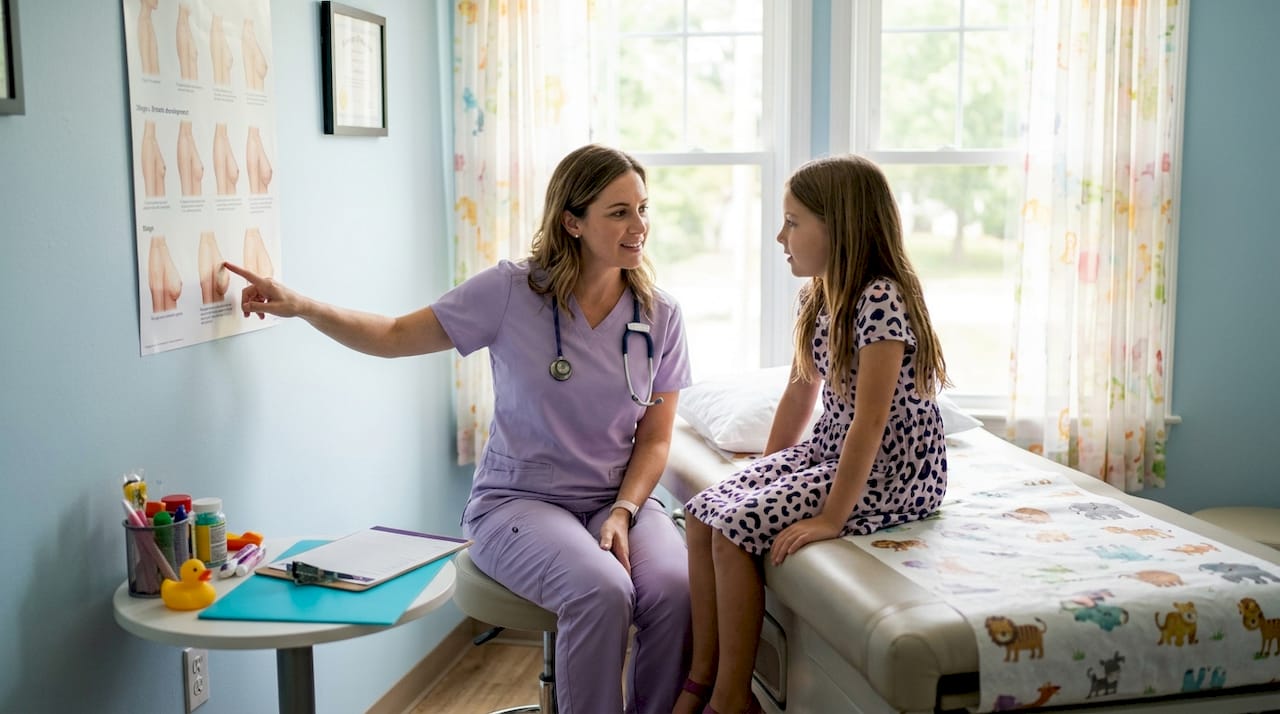
Emotional changes often show up alongside the physical ones. Moodiness, increased sensitivity, and a desire for more privacy are all normal. These shifts are not behavioral problems. They are hormonal. Naming that for your daughter reduces confusion and helps her feel understood rather than criticized.
Pro Tip: Keep a simple note on your phone tracking when you first notice discharge or breast development. This helps you time conversations and know when to have a period kit ready.
2. What signs indicate your daughter’s first period is approaching
Knowing what to look for helps you prepare without hovering. The signs your daughter’s first period is approaching follow a fairly predictable pattern, even if the exact timing varies.
Watch for these physical signals:
- Breast development beginning, even if just tenderness or small budding
- Pubic and underarm hair appearing or thickening
- Vaginal discharge that is clear or white and odorless
- A growth spurt that seems to plateau
- Mild cramping or lower back ache in the weeks before her first bleed
On the emotional side, look for increased irritability, tearfulness without an obvious cause, or a new desire for privacy around her body. These are not red flags. They are signals that her body is doing exactly what it should.
Medical advice is recommended if her period starts before age 8 or has not arrived by age 15. Outside of those thresholds, variation is completely normal. Some girls start at 10. Some start at 14. Neither is wrong.
3. How to build a period kit she will actually use
A well-stocked period kit is one of the most practical gifts you can give your daughter. It removes the panic of being unprepared and gives her a sense of control over something that can feel very out of control.
A practical period kit should include the following:
- Pads in light and regular absorbency
- A spare pair of underwear in a small zip bag
- pH-safe wipes for freshening up
- Opaque disposal bags for discreet waste management
- Optional period underwear as a backup layer
Here is a quick comparison of the most common first period product options:
| Product | Best for | Learning curve |
|---|---|---|
| Pads | First-time users, overnight | Very low |
| Period underwear | Backup protection, light days | Low |
| Tampons | Active girls, swimming | Moderate |
| Menstrual cups | Older teens, eco-conscious | High |
For most girls, pads are the right starting point. They are external, easy to use, and require no insertion. Period underwear works well as a backup layer or for very light days. Tampons and menstrual cups are better introduced once she is comfortable with her cycle and her body.
Involving your daughter in shopping for her own products shifts the experience from something done to her to something she has agency over. Teach her terms like “wings,” “maxi pad,” and “light flow” before she needs them. Familiarity with the vocabulary builds confidence. You can explore first period product options together to find what fits her lifestyle and comfort level.
Pro Tip: Pack her kit in a small, opaque pouch she can keep in her backpack at all times. A pencil case works perfectly. It looks like school supplies and draws zero attention.
Pads should be changed every four to six hours to maintain hygiene, even on light flow days. Teaching this schedule early prevents discomfort and builds healthy habits from the start.
4. How to talk about periods without making it awkward
Small, low-pressure conversations are more effective than one big formal talk. The “period talk” as a single event puts enormous pressure on both of you. Instead, weave the topic into everyday moments. A commercial for period products, a scene in a movie, or a question she asks about her body are all natural entry points.
Here is a simple approach that works:
- Start early and casually. Mention periods in passing when she is around 8 or 9, before the physical signs appear. Keep it brief and matter-of-fact.
- Follow her lead. If she asks a question, answer it directly and without drama. If she shuts down, do not push. Come back to it another day.
- Normalize your own experience. Sharing that you also had a first period, and that it felt strange at first, removes the sense that she is going through something unusual.
- Respond calmly to every question. Your reaction teaches her whether this is a safe topic. A calm, steady response tells her she can always come to you.
- Use non-verbal support too. Pre-agreed signals for help, like a specific emoji in a text or a product left on her pillow, allow you to support her even when words feel hard.
The goal is not a perfect conversation. The goal is a consistent message that her body is normal, her feelings are valid, and you are always in her corner. You can also share resources like how to tell mom about your first period to open the door from her side.
5. Planning for her period at school or away from home
Most girls get their first period somewhere other than home. School, a friend’s house, a sports practice. This is not a worst-case scenario. It is a normal one. The key is making sure she has a plan before it happens.
Work through these steps together:
- Identify a trusted adult at school. The school nurse is the obvious choice, but a favorite teacher or counselor works too. She should know who to go to before she needs to.
- Pack her school kit. A small pouch in her backpack with two pads, a spare pair of underwear, and discrete disposal bags covers almost every scenario.
- Practice the logistics. Walk her through how to use a pad, how to wrap and dispose of it, and how to ask for a bathroom pass without explaining why.
- Reassure her about irregular starts. Her first few periods may be light, spotty, or brownish. This is completely normal and not a sign that something is wrong.
Empowering girls with practical knowledge for moments when parents are absent is one of the most confidence-building things you can do. She does not need you to be there. She needs to know she can handle it herself.
Pro Tip: Do a dry run at home. Have her practice opening a pad, applying it, and wrapping a used one in a disposal bag. Doing it once without pressure means she will not be figuring it out for the first time in a school bathroom stall.
6. Common myths about first periods every parent should know
A lot of worry around first periods comes from misinformation. Clearing up the most common myths helps both of you approach this with calm instead of anxiety.
- “The blood should be red.” Not always. First periods are often irregular, spotty, and brownish in color. Dark brown or rust-colored blood is oxidized blood that moved slowly. It is normal, especially at the very start.
- “Periods should be regular right away.” Cycles take time to regulate. It is completely normal for the first year or two to have cycles that are longer, shorter, or skipped entirely.
- “Tampons are not for young girls.” Tampons are safe for girls of any age who are comfortable using them. There is no physical reason to wait.
- “Cramps mean something is wrong.” Mild cramping is a normal part of menstruation. A heating pad, gentle movement, and over-the-counter pain relief like ibuprofen manage most discomfort effectively.
- “If she is moody, it is just hormones.” Mood changes are real and deserve acknowledgment. Dismissing them as “just hormones” teaches her that her emotional experience does not matter.
Understanding why first periods are irregular removes a major source of unnecessary worry for both parents and daughters.
Key takeaways
Supporting your daughter through her first period requires early conversations, a practical kit, a clear school plan, and consistent emotional reassurance that normalizes every part of the experience.
| Point | Details |
|---|---|
| Start conversations early | Talk about periods before physical signs appear to reduce surprise and anxiety. |
| Build a period kit now | Include pads, spare underwear, wipes, and disposal bags before her first period arrives. |
| Plan for school scenarios | Identify a trusted adult and practice product use so she feels ready away from home. |
| Normalize irregularity | First periods vary in color, flow, and timing. This is expected, not a medical concern. |
| Use ongoing, low-pressure talks | Small, consistent conversations build more trust than one formal discussion. |
What I have learned about being the calm in the storm
Here is the honest truth: most parents feel underprepared for this conversation. Not because they do not care, but because nobody really taught them how to do it either. The pressure to say the right thing at the right moment can make you freeze up entirely.
What I have found, working with parents and girls through Themonthliesbox, is that the content of the conversation matters far less than the consistency of it. A daughter who hears her parent mention periods casually, without embarrassment or urgency, learns that this is a safe topic. That safety is what she will reach for when she actually needs help.
The parents who do this best are not the ones with the most medical knowledge. They are the ones who stay calm when their daughter is not, who keep a period kit stocked without making a big deal of it, and who follow up after the first period with a simple “How are you feeling?” rather than a debrief. Practical preparation and emotional steadiness work together. One without the other leaves a gap.
A self-care routine for pre-teen girls is also worth building early. When she has habits around her body that feel good, her period becomes part of a routine she manages rather than an event that manages her.
— The
A first period kit that does the heavy lifting for you
You do not have to figure out what to pack, what to include, or how to make it feel special rather than clinical. Themonthliesbox has already done that work.
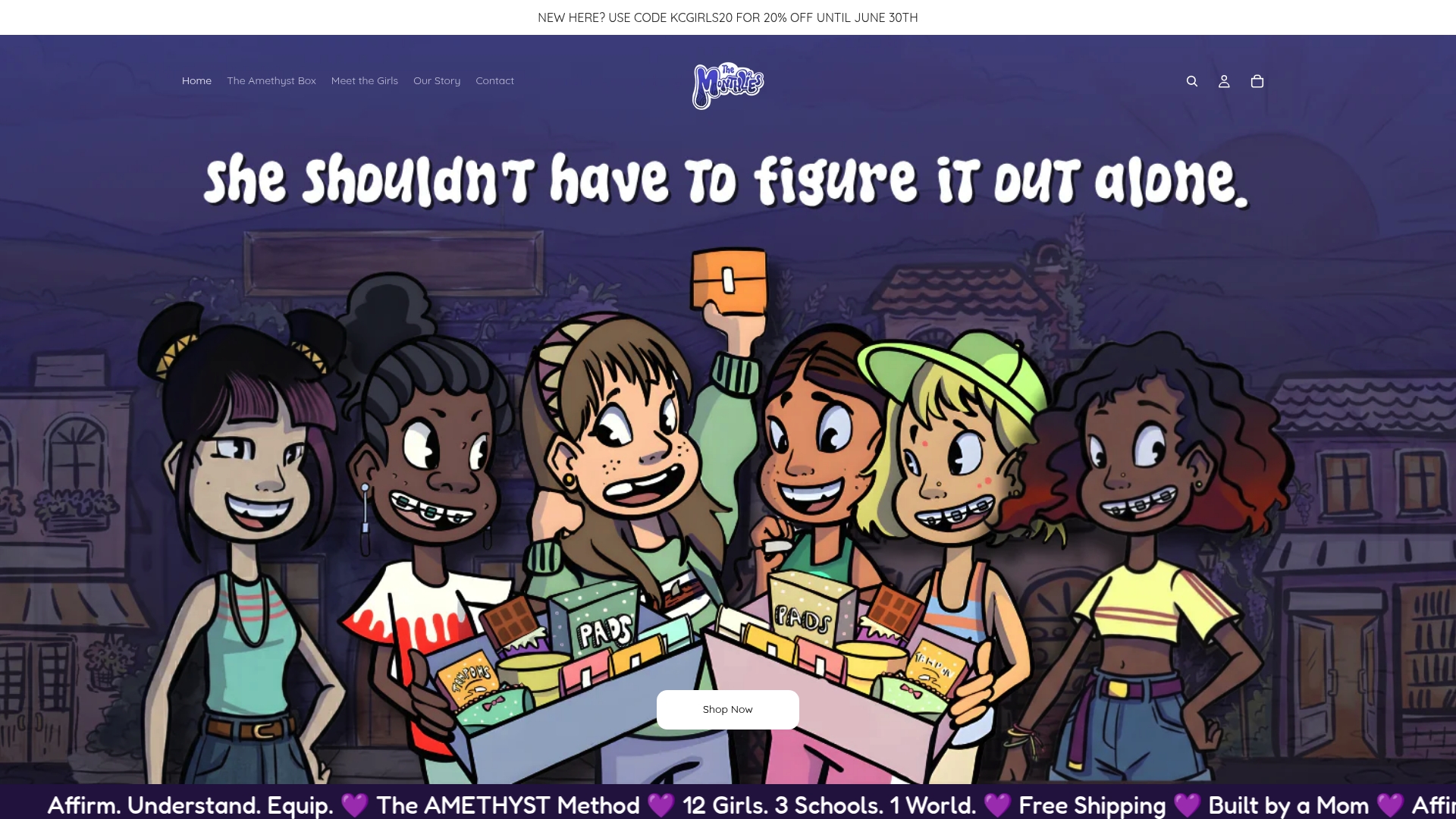
The Amethyst Box is a curated first period and self-care experience designed specifically for girls approaching menarche. It includes practical period supplies, affirmations, and educational materials built around the Amethyst Method: affirm, understand, and equip. It is not just a product. It is a message to your daughter that this moment is worth celebrating, not just surviving. For something portable and ready for school or travel, the On-The-Go Kit keeps her covered wherever she is.
FAQ
What age does a girl typically get her first period?
Most girls get their first period between ages 10 and 15, with 12 to 13 being the most common. A doctor should be consulted if it starts before age 8 or has not arrived by age 15.
How do I prepare my daughter for her first period?
Start with early, casual conversations about what to expect, then build a period kit with pads, spare underwear, and disposal bags. Practicing product use before her period arrives removes the stress of figuring it out in the moment.
What should I put in a first period kit?
A solid first period kit includes light and regular pads, a spare pair of underwear, pH-safe wipes, and opaque disposal bags. Period underwear makes a useful backup layer for added confidence.
Is it normal for a first period to be brown or irregular?
Yes. First periods are often brown, rust-colored, or very light. Cycles also take one to two years to become regular. Neither variation is a sign that something is medically wrong.
How do I talk to my daughter about her period without making it awkward?
Gradual, low-pressure conversations work better than one formal talk. Bring up the topic naturally in everyday moments, respond calmly to her questions, and let her set the pace.
0 comments