

A first period that skips months is defined as a normal part of early puberty, caused by the body’s hormonal system still learning to regulate itself. The medical term for this is oligomenorrhea when cycles are infrequent, or secondary amenorrhea when periods stop for three or more months after menarche. Understanding why first period skips months can save you a lot of unnecessary worry. The hypothalamic-pituitary-ovarian axis, known as the HPO axis, is the brain-to-ovary communication system that controls menstruation. In most girls, it takes 2–3 years after the first period for this system to work consistently.
Why does the first period skip months? The biology explained
The HPO axis is the root cause of most first menstrual cycle variations. This system involves the hypothalamus and pituitary gland in the brain sending hormonal signals to the ovaries. When those signals are inconsistent, the ovaries do not always release an egg. No egg release means no hormonal trigger for a period.

These cycles without ovulation are called anovulatory cycles. They are the main reason a teen’s period can appear one month and then disappear for two or three months afterward. The body is not broken. It is practicing. Think of it like a new driver learning to shift gears smoothly. The lurching and stalling are part of the process.
41–50% of teenage girls have irregular menstrual cycles during the 2–3 years after their first period. That statistic means skipped periods are the norm, not the exception, in early puberty. Cycles are considered irregular if they are shorter than 21 days or longer than 90 days.
The pattern of anovulatory cycles is not linear. A teen may have two normal cycles, then skip a month, then have another normal one. This stuttering pattern is how the hormonal axis fine-tunes itself over time. It is frustrating to track but completely expected.
Pro Tip: Keep a simple calendar noting when your daughter’s period starts and stops. Even rough notes help you see patterns over several months and give a doctor useful information if you ever need to consult one.
How lifestyle and environment affect menstrual cycle changes
The HPO axis is sensitive. Stress, sleep loss, and physical changes all send signals to the brain that can interrupt the hormonal chain reaction needed for a period. This is not a flaw in the system. It is the body prioritizing survival over reproduction during stressful times.
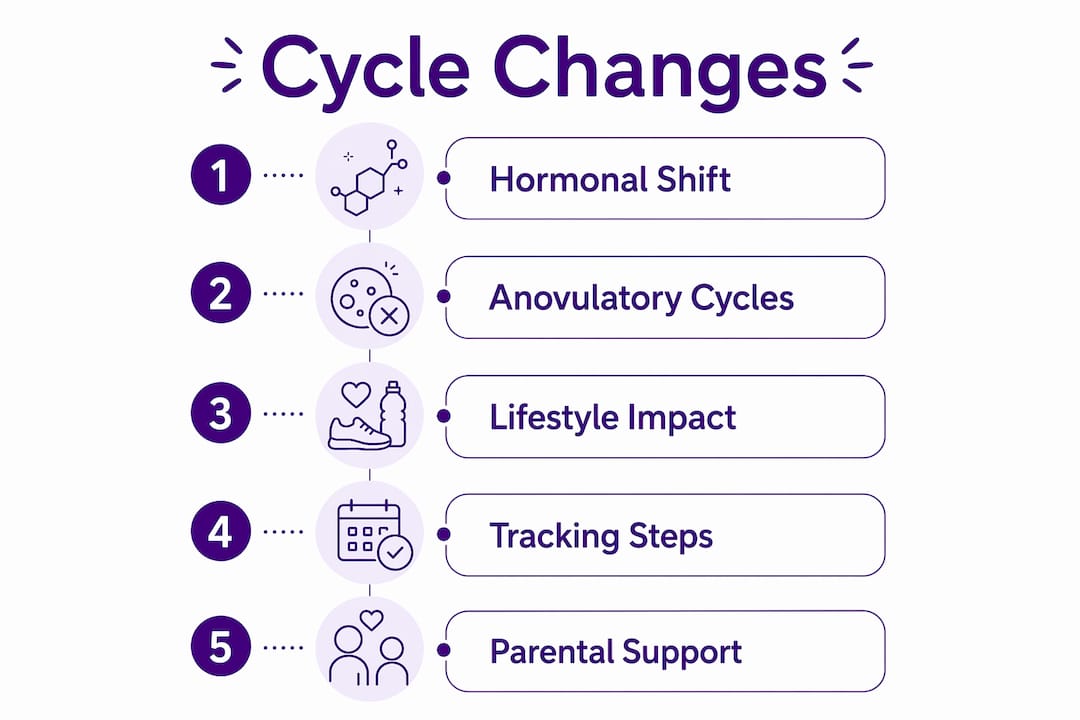
Lifestyle factors including intense physical stress, sleep deprivation, and rapid weight changes can disrupt hormonal signaling and cause missed cycles. When cortisol, the stress hormone, rises, it interferes with the brain’s signals to the ovaries. The good news is that cycles usually resume once the stressor is removed.
Common lifestyle triggers for skipped periods in teens include:
- Exam stress. A heavy testing season at school can raise cortisol enough to delay or skip a cycle entirely.
- Sports seasons. Intense athletic training, especially in sports like gymnastics, cross-country running, or dance, can suppress ovulation.
- Sleep disruption. Sleep deprivation and stress-related cortisol are directly linked to menstrual cycle variability in teens.
- Rapid weight changes. Gaining or losing weight quickly shifts hormone levels. Both directions can cause missed periods.
- Screen time and disrupted sleep schedules. Late-night screen use delays melatonin production, which affects the hormonal signals that regulate cycles.
- Family or social stress. Emotional upheaval at home or with friends counts as a stressor. The body does not distinguish between physical and emotional pressure.
The key distinction for parents is this: lifestyle-related skipped periods are temporary. Once the stressor resolves, the cycle typically returns. If skipped periods continue well after a stressful period ends, that is when to look more closely.
When should parents be concerned about skipped or irregular periods?
Most skipped periods in the first 2–3 years after menarche are normal. But some patterns signal that a healthcare provider should be involved. Knowing the difference protects your daughter without creating unnecessary anxiety.
Signs that warrant a medical conversation:
- No period for 3 or more months after the first year post-menarche. This is called secondary amenorrhea. Clinical guidelines recommend consulting a doctor at this threshold.
- Excess facial or body hair, unexplained weight gain, or persistent acne. These symptoms alongside irregular periods may suggest polycystic ovary syndrome, or PCOS, which is a hormonal disorder that benefits from early diagnosis.
- Very heavy bleeding. Heavy or very painful periods may indicate hormonal imbalance or conditions like endometriosis and should be evaluated if they occur frequently.
- Cycles shorter than 21 days or longer than 90 days consistently. Occasional outliers are normal. A consistent pattern outside this range is not.
- Worsening irregularity over time. Most teens see their cycles become more regular over 2–3 years. If irregularity is getting worse instead of better, that is a red flag worth investigating.
| Pattern | What it likely means |
|---|---|
| Skipped period in first 2 years | Normal HPO axis maturation |
| No period for 3+ months after year 1 | Consult a healthcare provider |
| Heavy bleeding with irregular cycles | Possible hormonal imbalance or endometriosis |
| Irregular cycles plus acne and facial hair | Possible PCOS, needs evaluation |
| Cycles becoming more regular over time | Normal developmental progress |
The 3-month rule is a threshold for seeking advice, not an automatic diagnosis. Many teens naturally skip periods as part of anovulatory cycle maturation. Patience and observation are your first tools. A doctor is your next step when the pattern crosses those specific lines.
How can parents track and support their teen through irregular cycles?
Tracking is the most practical thing you can do right now. A written record or a period-tracking app turns vague worry into concrete information. It also makes any future doctor’s visit far more productive.
Using period-tracking apps or calendars helps parents and teens establish a personalized baseline to distinguish normal irregularities from potential health concerns. Logging stressors alongside period dates adds essential context. You can learn more about setting this up with this first period tracking guide from Themonthliesbox.
Practical steps to support your daughter:
- Track period start and end dates every cycle, even if cycles are irregular.
- Note lifestyle events alongside period dates: exam weeks, sports seasons, sleep changes, and emotional stressors.
- Support consistent sleep. Aim for 8–10 hours per night for teens. Consistent sleep schedules stabilize the hormonal signals that regulate cycles.
- Encourage balanced nutrition. Avoid extreme diets. Adequate caloric intake supports healthy hormone production.
- Keep communication open. Ask how she is feeling, not just whether her period came. Emotional safety makes it easier for her to share changes with you.
Pro Tip: Tracking stressors alongside period dates provides essential context. When you can see that a skipped month lined up with finals week or a big life change, it stops feeling alarming and starts making sense.
Themonthliesbox also offers a parent’s guide to emotional responses during menstrual changes, which is worth reading alongside any tracking practice you set up.
Key Takeaways
Skipped periods in the first 2–3 years after menarche are a normal part of HPO axis maturation, not a sign of a disorder, and most irregularities resolve on their own with time and healthy habits.
| Point | Details |
|---|---|
| HPO axis maturation | The brain-to-ovary hormonal system takes 2–3 years to regulate, causing skipped cycles. |
| Anovulatory cycles are normal | No egg release means no period trigger; this is expected and temporary in early puberty. |
| Lifestyle triggers are real | Stress, poor sleep, and weight changes can delay cycles but usually resolve when the stressor does. |
| Know the red flags | Seek medical advice if periods stop for 3+ months or if irregular cycles come with acne, facial hair, or heavy bleeding. |
| Tracking builds clarity | Logging period dates and lifestyle events helps distinguish normal variation from patterns worth investigating. |
What I’ve learned about first period irregularity after years of supporting families
Parents often come to us at Themonthliesbox convinced something is wrong with their daughter because her period showed up once and then vanished for two months. The relief on their faces when they learn this is textbook normal is something I never get tired of seeing.
Here is what I genuinely believe after working with so many families: the anxiety parents feel about skipped periods is often bigger than the problem itself. The body is doing exactly what it is supposed to do. It is learning. The HPO axis is a complex system, and expecting it to work perfectly from day one is like expecting a new instrument player to perform a concert after one lesson.
What I always tell parents is this: your job right now is to observe, not to fix. Write things down. Notice patterns. Create an environment where your daughter feels comfortable telling you when something feels off. That open communication is worth more than any single medical appointment.
The parents who struggle most are the ones who either panic too early or wait too long. The 3-month rule exists for a reason. Use it as your guide, not your source of dread. And in the meantime, focus on the things you can control: sleep, nutrition, stress reduction, and connection.
— The
Tools and support for your daughter’s first period experience
Knowing why periods skip months is one part of the picture. Having the right supplies and support ready is the other part.
Themonthliesbox created the Amethyst Box specifically for girls approaching or experiencing their first period. It combines practical period supplies with affirmations and educational materials, so your daughter feels prepared and confident, not caught off guard. For families who want a fuller self-care experience, the Monthlies Deluxe Box adds premium comfort items designed to make the early period years feel supported rather than stressful. Both options reflect the Amethyst Method: affirm, understand, and equip.
FAQ
Why did my daughter’s period stop after the first one?
A first period that stops and does not return for weeks or months is normal. The HPO axis is still maturing, and anovulatory cycles are common in the first 2–3 years after menarche.
How long can a teen go without a period before it’s a concern?
The clinical guideline is three months. If your daughter has no period for three or more months after her first year post-menarche, consult a healthcare provider to rule out secondary amenorrhea or hormonal conditions.
Can stress really cause a teen to skip her period?
Yes. Cortisol elevation from stress interferes with the brain’s hormonal signals to the ovaries. Exam pressure, family changes, and intense athletic training are all common triggers for a missed cycle.
What is the difference between irregular periods and a skipped period?
A skipped period means one cycle does not occur. Irregular periods means the cycle length varies significantly, shorter than 21 days or longer than 90 days, over multiple cycles. Both are common in early puberty and often resolve without treatment.
Should I take my daughter to a doctor if her periods are irregular?
Not immediately. Most early irregularities resolve on their own. Seek medical advice if periods are absent for 3+ months, if cycles are getting more irregular over time, or if symptoms like excess facial hair or heavy bleeding appear alongside the irregularity.
0 comments