

Getting your first period can feel like a lot. You might feel confused, nervous, or completely caught off guard. That is 100% normal. Knowing what to do your first period makes all the difference between panic and confidence. This guide walks you through everything: what signs to watch for before it starts, how to handle it when it arrives, which products work best for beginners, and how to know what is normal. You are not alone in this. So many girls have been exactly where you are, and you are going to be just fine.
Table of Contents
- Key Takeaways
- What to do when your first period starts: Signs and preparation
- Step-by-step: How to manage your first period
- Period product options for beginners
- What is normal and when to get help
- My honest take on preparation and confidence
- You deserve to feel ready and supported
- FAQ
Key Takeaways
| Point | Details |
|---|---|
| Watch for early signs | Breast development and vaginal discharge can signal your period is coming months before it starts. |
| Build a period kit early | Keep pads, spare underwear, and a small bag ready so you are never caught off guard. |
| Know your product options | Pads are the easiest starting point, but period underwear and liners are great backup choices. |
| Irregular cycles are normal | First periods are often unpredictable, so tracking your cycle helps you spot patterns over time. |
| Ask for help when you need it | Talking to a trusted adult is always okay, and doctor visits between ages 13 and 15 are recommended. |
What to do when your first period starts: Signs and preparation
Your body gives you clues before your period ever shows up. Learning to read those clues is one of the best first period tips you can give yourself. Menarche typically happens between ages 9 and 15, usually two to three years after your breasts start developing. That gives you a real window to get ready.
Here are the most common early signs to look out for:
- Breast development starting to feel tender or growing noticeably
- Pubic and underarm hair beginning to grow
- Vaginal discharge that is clear or white, which often begins six to twelve months before your first period
- Mood changes like feeling more emotional or irritable than usual
- Crampy feelings low in your belly even before any bleeding starts
Starting conversations gradually with a trusted adult, rather than waiting until the day your period arrives, makes the whole experience feel much calmer. You do not have to figure this out by yourself.
Building a small emergency kit is one of the smartest things you can do. Your kit should include a few pads, an extra pair of underwear, spare pants if possible, and an opaque bag so everything stays discreet. An emergency kit at school significantly reduces anxiety about accidents happening in public. Keep one in your backpack and one at home so you are covered wherever you are.
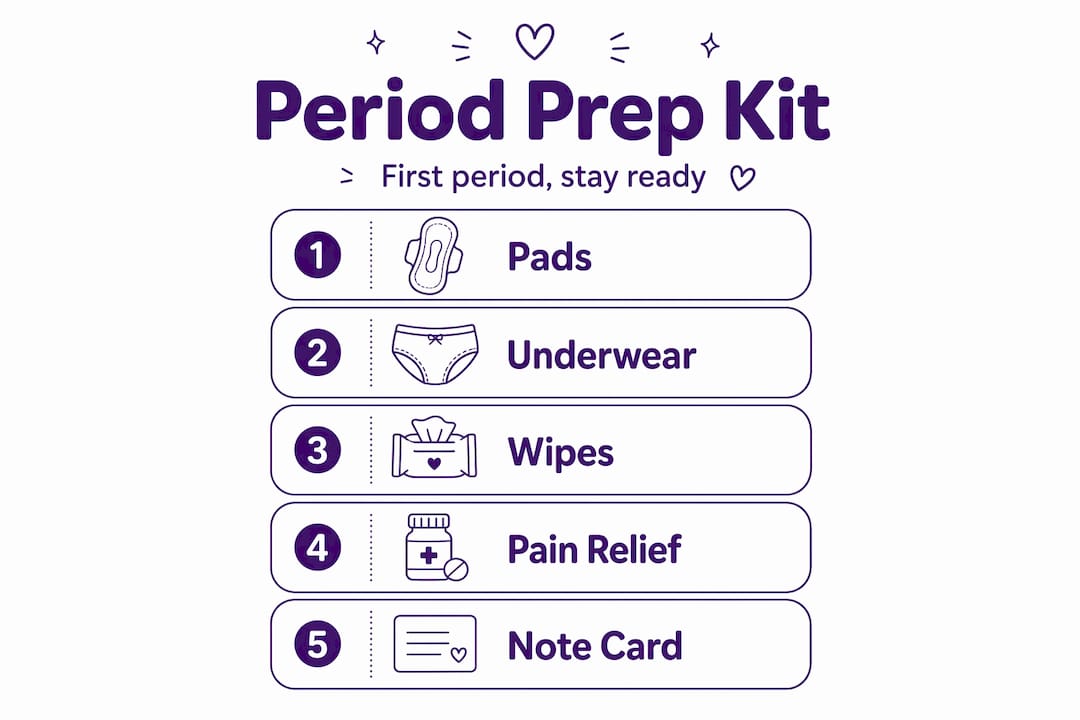
Pro Tip: Ask a parent, older sibling, or trusted adult to help you put your kit together. Check out this guide on talking to your mom if you are not sure how to start that conversation.
Step-by-step: How to manage your first period
When your period actually arrives, having a simple plan helps. Here is exactly what to do, one step at a time.
- Stay calm. A little blood on your underwear is not an emergency. Take a slow breath. You are okay.
- Check what you have available. Look in your emergency kit, your bathroom cabinet, or ask a trusted adult or school nurse for a pad.
- Place the pad correctly. Peel off the adhesive backing and press the pad firmly into the center of your underwear, sticky side down. Make sure it sits flat.
- Change your pad every 3 to 4 hours. Even if the flow seems light, regular changes keep you feeling fresh and prevent odor.
- Manage any discomfort. Self-care for cramps includes drinking plenty of water, eating balanced meals, using a heating pad on your belly, and doing light movement like walking or stretching.
- Keep doing your normal activities. You do not have to sit out of gym class or skip plans with friends. Many period myths suggest girls should stop all activity, but staying gently active can actually ease cramps.
- Tell a trusted adult. Whether that is your mom, dad, aunt, or school counselor, letting someone know gives you a support system. Dads can absolutely help too. Support from multiple trusted adults helps girls feel less alone.
- Track the experience. Write down the date it started, how heavy the flow felt, and any symptoms you noticed. This information becomes really useful over time.
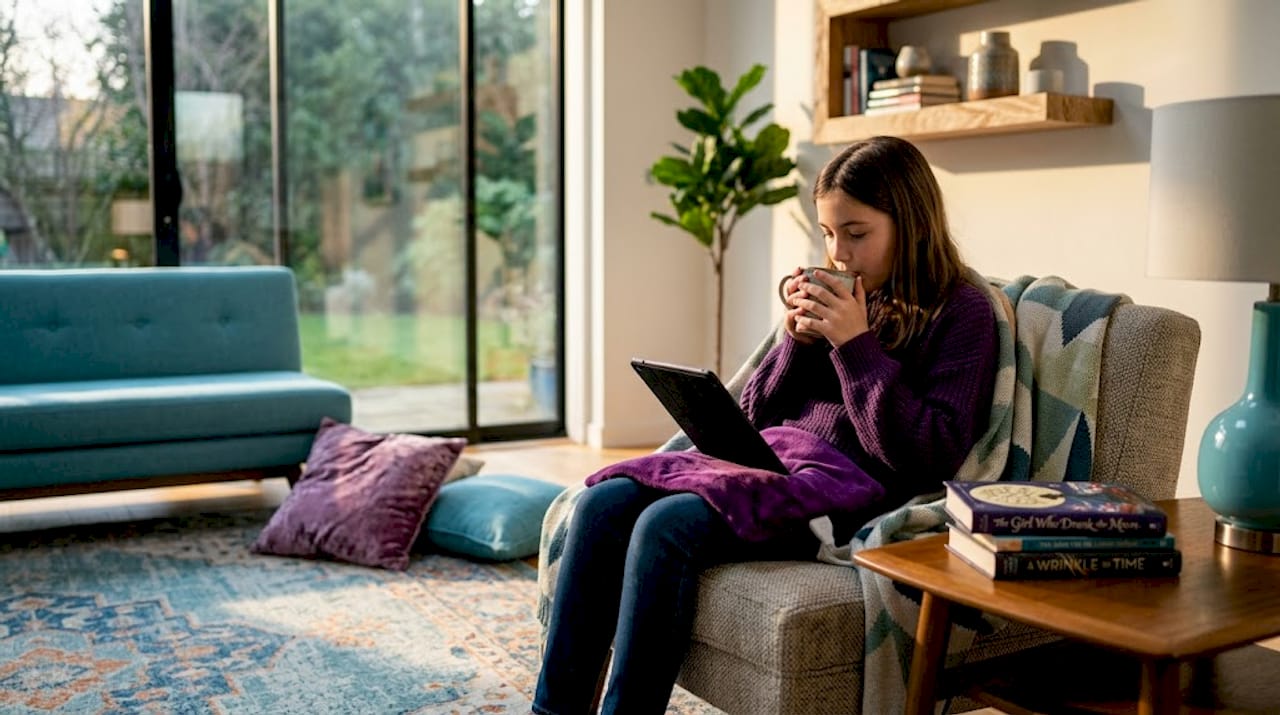
Pro Tip: A period self-care routine does not have to be complicated. Warm tea, a cozy blanket, a heating pad, and your favorite show can turn a tough first day into something manageable.
The most important thing to remember? Cramps and mood swings are very common during first periods and usually get easier as your body settles into its cycle. You are not overreacting. Your feelings are valid.
Period product options for beginners
Knowing your choices is a big part of dealing with your first period confidently. You do not have to use whatever someone hands you. Here is a breakdown of the most common period products and how they compare for someone just starting out.
| Product | How it works | Best for beginners? | Key consideration |
|---|---|---|---|
| Pads | Sticks to underwear to absorb flow | Yes, easiest to start with | Change every 3 to 4 hours |
| Panty liners | Thinner version of pads for light days | Yes, great as backup | Not enough for heavier flow |
| Tampons | Inserted internally to absorb flow | Not recommended first | Requires practice and comfort |
| Period underwear | Absorbent underwear that replaces pads | Yes, very comfortable | Needs washing after use |
| Menstrual cup | Silicone cup inserted internally | Not recommended first | Steep learning curve |
For most beginners, pads are the best place to start. They are external, easy to see, and simple to change. Once you feel more comfortable with your body and your cycle, you can explore other options at your own pace. There is no rush.
A few things to keep in mind when choosing and storing your period products:
- Always check the absorbency level on the packaging. “Regular” is a good starting point for most first periods, which tend to be lighter.
- Store your supplies somewhere private but easy to access, like a small pouch in your bag or a dedicated drawer at home.
- Wrap used pads in their wrapper or toilet paper before throwing them in the trash. Never flush pads or tampons down the toilet.
- Period underwear is a great backup option to wear alongside a pad when you are worried about leaks.
Pro Tip: The Monthlies On-The-Go Kit is designed to carry your period essentials discreetly, so you always have what you need whether you are at school, sports practice, or a friend’s house.
What is normal and when to get help
Here is something that surprises a lot of girls. Your first few periods probably will not follow a neat schedule. That is completely okay and expected.
Normal teen cycles last anywhere from 21 to 35 days, and bleeding typically lasts 3 to 7 days. First periods often start light and irregular, and your body may take a year or two to settle into a consistent pattern. That is your body learning something new. Give it grace.
Common symptoms that are normal
- Mild to moderate cramping low in your belly or lower back
- Feeling tired or low-energy, especially on the first day or two
- Mood changes like feeling teary, irritable, or more sensitive
- Light spotting or very light flow for your first period or two
- Breast tenderness or bloating in the days before your period starts
Signs that you should talk to a doctor
Some things are worth checking out with a healthcare provider:
- Soaking through a pad every hour for two or more hours in a row
- Periods lasting longer than 7 days consistently
- Severe pain that does not ease with rest, heat, or over-the-counter pain relief
- No period by age 15 even if other puberty signs have started
Gynecological visits are recommended between ages 13 and 15. These appointments are mostly about education and asking questions, not uncomfortable exams. Think of it as a conversation with someone who has answered every question before and is not going to judge you.
Tracking your cycle is one of the most empowering habits you can build early. Even a simple notes app on your phone works. Write down when your period starts, when it ends, and how you felt. Over time, those notes will show you your own personal pattern.
My honest take on preparation and confidence
What I have seen again and again is that the girls who feel the most confident during their first period are not the ones who knew everything. They are the ones who knew they were supported.
I have met so many young girls who were terrified because nobody had talked to them about their body before their period started. The fear was not about blood. It was about being alone in it. That is the part that breaks my heart. And it does not have to be that way.
One of the biggest misconceptions I have heard is the idea that you need to wait until your period actually starts to have the conversation. That waiting actually makes things harder. The earlier those conversations start, the more normal menstruation feels. When it arrives, it becomes a milestone instead of a shock.
What really changes the experience is having both the knowledge and the supplies ready before they are needed. Reframing menstruation as a healthy, normal milestone rather than something scary shifts everything. Every girl’s experience is different. Some periods are light; some come with more symptoms. But every single experience is manageable when you feel prepared and supported. You are more capable than you know.
— Themonthliesbox
You deserve to feel ready and supported
Feeling prepared is not just about having the right supplies. It is about feeling like you have a community behind you.
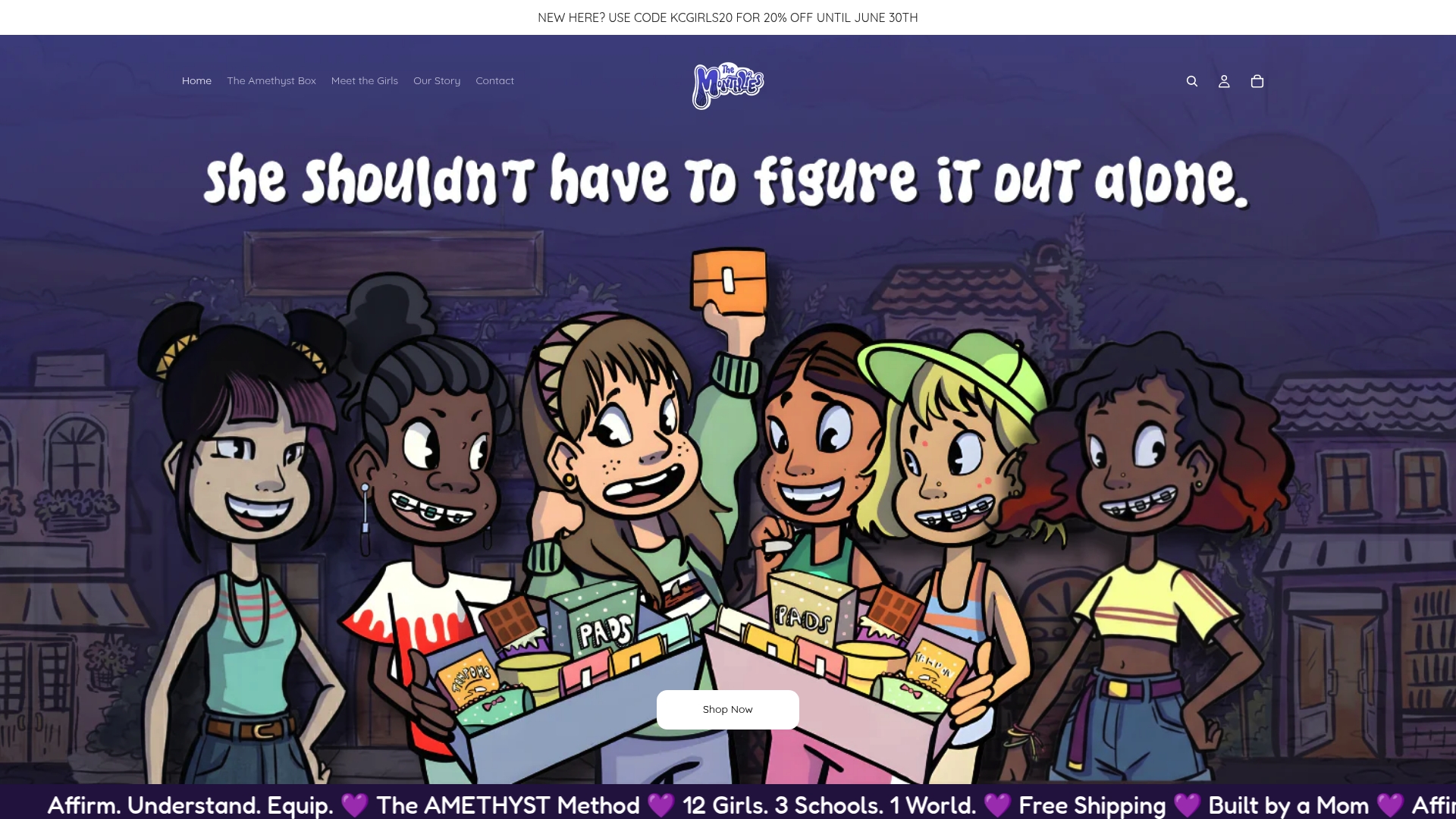
At Themonthliesbox, we built the Amethyst Box specifically for this moment. It is a curated first period experience that includes practical period products, affirming educational materials, and confidence-building tools designed around our Amethyst Method: Affirm, Understand, and Equip. It is the kind of box that says, “We thought of everything so you do not have to.” If you want something you can carry everywhere, the On-The-Go Kit fits neatly in any backpack and keeps your essentials ready for school, activities, and travel. Explore everything at Themonthliesbox and find what feels right for you. You deserve to feel ready.
FAQ
What should I do if my first period starts at school?
Go to the school nurse or ask a trusted teacher for a pad. Keep a small emergency kit in your backpack with a pad, spare underwear, and an opaque bag so you are always prepared.
How long will my first period last?
Most first periods last between 3 and 7 days, though they may be shorter or lighter than later cycles. It is completely normal for early cycles to be irregular as your body adjusts.
What are the best period essentials for beginners?
Pads are the easiest starting point for most girls new to menstruation. Panty liners and period underwear are also great beginner-friendly options to keep as backup.
How do I know if my cramps are too painful?
Mild cramps are normal and can be managed with rest, hydration, and a heating pad. If pain is severe enough to stop you from daily activities or does not improve with basic care, talk to a doctor or trusted adult.
When should I see a doctor about my period?
Initial gynecological visits are recommended between ages 13 and 15 for general education and puberty-related questions. See a doctor sooner if you have very heavy bleeding, severe pain, or no period by age 15.
0 comments