

Your first period can feel like a mystery. One day nothing, the next day something unexpected in your underwear. Knowing what to expect first period day makes all the difference between panic and calm. This guide covers the signs your body sends before it arrives, what actually happens on day one, how to prepare for period surprises, and how to manage any discomfort you feel. Whether you are a girl getting ready or a parent wanting to support her, you are in the right place.
Table of Contents
- Key takeaways
- Signs your first period is starting
- What happens on the first day of your period
- How to prepare for your first period
- Managing discomfort on your first period day
- Understanding irregular periods in your first year
- My honest take on supporting girls through this
- Get ready with the right support
- FAQ
Key takeaways
| Point | Details |
|---|---|
| Signs come weeks before | Breast development, discharge, and mood changes signal your period is approaching months in advance. |
| First day bleeding varies | Spotting can be brown, pink, or red. All of these are completely normal on day one. |
| A period kit builds confidence | Keeping pads and spare underwear in your bag means you are ready wherever you are. |
| Cramps are manageable | Heat therapy and gentle movement ease discomfort without needing to stay in bed all day. |
| Irregular cycles are expected | Your menstrual cycle first month and beyond may be unpredictable. That is normal for the first year. |
Signs your first period is starting
Your body does not just surprise you out of nowhere. It actually gives you a lot of clues in the months and even years before your period arrives. Learning to read those signs is one of the best first day period tips anyone can give you.
Here is what to watch for:
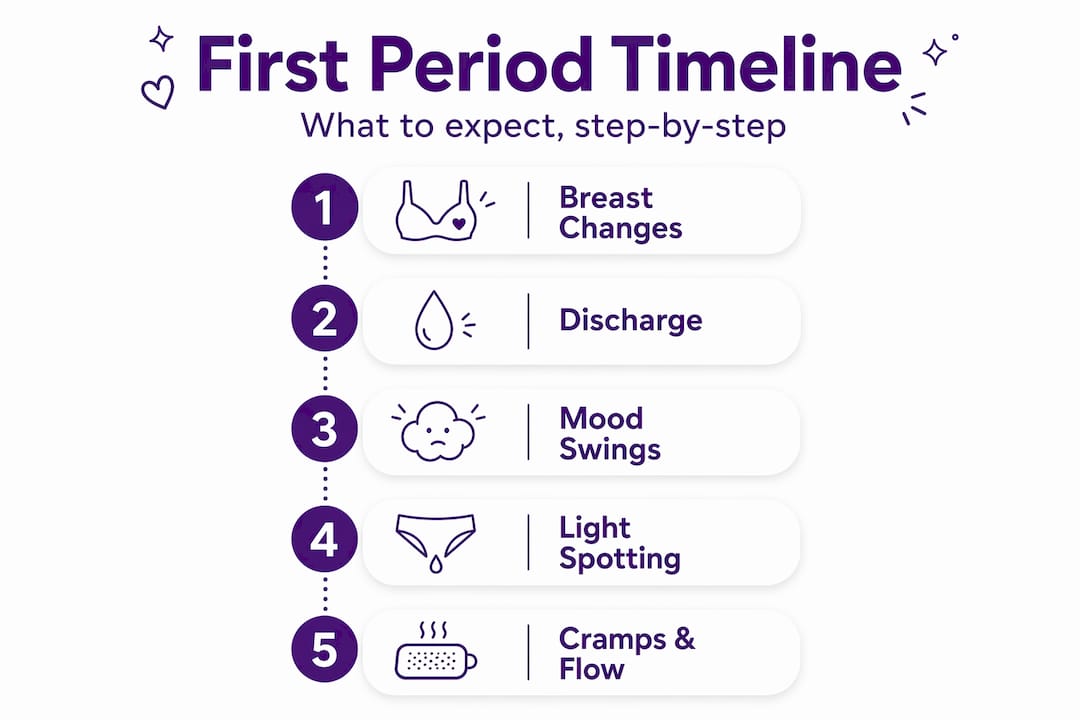
- Breast development. This is usually the first sign. Breast development typically begins two to three years before your first period. If you started developing breast buds a couple of years ago, your period may be closer than you think.
- Pubic and underarm hair. Hair growth in these areas usually follows breast development. It is a sign that your hormones are actively shifting.
- Vaginal discharge. This one surprises a lot of girls. A clear or milky discharge typically begins six to twelve months before the first period. It is not a sign of infection. It is your body preparing.
- Mood swings. Feeling more emotional than usual, or noticing your feelings shift quickly, is a hormonal signal. It does not mean something is wrong with you.
- Growth spurts. A noticeable increase in height or changes in your body shape often happen in the year leading up to menarche.
Pro Tip: Keep a simple note on your phone tracking when you first noticed discharge. That date can help you and your doctor estimate when your period might arrive.
Most girls experience their first period around age 12, though anywhere between 9 and 15 is completely within the normal range. If you are in that window and noticing several of the signs above, your body is right on track.
What happens on the first day of your period
This is the part most girls are most curious and most nervous about. The honest answer is that the first day looks different for everyone. That is not a cop-out. It is genuinely true, and knowing that ahead of time removes a lot of the fear.
What you might notice on day one:
- Light spotting. Many girls do not see bright red blood at first. The first day bleeding often appears as brown or pinkish spotting. This is old blood moving slowly, and it is completely normal.
- Mild to moderate cramps. You might feel a dull ache or pressure in your lower belly. Some girls feel it in their lower back too.
- Fatigue. Feeling more tired than usual on day one is common. Your body is doing real work.
- Mood changes. You might feel irritable, teary, or just a little off. Hormonal shifts drive this, and it usually eases up after the first day or two.
Pro Tip: Count your first period day as the day you notice any spotting or color change, not just when you see bright red blood. Tracking from spotting gives you more accurate cycle data for future reference and any doctor conversations.
One thing that surprises many girls is the fear of visible leaks. The truth is that modern absorbent products and normal flow mechanics make visible leaks far less likely than most people imagine. Knowing this genuinely helps.
Your early cycles during the menstrual cycle first month and beyond will likely be irregular. Cycle length can range from 21 to 45 days in the beginning. Do not stress if your second period does not arrive exactly a month later.
How to prepare for your first period
Preparation is where anxiety turns into confidence. You do not need a lot. You need the right things, in the right place, before the moment arrives.
Here is a simple way to get ready:
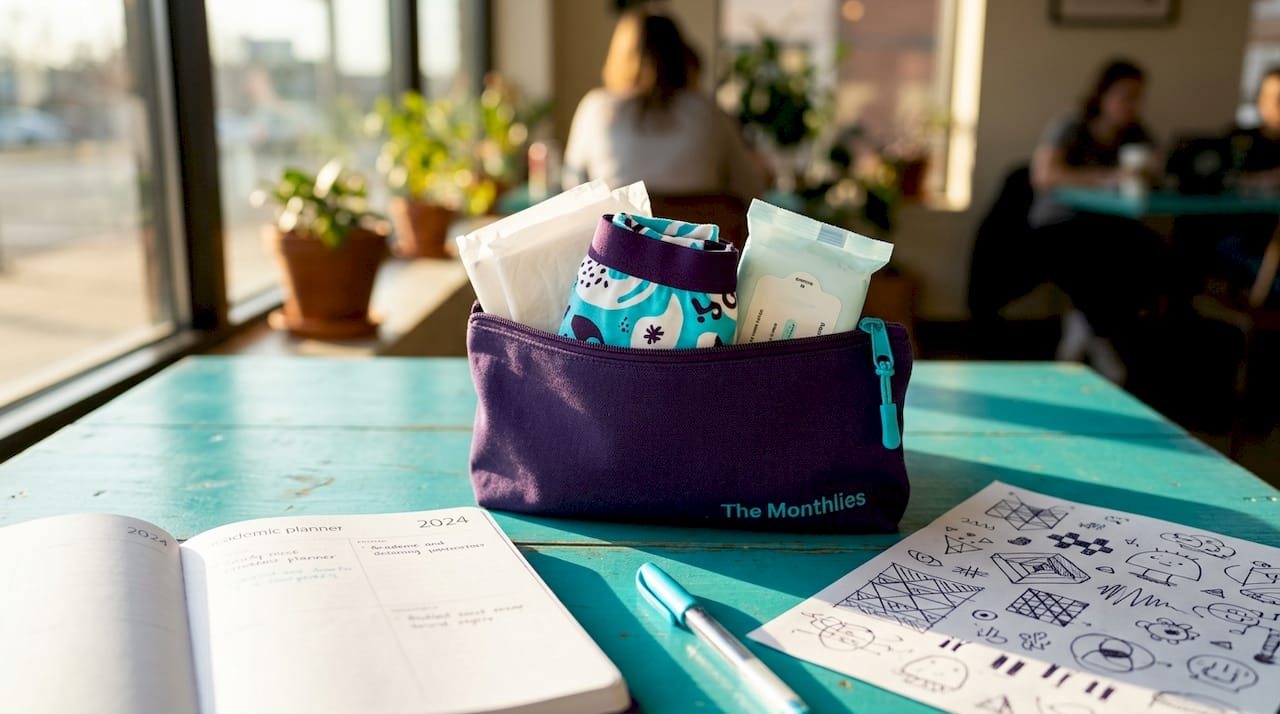
- Build a period kit. Pack a small pouch with two or three pads, a spare pair of underwear, and some fragrance-free wipes. Keep it in your school bag or locker. Access to clean supplies removes the stress of being caught unprepared and gives you real peace of mind.
- Choose comfortable clothing. On days when you think your period might be close, wear cotton underwear and looser-fitting bottoms. Dark colors are a practical choice if you are feeling uncertain.
- Learn basic hygiene. Change your pad every four to six hours, even on lighter days. This prevents irritation and keeps you feeling fresh.
- Talk to a trusted adult. Whether that is a parent, an aunt, a school nurse, or another trusted person, having someone in your corner matters. You do not have to figure this out alone.
- Normalize the feelings. It is okay to feel nervous, curious, or even a little excited. All of those feelings make sense. Periods are a normal, healthy part of growing up.
Pro Tip: A stealth kit with pads and spare underwear tucked into a pencil case or small bag gives you privacy and confidence at school without drawing attention.
Mental preparation matters just as much as physical preparation. Knowing what happens on period day before it happens means you can respond instead of react.
Managing discomfort on your first period day
Cramps are real. So is the fatigue and the moodiness. But you have more tools than you might think.
- Try heat therapy first. A heating pad on your lower belly or a warm bath can ease cramp pain quickly. This is one of the most effective and gentle options available.
- Move gently. It feels counterintuitive, but light daily movement actually helps reduce cramps by improving circulation and releasing endorphins. A short walk or some light stretching can shift how you feel.
- Use pain relief if needed. NSAIDs like ibuprofen are considered a first-line treatment for cramps. Always follow the dosage on the label and check with a parent or doctor before taking any medication.
- Drink warm fluids. Warm water, herbal tea, or broth can ease cramping and support your mood. Warm fluids and nourishing foods play a real role in how you feel on day one.
- Practice slow breathing. When cramps spike, slow and steady breathing activates your body’s calm response. Breathe in for four counts, out for six. It genuinely works.
Pro Tip: If you know your period is coming, start taking ibuprofen at the first sign of discomfort rather than waiting until pain peaks. Getting ahead of cramps is much easier than catching up to them.
Periods should not stop you from going to school or doing the things you love. If your symptoms are regularly that severe, that is worth a conversation with a doctor.
Understanding irregular periods in your first year
Here is something that does not get said enough. Irregular periods during your first year are not a problem. They are the rule, not the exception.
| What is normal | What to watch for |
|---|---|
| Cycles ranging from 21 to 45 days | No period at all by age 15 |
| Light or heavy flow that varies month to month | Bleeding so heavy it soaks through a pad in under an hour |
| Spotting between periods | Severe pain that stops you from functioning |
| Skipping a month occasionally | Periods that are consistently extremely painful |
Your hormones are still finding their rhythm. Full cycle regulation can take up to several years after menarche. That is a long time, and it is completely okay.
What helps most during this phase is tracking. Write down the date your period starts each month, how heavy the flow feels, and any symptoms you notice. That record becomes useful if you ever need to speak with a healthcare provider. Severe pain or heavy bleeding that disrupts daily life, or no period by age 15, are signs worth discussing with a doctor. Most of the time, though, what you are experiencing is simply your body learning its own pace.
My honest take on supporting girls through this
I have seen firsthand how much a little preparation changes everything. The girls who feel most confident on their first period day are not the ones who had the most supplies. They are the ones who had the most information.
What surprises parents most is how much their daughter already knows, and how much she still needs to hear from them specifically. A five-minute conversation at home lands differently than anything she reads online. It tells her that her body is not something to be embarrassed about.
What surprises girls most is that it is often less dramatic than they expected. The fear is usually bigger than the reality. Brown spotting on a Tuesday afternoon, not a movie-style moment.
My honest advice: start the conversation before the signs appear. Do not wait for the discharge or the mood swings to prompt it. Early, honest talks build the kind of confidence that carries girls through not just their first period, but the whole first year. This is something to grow through, not just get through. And no girl should have to figure it out alone.
— Themonthliesbox
Get ready with the right support
If you want your daughter to feel truly prepared, not just informed, the Amethyst Box from Themonthliesbox was built exactly for this moment. It brings together practical period supplies, affirmations, and educational materials designed to help girls feel confident, supported, and ready.
For on-the-go readiness, the Monthlies On-The-Go Kit is a compact option perfect for school bags and sleepovers. Both are thoughtfully curated so that the first period day feels like the beginning of something good, not something scary. Because it is. Welcome to LavenHaven. We have been waiting for you.
FAQ
What does the first day of your period feel like?
Most girls notice light spotting that is brown or pink rather than bright red, along with mild cramps and some fatigue. The experience varies widely, and many girls find it less intense than they expected.
What are the signs your period is starting?
Common signs include lower belly cramps, mood changes, light spotting, and a feeling of heaviness or pressure in the pelvic area. These typically appear within the first few hours of the first day.
How do you prepare for your first period?
Keep a small kit with pads, spare underwear, and wipes in your school bag. Talk to a trusted adult ahead of time and track any discharge or body changes you notice in the months before.
Is it normal for your first period to be irregular?
Yes. Cycle length during the menstrual cycle first month and throughout the first year can range from 21 to 45 days, and flow can vary significantly. It takes time for hormones to settle into a regular pattern.
When should you see a doctor about your period?
See a doctor if you have not started your period by age 15, if bleeding is extremely heavy, or if cramps are severe enough to prevent normal daily activities. These situations are worth a medical conversation.
0 comments