

When your daughter starts her period, your job is simple: stay calm, keep the language normal, and have a small kit ready before she needs it. Ask “What would be most helpful right now?” instead of guessing. Start the conversation long before the first period arrives, and treat it as an ongoing chat, not a one-time speech. If bleeding is unusually heavy or pain disrupts her day, call her doctor.
TL;DR:
- Having supplies ready and practicing vocabulary beforehand helps boys approach the topic of periods smoothly and without awkwardness.
- Starting conversations early through natural moments reduces shame and ensures girls feel comfortable asking questions when their period begins.
- A small, discreet period kit with basic products and a supportive note increases confidence and minimizes anxiety for girls on the go.
- Signs such as heavy bleeding, severe pain, or absence of periods by age 15 should prompt a consultation with a healthcare professional.
- Fathers can positively influence the experience by staying calm, normalizing the process, and using a gentle, ongoing dialogue rather than a one-time talk.
Table of Contents
- What Is a Period, and When Does It Typically Start?
- When Should Dads Start the Period Talk?
- What Should Dads Actually Say to Start the Conversation?
- How Do You Build a Period Kit for School and On the Go?
- How Should Dads Handle the Emotional Side of This?
- When Should a Period Become a Medical Conversation?
- Why Father Involvement Changes This Conversation
- A Practical Way to Start Preparing Together
- Sources
What Is a Period, and When Does It Typically Start?
A period happens when the lining of the uterus sheds because a pregnancy did not occur that cycle. It is a normal, monthly biological process, not an illness or an emergency. Explaining it this plainly, without euphemisms, helps your daughter trust that you are giving her real information instead of dancing around the subject.
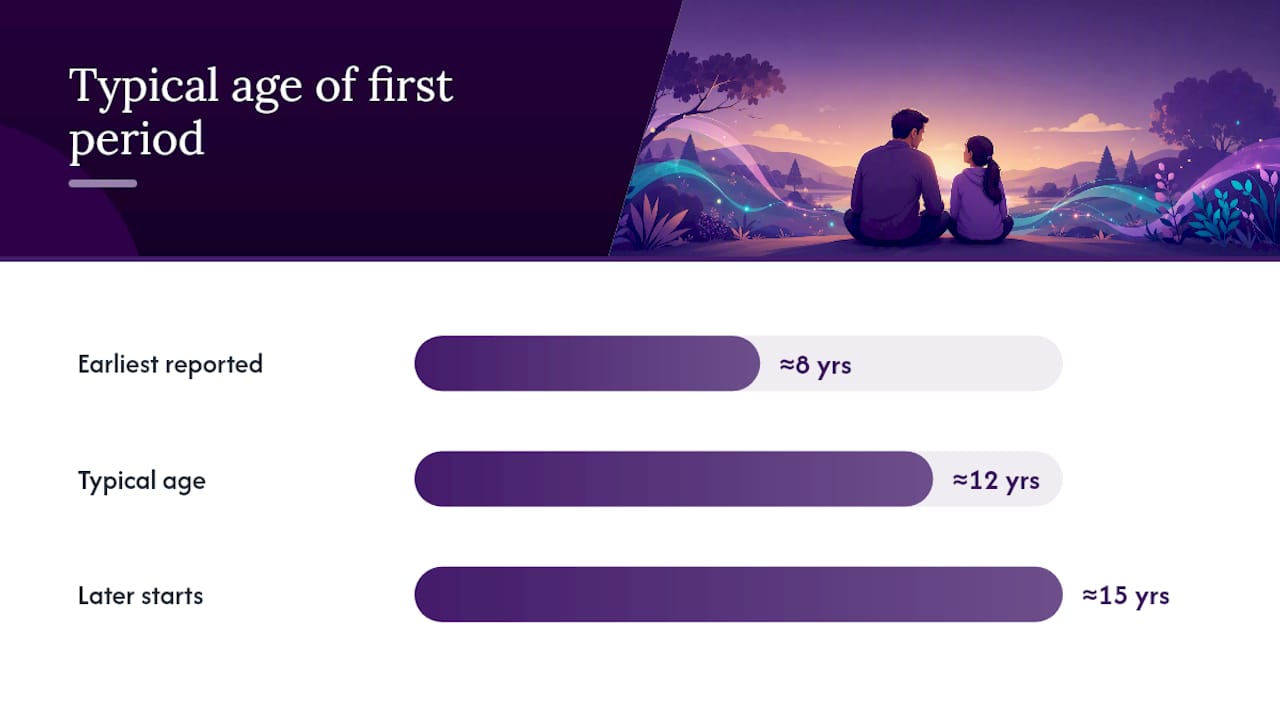
Most girls get their first period around age 12, though some start as early as 8 and others closer to 15, according to NHS guidance on starting periods. Bleeding typically lasts several days, and the first few cycles are often irregular. That inconsistency is expected, not a red flag.
Common early symptoms include cramping, bloating, and mood swings in the days before bleeding starts. A few practical facts worth knowing:
- Breast development and body hair usually appear one to two years before the first period.
- Cycle length varies widely in the first year, with cycles coming at irregular intervals.
- Spotting before a full flow is common and does not need a doctor visit on its own.
Quick fact: A first period can arrive with almost no warning, which is exactly why having supplies on hand matters more than having perfect timing.
When Should Dads Start the Period Talk?
Start before her first period, not after. The early physical signs of puberty, breast growth, body hair, sudden mood shifts, are your cue to bring the topic into normal conversation. Waiting until bleeding actually starts puts her in the position of explaining something to you, instead of the other way around.
You do not need a formal sit-down. Ongoing, low-pressure conversations work better than a single big talk, and everyday moments give you natural openings:
- A tampon commercial on TV.
- Walking past the period aisle at the store.
- A comment from a friend, cousin, or classmate who has already started.
- A school health class assignment coming home.
Repeated short conversations reduce shame and surprise far more effectively than one long lecture. Think of it less as “the talk” and more as a topic you revisit the way you’d revisit any other part of growing up, like changing bike gears or shaving. For more on timing by age, The Monthlies breaks down when to start these conversations in more detail.
What Should Dads Actually Say to Start the Conversation?
The words matter less than the tone. Neutral, direct, and unhurried beats clever or dramatic every time. Here’s a simple flow you can adapt:
- Open low pressure. “Hey, I want to talk about something that happens to a lot of girls your age, periods. Have you learned about this at school yet?”
- Normalize it fast. “It’s a totally normal part of growing up. Almost every woman goes through it, including your mom, grandma, and aunts.”
- Explain the basics simply. “Your body sheds the lining of the uterus once a month. It usually means some bleeding for a few days, and mild cramps are common.”
- Invite questions without pressure. “You don’t have to ask anything now, but if you ever have a question, day or night, I want you to feel like you can bring it to me.”
- Offer control, not takeover. “I got you a small kit just in case. Want me to show you what’s in it, or would you rather look through it on your own?”
If she’d rather talk to her mom, an aunt, or another trusted adult, say so without hesitation: “If you’d rather talk to Aunt Jen about this stuff, that’s completely fine too. I just want you to have someone.” Clinical guidance from Mayo Clinic backs this up directly: dads who stay open, use correct terms, and prepare supplies in advance do more to reduce shame than dads who avoid the topic out of discomfort.
Pro Tip: Practice saying the word “period” out loud before the conversation happens. Dads who stumble over the vocabulary tend to make the moment feel bigger and more awkward than it needs to be.
How Do You Build a Period Kit for School and On the Go?
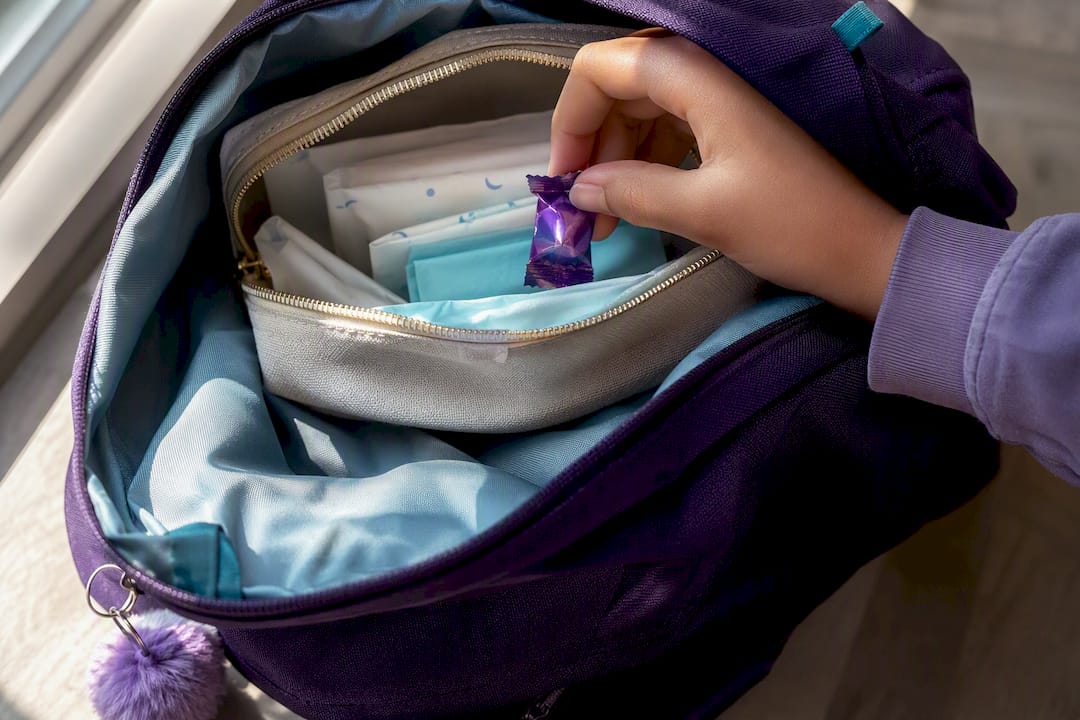
A discreet, well-stocked kit does more to reduce anxiety than almost anything you’ll say. Health experts recommend keeping it small and portable: one or two pads or tampons, a spare pair of underwear, wet wipes, and an over-the-counter pain reliever for cramps.
Build two versions; for tips on keeping these supplies organized and accessible, see how to organize your home for back to school.
- A school bag pouch: small, zippered, and easy to tuck into a backpack pocket without drawing attention.
- A home stash: kept in a bathroom drawer or her bedroom, restocked quietly so she never has to ask.
Show her how to use each product once, then step back. A quick demo of how a pad sticks in place or how period underwear works removes the guesswork without turning it into a repeated production. Cover disposal too. Wrapping used products in toilet paper or the wrapper itself before tossing them keeps the process simple and hygienic. For a full packing breakdown, The Monthlies’ guide to period bags covers exactly what to include and why.
Pro Tip: A small handwritten note or her favorite candy tucked into the kit can turn a practical object into a quiet gesture of support, especially the first time she carries it to school.
How Should Dads Handle the Emotional Side of This?
Validate first, fix nothing. If she’s upset, embarrassed, or in pain, “That sounds really uncomfortable, I’m sorry” goes further than any explanation. Ask directly what kind of help she wants: “Do you want me to grab you something, or would you rather I just leave you be for a bit?”
Skip the jokes entirely. Even a lighthearted comment can land as mockery to a girl who’s still figuring out how she feels about her own body. Calm, steady reassurance does more work than humor ever will here.
Let her choose who she talks to about specifics. If she’d rather ask her mom, a sister, or a family friend how to use a tampon, that’s not a rejection of you. It’s her exercising the same privacy any of us would want.
When Should a Period Become a Medical Conversation?
Most teenage periods fall within a wide, normal range, but a few signs warrant a call to her pediatrician:
- No period at all by age 15, or periods starting before age 8.
- Bleeding heavy enough to soak a pad or tampon every hour, according to Cleveland Clinic guidance on menarche.
- Pain severe enough to miss school, sports, or normal activities.
Before calling, jot down when bleeding started, how heavy it’s been, and any missed activities. That short record helps a provider assess the situation faster and gives you something concrete to reference instead of relying on memory alone.
Why Father Involvement Changes This Conversation
The Amethyst Method behind The Monthlies was built on the belief that puberty prep works best when it combines three things: affirming a girl’s confidence, helping her understand what’s happening to her body, and equipping her with real supplies. Dads have a place in every part of that, not just the equipping.
Involvement doesn’t require expertise. It requires showing up, staying calm, and treating the topic like any other part of growing up worth talking about openly. If you’ve found a phrase or approach that worked with your own daughter, share it with another dad. Reducing stigma around this topic happens one honest conversation at a time, passed between fathers who’ve been there.
— The
A Practical Way to Start Preparing Together
Reading a guide is a good first step. Handing her a box designed specifically for this milestone takes it further. The Amethyst Box pairs affirmation cards, plain-language educational material, and real period supplies sized for a first cycle, built to be unpacked together rather than handed over and forgotten.
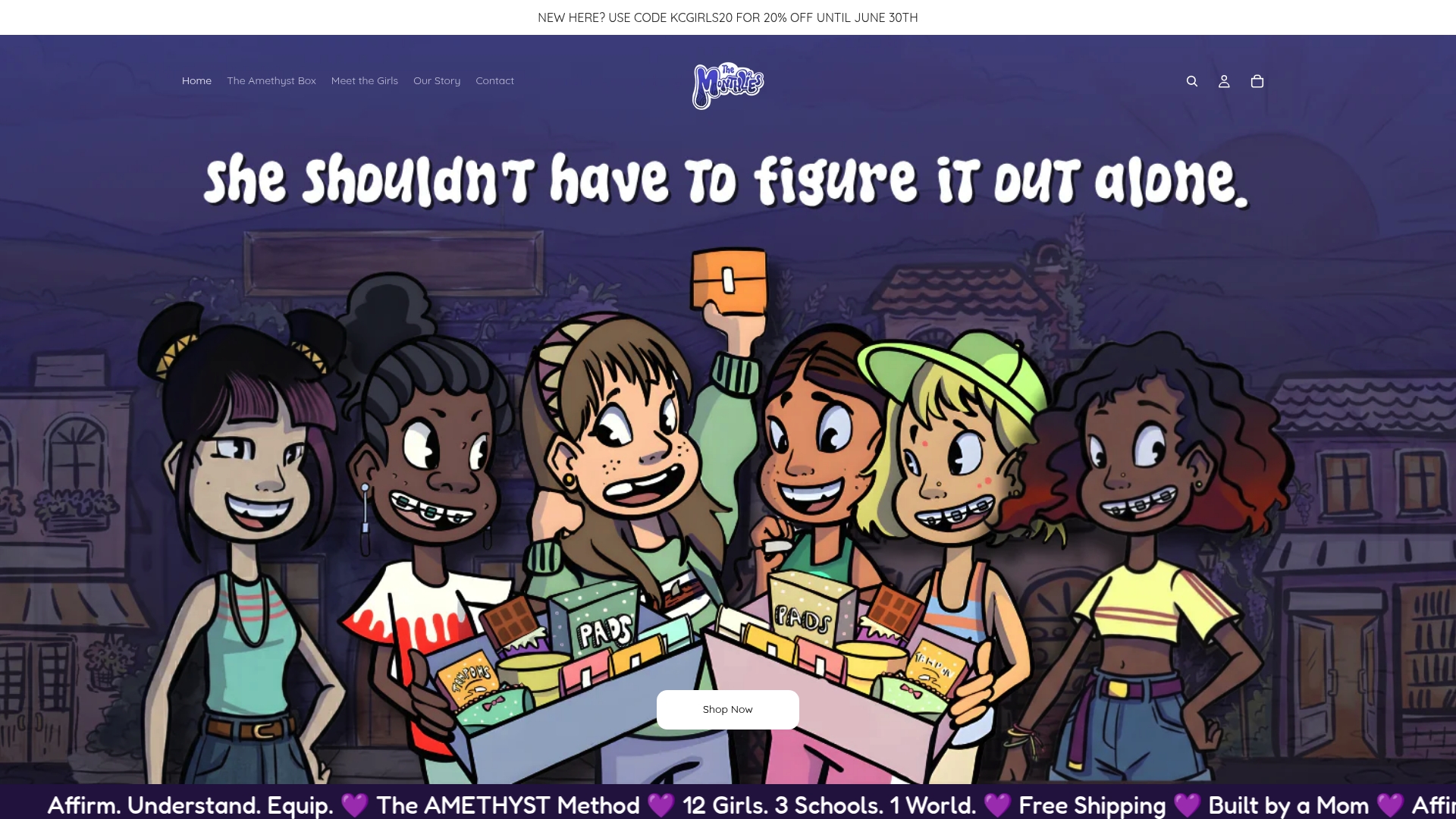
Open it as a shared activity: read through the materials side by side, let her assemble her own school pouch from the supplies inside, and use the affirmation cards as a low-pressure way to talk about how she’s feeling about this stage of growing up. It works well as a milestone gift too, something she opens before her first period rather than after. If you’re ready to put together a kit that does the practical and emotional work at once, check out the Amethyst Box and start preparing together tonight.
This article is general information, not a substitute for advice from a qualified doctor. Consult a qualified healthcare professional about your own circumstances before acting on anything here.
Sources
- First period: What to expect, and how to prepare
- Talking about menstruation
- Dads, daughters and talking about menstruation — Advice from an expert. — Mayo Clinic
- Menarche: What to expect
0 comments