

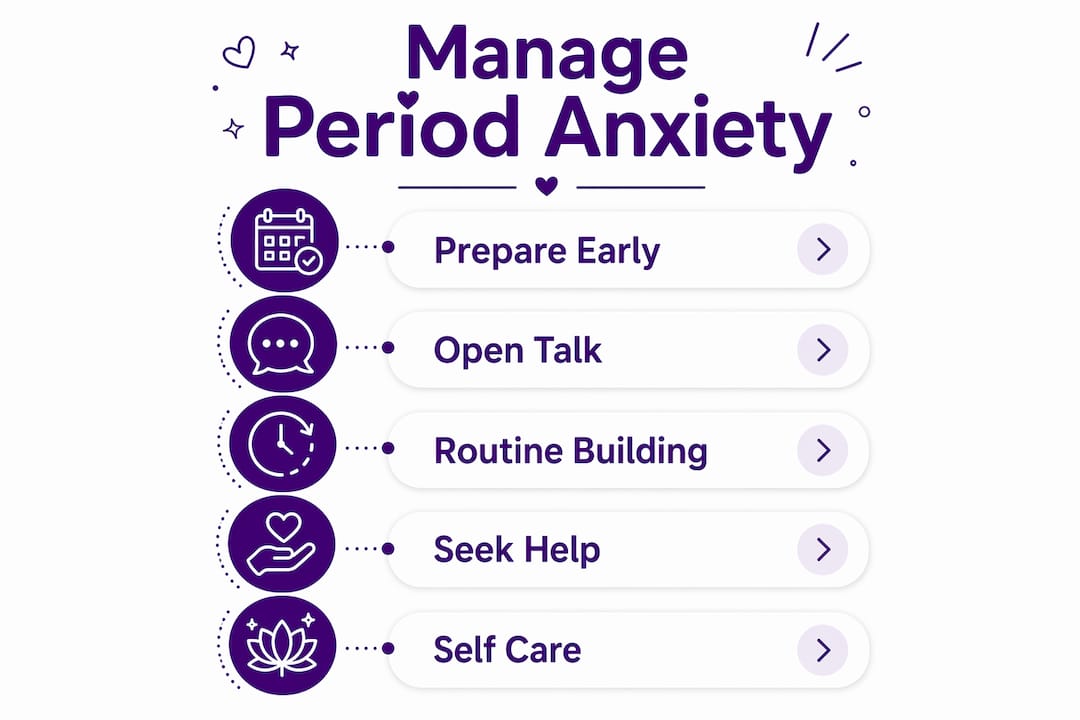
Period anxiety is defined as the fear, worry, or emotional distress girls experience before or during menstruation. It affects preteens and teens at a stage when their bodies are changing fast and information often feels scarce. The good news is that parents are the single most powerful factor in reducing that fear. When you help your daughter manage period anxiety through early conversations, steady routines, and informed medical awareness, you give her something no product alone can provide: confidence that she is not alone and that her body makes sense.
How to help your daughter manage period anxiety through conversation
The most effective first step is starting the conversation before her first period arrives. Girls who receive accurate information early feel significantly less fear when menstruation begins. Waiting until she asks means waiting too long.
Age-appropriate dialogue does not require a formal sit-down talk. You can talk to your daughter about periods the same way you explain other body changes: casually, honestly, and in small pieces over time. A comment while watching a movie, a question answered at the grocery store, a book left on her nightstand. These low-pressure moments build a foundation of trust.
Here is what effective early communication looks like:
- Start before puberty begins. Ideally, begin conversations around age 8 or 9, before physical signs appear.
- Normalize the process. Tell her that periods are healthy, expected, and something her body is designed to do.
- Invite questions. Ask her what she has already heard and correct any myths gently.
- Use accurate words. Terms like uterus, menstruation, and cycle reduce shame and build body literacy.
- Revisit the topic regularly. One conversation is not enough. Return to it as she grows and her questions change.
Calm’s anxiety guidance highlights that talking through feelings is one of the six core strategies for reducing premenstrual anxiety. That means your conversations are not just emotionally supportive. They are clinically meaningful.
Pro Tip: Keep a short, age-appropriate book about puberty in a visible spot at home. Girls often read these privately and come back with questions they would not have asked out loud first.
What lifestyle habits ease menstrual anxiety in teens?
Predictable daily routines are one of the most underrated tools for managing monthly anxiety. When a girl’s body knows what to expect, her nervous system is less reactive to hormonal shifts. The goal is stability: in sleep, movement, food, and stress management.
Here are five habits worth building together:
- Prioritize consistent sleep. Good sleep hygiene with a regular bedtime and reduced screen time before bed directly regulates mood before periods. Aim for 8–10 hours per night for teens.
- Add regular aerobic exercise. Walking, swimming, and biking several times per week reduce PMS symptoms including anxiety. Exercise does not need to be intense to work.
- Support a balanced diet. Foods rich in calcium, magnesium, and vitamin B6 help stabilize mood during the luteal phase. Think leafy greens, nuts, beans, and whole grains.
- Practice breathing or mindfulness. Even five minutes of slow breathing before bed can lower baseline anxiety. Apps like Headspace or Calm offer teen-friendly guided sessions.
- Cut back on caffeine before her period. Reducing caffeine and stimulants before menstruation lowers anxiety symptoms noticeably. Swap soda or coffee for herbal tea in the week before her cycle.
These habits work best when they are consistent, not just applied during hard days. Building them year-round means her body is already regulated when her cycle creates additional stress.
Pro Tip: Help her create a simple “pre-period week” routine on her phone calendar. Knowing what is coming and having a plan reduces anticipatory anxiety more than any single coping technique.

When should you seek professional help for period anxiety?
Not all menstrual anxiety is typical PMS. Premenstrual Dysphoric Disorder, known as PMDD, is a serious mental health condition that causes significant disruption to daily life and requires professional assessment. The difference between PMS and PMDD is not just intensity. It is functional impact.
The American Academy of Pediatrics (AAP) provides clear thresholds for when parents should seek medical evaluation. These benchmarks remove the guesswork from a decision that many parents delay because they assume irregular cycles are normal.
| Symptom or Situation | AAP Guideline |
|---|---|
| No period by age 15 | Seek medical evaluation |
| More than 3 months without a period | Consult a healthcare provider |
| Heavy bleeding that interferes with activities | Medical evaluation recommended |
| Anxiety severe enough to cause missed school | Discuss with a doctor promptly |
| Mood symptoms tied to cycle for 2+ months | Track and report to a provider |
Tracking symptoms over at least two menstrual cycles is the standard method for distinguishing PMS from PMDD. Tracking helps both parents and clinicians see whether symptoms follow a predictable pattern tied to the cycle. That pattern is what separates a mood disorder from menstrual-linked anxiety.
When PMDD is confirmed, treatment options include SSRIs and hormonal contraceptives. Yaz is FDA-approved for PMDD treatment and can begin working within the first menstrual cycle. SSRIs can be prescribed daily or intermittently depending on symptom timing. A pediatrician or adolescent gynecologist can guide the right approach.
“Parents should consider menstrual cycle-linked mood changes seriously rather than dismissing them as ‘just hormones.’” — Anxiety and Depression Association of America (ADAA)
Practical self-care strategies to support your daughter during her period
Emotional support and physical comfort work together. When your daughter feels prepared and cared for, her anxiety drops before a single cramp arrives. The goal is to make her period feel manageable, not scary.
Here are concrete ways to build that sense of safety:
- Build a period preparedness kit. A small bag with pads, pain relief, a change of underwear, and wipes removes the fear of being caught off guard at school. Fear of leaks is one of the most common sources of period stress in teens. A period self-care routine built around preparedness gives her control.
- Create comfort rituals. Warm baths, a heating pad, cozy socks, and a favorite show are not indulgences. They are real tools for managing period cramps and calming the nervous system.
- Encourage journaling. Writing down feelings before and during her period helps her recognize patterns and process emotions without needing to verbalize everything.
- Validate her experience. When she says she feels anxious or uncomfortable, believe her. Dismissing her feelings teaches her to hide them. Saying “that sounds really hard, and I’m here” teaches her to ask for help.
- Use affirmations. Simple phrases like “my body knows what it’s doing” or “I can handle this” are not cheesy. Repeated regularly, they reshape how she relates to her cycle over time.
The emotional responses to a first period vary widely. Some girls feel proud. Others feel scared or overwhelmed. Both are normal. Your job is not to fix her feelings but to stay present with them.
Key Takeaways
Helping your daughter navigate period anxiety requires early conversations, consistent daily habits, and clear criteria for knowing when professional support is the right next step.
| Point | Details |
|---|---|
| Start conversations early | Begin talking about periods before puberty signs appear, ideally around age 8 or 9. |
| Build daily routines | Sleep, exercise, diet, and reduced caffeine stabilize mood and reduce premenstrual anxiety. |
| Track symptoms over two cycles | Tracking distinguishes typical PMS from PMDD and guides medical decisions. |
| Know the AAP thresholds | Seek care if no period by 15, more than 3 months without one, or heavy bleeding disrupts daily life. |
| Validate and prepare | Period preparedness kits and emotional validation reduce fear and build lasting confidence. |
What I’ve learned from watching parents wait too long
The most common mistake I see is delay. Parents wait for their daughter to bring it up. They assume she already knows from school or friends. They worry that talking about periods will make her more anxious, not less. Every one of those assumptions works against her.
The research is clear: girls who receive accurate, calm information before their first period have a better experience of it. Not perfect. But better. The conversation does not need to be comprehensive or clinical. It just needs to happen.
What I have also seen is that parents underestimate how much their own comfort level shapes their daughter’s reaction. If you talk about periods the way you talk about a weather forecast, she learns that this is ordinary information. If you whisper or avoid the topic, she learns that something is wrong or shameful. Your tone is the message.
The blend of emotional support and practical preparation is what actually works. Not one or the other. A girl who knows what a period is but has no one to talk to about her fears is still anxious. A girl who feels emotionally supported but has no supplies or plan is still scared. Both pieces matter equally.
Trust your instincts when something feels beyond typical PMS. Advocate loudly at the doctor’s office. You are not overreacting by asking for a second opinion or requesting a cycle-based mood assessment. You are doing exactly what she needs.
— Themonthliesbox
Themonthliesbox: period preparation built for real girls
Knowing what to do is one thing. Having the right tools in her hands is another.
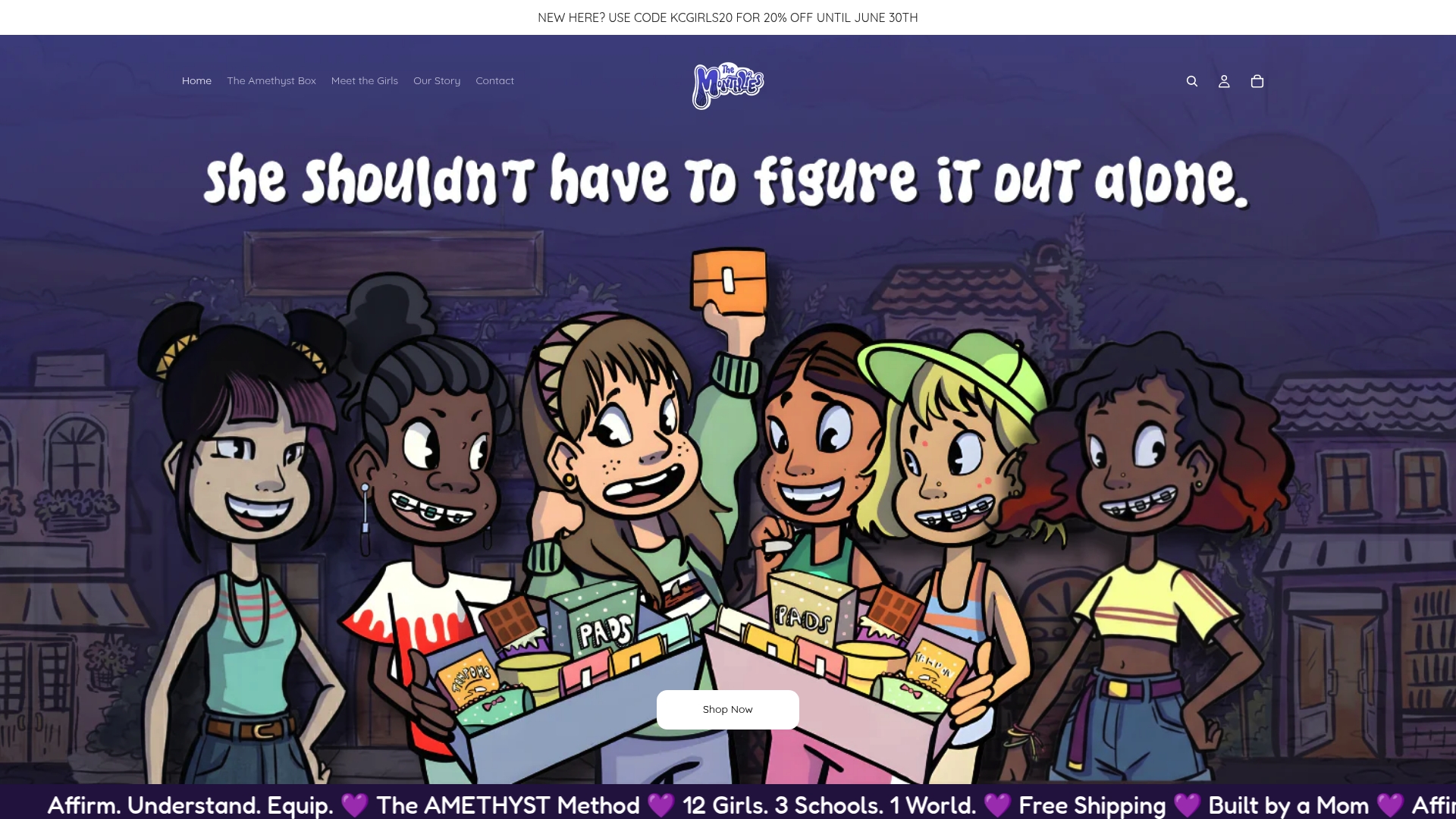
Themonthliesbox designs period preparation kits specifically for girls who are approaching or experiencing their first period. The Amethyst Box combines affirmations, educational materials, and practical period supplies into one thoughtful package built around the Affirm, Understand, and Equip method. For girls who need something portable, the On-The-Go Kit keeps essentials close at school or during activities. The LavenHaven Care Package adds comfort items and self-care tools that make hard days feel a little softer. These kits do not replace the conversations you have with your daughter. They support them.
FAQ
What is period anxiety in teens?
Period anxiety is fear or worry tied to menstruation, including fear of leaks, pain, or unpredictability. It is common in preteens and teens and responds well to early education and consistent support.
How is PMDD different from regular PMS?
PMDD is a clinically recognized mental health condition that causes severe mood disruption tied to the menstrual cycle. Unlike typical PMS, PMDD requires professional diagnosis and often medical treatment such as SSRIs or hormonal contraceptives.
When should I take my daughter to a doctor for period problems?
The AAP recommends seeking care if your daughter has not had her first period by age 15, goes more than three months without a period, or experiences heavy bleeding that disrupts daily activities.
How do I start talking to my daughter about periods?
Start early, around age 8 or 9, with simple and calm language. Normalize periods as a healthy body process and invite her questions over multiple conversations rather than one big talk.
Can lifestyle changes actually reduce period anxiety?
Yes. Regular aerobic exercise, consistent sleep, a balanced diet, and reduced caffeine before her period all reduce premenstrual anxiety. These habits work best when practiced year-round, not only during her cycle.
0 comments