

First period flow amount refers to the volume of menstrual blood a girl loses during her very first menstrual cycle. Most first periods are lighter than parents expect. Spotting or light staining is far more common than a heavy flow, and that is completely normal. Understanding what to expect removes a lot of fear from this milestone, for both parents and daughters. The more clearly you understand what a typical first menstrual cycle flow looks like, the better prepared and calmer you will both feel when it arrives.
What is a normal first period flow amount?
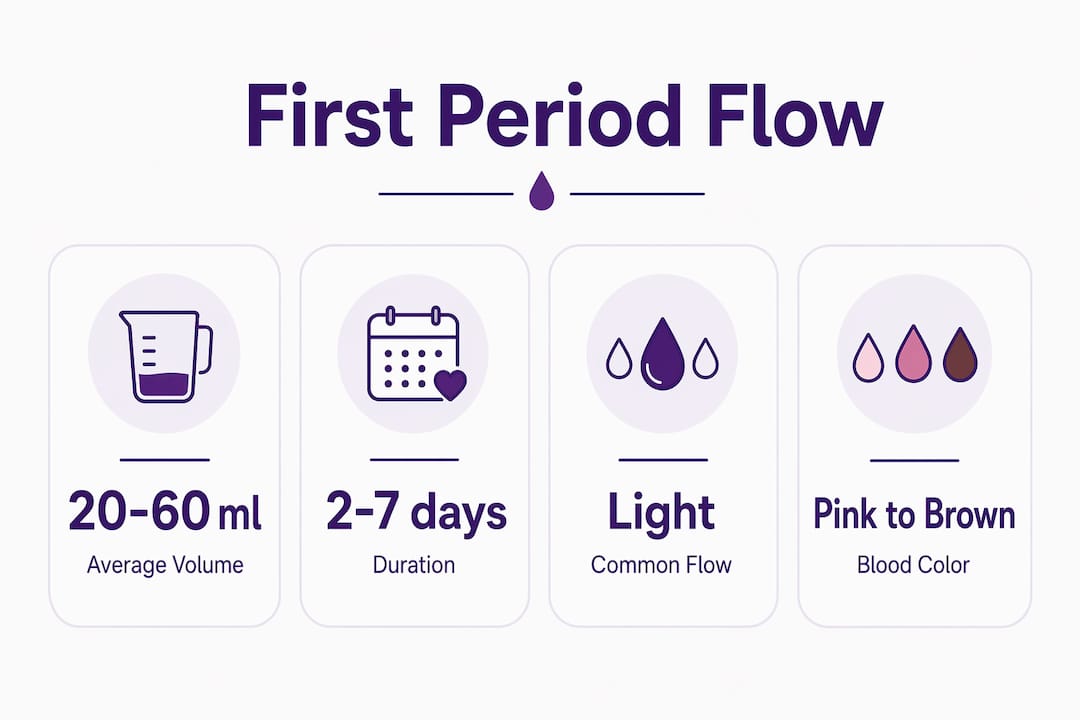
A normal first period flow amount is smaller than most people expect. Average menstrual blood loss across a full period is 20–60 ml, which equals about 4–12 teaspoons. That sounds like a lot, but it is spread across several days. A first period is almost always on the lighter end of that range, and many girls lose far less.
The medical term for menstrual blood volume is “menstrual fluid loss.” Clinicians use this term because the fluid includes not just blood but also uterine lining tissue and cervical mucus. Knowing this helps explain why the color and texture of first period blood can look different from what girls see in movies or read about online.

First period duration typically runs 2–7 days. Flow is usually lightest on the first day, picks up slightly in the middle, and tapers off toward the end. Some girls experience only 1–2 days of light spotting for their very first cycle. Both patterns fall within the normal range.
Color is another source of confusion. First period blood can appear bright red, dark brown, or even pinkish. Brown discharge is simply older blood that took longer to leave the body. Brown or pink spotting at the start of a first period is common and does not signal a problem.
Pro Tip: A panty liner is often enough protection for a first period. Keep a few in your daughter’s backpack so she feels ready without carrying bulky supplies.
| Flow type | What it looks like | What it means |
|---|---|---|
| Spotting | Light pink or brown staining | Very common for a first period |
| Light flow | Small amount of red or dark blood | Normal and expected |
| Moderate flow | Fills a pad partially in 3–4 hours | Less common for a first period |
| Heavy flow | Soaks a pad in under an hour | Warrants medical attention |
| No flow yet | No visible blood | May still be approaching |
Why is first period flow often lighter than expected?
The hormone system is still adjusting during early puberty. This adjustment causes the first menstrual cycle flow to be irregular and unpredictable in both volume and timing. Irregular cycles and light flow for the first several years are a normal part of puberty, not a sign that something is wrong.
The body is essentially learning a new rhythm. Estrogen and progesterone levels fluctuate as the brain and ovaries begin communicating. This back-and-forth means the uterine lining does not always build up the same way each month, which directly affects how much blood is shed.
Here are the key reasons why early period flow is light and variable:
- Hormones are still calibrating. The endocrine system takes time to establish consistent monthly signals between the brain and the ovaries.
- Ovulation may not happen every cycle. Without ovulation, the uterine lining builds up less, resulting in a lighter flow.
- The uterus is still maturing. A younger uterus produces a thinner lining, which means less tissue to shed each month.
- Stress and body weight affect flow. Both low body weight and high stress can suppress hormones and reduce flow volume.
- Cycle regularity takes years to establish. Up to 6 years may pass before periods become consistent in timing and flow amount.
The misconception that a first period will be dramatic and heavy causes real anxiety for many girls and parents. Setting realistic expectations ahead of time is one of the most helpful things a parent can do. Reading about hormonal changes together can make these conversations feel less intimidating.
When should parents be concerned about first period flow?
Most first periods do not require a doctor visit. The flow is light, the duration is short, and the experience passes without complication. However, a few specific signs do warrant medical attention.
Changing a pad or tampon more than once per hour over several consecutive hours is the clinical threshold for heavy menstrual bleeding. This is an objective measure, not a subjective feeling. If your daughter reaches that point, contact her pediatrician.
Watch for these warning signs:
- Soaking through protection hourly for several hours. This meets the medical definition of heavy menstrual bleeding and needs evaluation.
- Bleeding that lasts longer than 7–8 days. Periods exceeding 8 days for two or more cycles in a row should be discussed with a doctor.
- Passing large clots. Clots larger than a quarter can indicate a heavier-than-normal flow.
- Severe cramping that does not respond to over-the-counter pain relief. Pain that interferes with daily activities is worth reporting.
- Dizziness, fatigue, or paleness. These can be signs of anemia from blood loss and need prompt medical attention.
Pro Tip: Keep a simple period log for your daughter’s first few cycles. Note the start date, end date, and how many pads or liners she used each day. This gives the doctor clear, useful information if you ever need to make an appointment.
Heavy flow is rare in a first period. Most parents find that the actual experience is much lighter than what they feared. Still, knowing the thresholds gives you confidence rather than worry.
How to support your daughter through her first period flow
Preparation is the single most effective way to reduce fear around a first period. When a girl knows what to expect, she feels in control. Here is a practical approach to supporting her:
-
Talk about flow before it happens. Explain that her first period will likely be light, possibly just spotting, and that this is normal. Use the 4–12 teaspoon range to put volume in perspective. Concrete numbers help more than vague reassurances.
-
Stock the right supplies for light flow. Panty liners and light pads are the right starting point. A girl with a light first period does not need heavy-duty products. Having the right supplies on hand prevents the panic of feeling unprepared.
-
Teach her to track her cycle. Tracking flow patterns builds body literacy over time. A simple notebook or a basic period app works well. The goal is awareness, not perfection.
-
Normalize color and texture variations. Tell her that brown, pink, and red are all normal. Explain that menstrual blood looks like more than it actually is because it mixes with water in the toilet or on a pad.
-
Keep the conversation open. Ask how she is feeling after her first period, not just physically but emotionally. Many girls feel surprised, relieved, or even proud. Others feel anxious. All of those responses are valid. A guide on talking to your daughter about periods can help you find the right words.
-
Remind her that irregularity is normal. Her next period may arrive earlier or later than expected. The flow amount may be different too. This does not mean anything is wrong. It means her body is still finding its rhythm, and that process takes time.
The goal is not to make her an expert on menstrual medicine. The goal is to make her feel supported, informed, and confident that she can handle whatever her body does.
Key Takeaways
A first period flow amount is almost always lighter than expected, and understanding that fact ahead of time is the most reassuring thing a parent can offer.
| Point | Details |
|---|---|
| First period flow is usually light | Spotting or light staining is the most common first period experience, not heavy bleeding. |
| Normal volume is 20–60 ml total | This equals 4–12 teaspoons spread across 2–7 days, with first periods often below that range. |
| Irregularity is expected for years | The endocrine system can take up to 6 years to establish consistent cycles and flow amounts. |
| Heavy bleeding has a clear threshold | Changing protection more than once per hour over several hours signals a need for medical attention. |
| Tracking builds confidence | Logging flow patterns helps girls develop body literacy without stressing over exact volumes. |
What I have learned from years of watching parents prepare for this moment
Parents almost always overestimate how dramatic a first period will be. They picture heavy bleeding, emergency runs to the pharmacy, and a daughter in distress. What actually happens, more often than not, is a quiet moment. A small stain. A daughter who is not sure if it has even started yet.
The anxiety is understandable. We want to protect our girls from discomfort and confusion. But the fear of the first period is often bigger than the period itself. The most powerful thing you can do is say, out loud and calmly, “This might be lighter than you expect, and that is okay.” That sentence alone can change the entire experience.
What I have also seen is that girls who feel informed feel less afraid. When a daughter knows that brown spotting counts, that a panty liner might be all she needs, and that her cycle will be irregular for a while, she approaches puberty with curiosity instead of dread. That shift matters more than any product or supply kit.
Patience is the other piece parents often overlook. Irregular cycles and variable flow are not problems to fix. They are a normal phase that the body moves through at its own pace. Your job is not to make it perfect. Your job is to make her feel supported while it unfolds.
— The
Themonthliesbox is here to help you prepare with confidence
Knowing what to expect from a first period is only part of the picture. Having the right tools, the right words, and the right support makes all the difference when the moment actually arrives.

Themonthliesbox created the Amethyst Box specifically for this transition. It combines practical period supplies sized for light and variable flows with affirmations, educational materials, and confidence-building resources. The Amethyst Method guides girls and parents through three phases: affirm, understand, and equip. Whether your daughter’s first period is weeks away or already here, Themonthliesbox gives you both something concrete to hold onto. You do not have to figure this out alone.
FAQ
What is the average first period flow amount?
A first period flow amount is typically lighter than later periods, often just spotting or light staining. Average total menstrual blood loss across a full period is 20–60 ml, but a first period is usually well below that range.
How long does a first period usually last?
A first period typically lasts 2–7 days, though some girls experience only 1–2 days of light spotting. Duration varies widely and does not indicate whether the flow is healthy or not.
Is brown discharge a normal part of a first period?
Yes. Brown or dark discharge during a first period is simply older blood that took longer to exit the body. It is one of the most common ways a first period begins and is not a cause for concern.
When should I take my daughter to a doctor about her period flow?
Contact a doctor if your daughter soaks through a pad or tampon more than once per hour for several consecutive hours, or if bleeding lasts longer than 8 days across two or more cycles.
How long will it take for my daughter’s period to become regular?
Cycle regularity can take up to 6 years to establish after a first period. Irregular timing and variable flow amounts during this phase are completely normal and expected.
0 comments