

Why does period blood color change throughout your cycle?
Period blood color changes because of two main things: how long blood stays in the uterus before leaving the body, and how much it’s been exposed to oxygen. That process, called oxidation, is the same reason a cut on your skin turns brown after a day under a bandage. The longer blood sits, the darker it gets.
Menstrual flow is also more than just blood. According to HelloClue, it’s a combination of blood, shed endometrial (uterine lining) cells, and vaginal secretions. The ratio of those parts shifts throughout your cycle, which is why color and texture can look different from day to day.
Here’s a quick look at what each color usually means:
- Bright red: Fresh blood moving quickly out of the body, common on heavier flow days
- Dark red or brown: Older blood that has had more time to oxidize, often seen at the start or end of a period
- Pink: Lighter flow mixed with vaginal secretions, sometimes seen at the very beginning of a period
- Black: Very old blood, usually at the cycle’s start or end, fully oxidized
- Gray or orange: Not a normal period color; these can signal infection and need medical attention
Table of Contents
- What’s actually happening in your body during your period?
- What color variations are normal during puberty?
- When should a color change prompt a call to the doctor?
- Building confidence about menstruation with Themonthliesbox
- Key Takeaways
What’s actually happening in your body during your period?
The uterus contracts to push blood and tissue out. When those contractions are strong and flow is fast, bright red blood leaves the body before it has time to oxidize. Slower flow gives blood more time to sit, react with oxygen, and darken.

Menstrual flow is a mix of blood, endometrial tissue, and cervical mucus. The balance of those components shifts throughout the cycle, which affects both color and texture. During puberty especially, hormones are still finding their rhythm, so flow speed and uterine lining thickness can vary quite a bit from one cycle to the next.
Small clots are also common. Blood that pools and thickens before leaving the body can form clots, and according to the Cleveland Clinic, this is usually normal. What to watch for is a change in clot size or frequency over time.
- Hormonal shifts during puberty affect how thick the uterine lining grows and how quickly it sheds
- Flow speed directly controls how much oxidation happens before blood exits the body
- The mix of endometrial tissue and vaginal secretions changes the appearance beyond just blood color
- Clotting is a natural part of the process, not automatically a cause for concern
Pro Tip: Start a simple period journal or use a free app to note color, flow level, and any symptoms each day. After two or three cycles, you’ll have a clear picture of what’s normal for you, which makes it much easier to spot anything that’s actually different.
What color variations are normal during puberty?
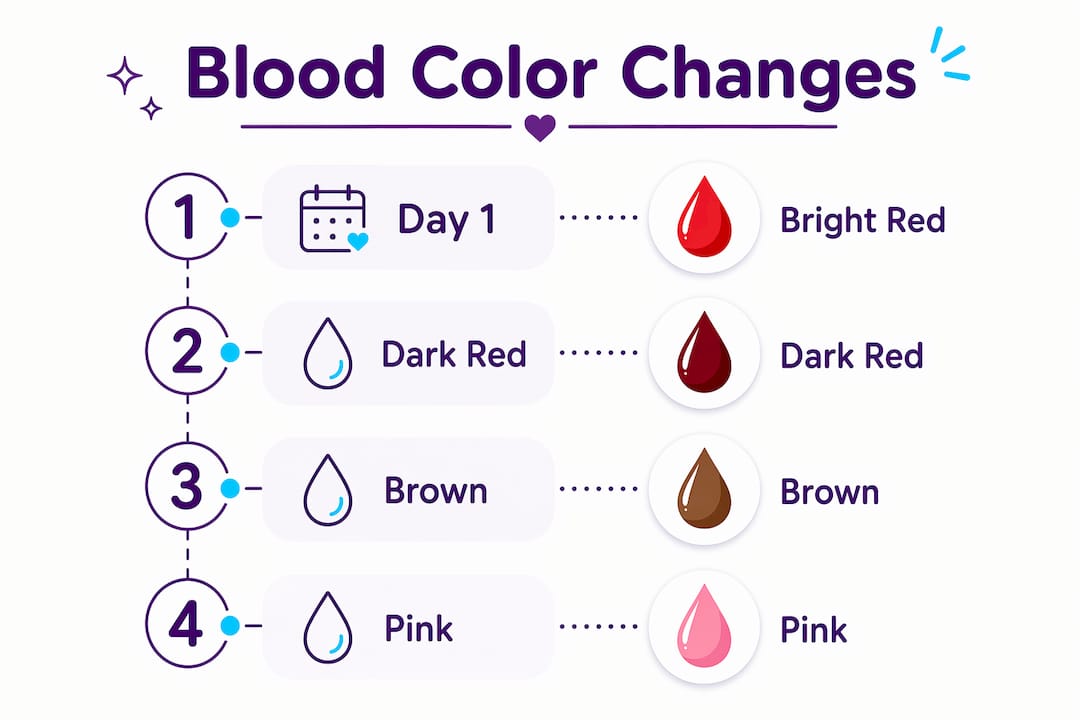
Puberty is a time of big hormonal development, and periods during these early years can look and feel inconsistent. That’s completely expected. Hormonal changes during puberty affect the uterine lining and blood flow speed, which is why younger girls often see more color variation than adults with established cycles.
A single period might start pink, shift to bright red in the middle, and finish with dark brown or black. All of that can happen within one cycle and still be perfectly normal. Color can also differ from month to month as hormones continue to develop.
- Light pink: Often seen at the very start of a period or when flow is light; mixing with vaginal secretions creates this softer shade
- Bright red: Typical during the heaviest days, usually days two and three of the cycle
- Dark red: Common as flow slows; blood has had slightly more time to oxidize
- Brown or black: Normal at the beginning or end of a period; this is older blood that took longer to leave the uterus
- Color shifts within one period: Completely normal and reflect changing flow speed and composition
Understanding these color variations in menstrual blood takes away so much of the fear that can come with a first period. When you know what to expect, you feel supported instead of scared.
When should a color change prompt a call to the doctor?
Most period blood color changes are normal, but a few colors and symptoms are worth taking seriously. Gray or orange discharge with a foul smell can indicate a bacterial infection and needs medical attention. These are not typical period colors.
Typical average blood loss per cycle is within the normal range for menstruation. Soaking more than one pad or tampon per hour, or feeling weak or dizzy during your period, means it’s time to call a healthcare provider right away.
Here’s what to watch for:
- Gray, orange, or unusually bright colors in menstrual discharge
- A strong or unpleasant odor accompanying any color change
- Heavy bleeding that soaks through a pad or tampon in under an hour
- Dizziness, weakness, or fainting during your period
- Severe pain that feels different from typical cramps
- Clots that are noticeably larger or more frequent than usual
Parents, you play a big role here. Encouraging your daughter to track her cycle and feel comfortable talking about what she notices makes it easier for her to speak up when something feels off. She should never feel embarrassed to ask for help.
Building confidence about menstruation with Themonthliesbox
Knowing why period blood color changes is powerful. It turns something that might feel alarming into something you can understand and even expect. That’s exactly the kind of knowledge Themonthliesbox is built around.

Themonthliesbox offers the Amethyst Box, a curated puberty preparation kit designed to walk girls and their parents through the first period experience with education, affirmations, and practical supplies. It’s built on the Amethyst Method: Affirm, Understand, and Equip. Every piece of it is designed to replace fear with confidence.
- Educational materials that explain period basics, including color changes and what they mean
- Affirmations and emotional support tools to normalize the experience
- Practical period supplies so girls feel ready, not caught off guard
- Blog resources covering first period tracking, hormonal changes, and what to expect
Themonthliesbox also draws on expert medical insights, including guidance aligned with what physicians at the Cleveland Clinic and platforms like HelloClue share about normal menstrual variation. The goal is simple: every girl should feel supported and informed, not alone.
Key Takeaways
Period blood color changes are driven by oxidation, flow speed, and the natural mix of blood, uterine tissue, and vaginal secretions throughout the cycle.
| Point | Details |
|---|---|
| Oxidation drives color | Blood darkens the longer it stays in the uterus before leaving the body. |
| Bright red means fresh flow | Fast-moving blood exits before oxidizing, producing bright red color on heavier days. |
| Pink, brown, and black are normal | These colors reflect lighter flow, older blood, or mixing with vaginal secretions at cycle start or end. |
| Average blood loss is within typical limits observed in menstruation. | Soaking a pad or tampon in under an hour signals heavy bleeding that warrants medical evaluation. |
| Tracking builds confidence | Noting color and flow each cycle helps girls and parents identify what’s normal versus what needs attention. |
0 comments