

A daughter’s first period is one of the most significant moments in her young life. And yet, for so many girls, it arrives wrapped in confusion, embarrassment, or silence. That’s exactly why so many caregivers are asking why celebrate first period at all. The answer goes far beyond biology. Celebrating this milestone sends a clear message: you are not broken, you are not alone, and this is something to be proud of. This guide walks you through the cultural roots, emotional science, and practical steps to turn menarche into a moment your daughter will remember with confidence.
Table of Contents
- Key takeaways
- What the first period really means
- First period traditions around the world
- How to celebrate your daughter’s first period
- The long-term benefits of celebrating menstruation
- My take on why this moment deserves to be celebrated
- Give her the celebration she deserves
- FAQ
Key takeaways
| Point | Details |
|---|---|
| Celebration shifts the narrative | Marking the first period replaces shame with pride and sets a positive tone for years of menstrual health ahead. |
| Education must come early | Many girls start their period before formal school education covers it, so caregiver-led preparation is critical. |
| Consent matters most | Ask your daughter how she wants to mark the moment. Her comfort shapes the entire experience. |
| Global traditions offer inspiration | Cultures worldwide have honored menarche for centuries, giving families rich ideas to draw from. |
| Ongoing conversation is the goal | One celebration is a great start, but regular, open dialogue builds lasting body confidence. |
What the first period really means
Menarche, the medical term for a girl’s first period, typically arrives between ages 8 and 16. The average age is around 12, but there is a wide range of normal. Cycles in the first year or two are often irregular, and that is completely expected. Periods usually occur every 21 to 35 days and last anywhere from a few days to a week.
Physically, the signs leading up to a first period include breast development, pubic hair growth, and vaginal discharge, often appearing one to two years before bleeding begins. Emotionally, the picture is more complex. Girls may feel excited, scared, proud, or deeply uncomfortable, sometimes all at once. Caregivers can reduce anxiety through calm, informed discussions that normalize what is happening in her body.
Knowing what is normal also means knowing when to pay attention. Here are signs that warrant a conversation with a doctor:
- Bleeding that soaks more than one pad or tampon per hour for four or more hours
- Periods lasting longer than seven days consistently
- Severe cramps that interfere with daily activities
- No period by age 16
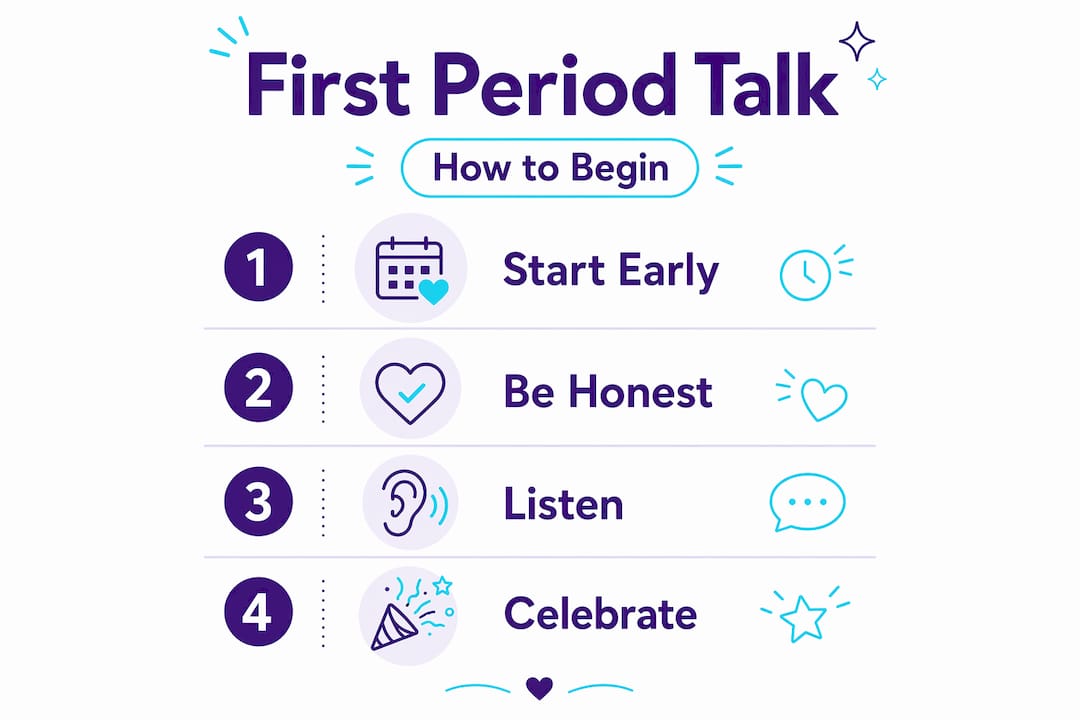
Pro Tip: Start talking about periods before they happen. Menstrual education often begins at age 9 to 11 in many schools, but periods can start as early as age 8. Getting there first means your daughter hears it from you, not a confused classmate.
The emotional weight of this moment is real. Adolescents shape their sense of self partly through how their changing bodies are perceived by others. Normalizing menarche helps young people make positive meaning of these changes and supports self-acceptance. That is not a small thing. It is the foundation of a healthy relationship with her own body for years to come.
First period traditions around the world
Here is something that often surprises parents: the idea of celebrating a first period is not new or unusual. Cultures around the world have honored this transition for centuries. The significance of first period ceremonies is woven into the fabric of communities from Japan to South Africa to the American Southwest.
Global menarche ceremonies include traditions like the Navajo Kinaalda, a four-day ceremony involving running, corn cake baking, and community celebration. In South India, the Ruthu Sadangu marks the occasion with family gatherings, new clothing, and symbolic gifts. In parts of Morocco, families shower the young girl with money and sweets. In Japan, families traditionally prepare a meal of red rice and beans called sekihan to mark the day.
| Tradition | Culture | Key elements |
|---|---|---|
| Kinaalda | Navajo (USA) | Running ceremony, corn cake, community gathering |
| Ruthu Sadangu | South India | Family feast, new clothes, symbolic gifts |
| Sekihan meal | Japan | Red rice and beans shared with family |
| Moroccan celebration | Morocco | Money, sweets, community acknowledgment |
What these traditions share is a common purpose. They say: this matters, you matter, and we see you. They create social belonging at a moment when a girl might otherwise feel isolated or ashamed.
That said, blending cultural rituals with accurate health information is worth being intentional about. Some traditional practices carry myths or restrictions around menstruation that can actually deepen shame. The goal is to preserve tradition while preventing harmful misinformation from taking root. Celebrate the milestone. Just make sure the celebration is paired with honest, accurate education.
How to celebrate your daughter’s first period
The most important rule? Ask her first. Consent-based celebration paired with practical readiness produces the best outcomes for menstrual attitudes and hygiene. Some girls want a party. Others want a quiet acknowledgment and a hug. Both are perfect.
Here are practical first menstruation celebration ideas that work across a range of comfort levels:
- Have a private conversation first. Before any celebration, sit with her one-on-one. Validate her feelings, whatever they are. Let her know this is normal, healthy, and something you are both ready for together.
- Create a first period kit together. Gather pads, liners, pain relief, and a small comfort item like a heating pad or her favorite snack. Making the kit together turns a practical task into a meaningful ritual.
- Give a thoughtful gift. A journal, a piece of jewelry, a book about growing up, or a self-care product she has been wanting all send the message that this moment deserves to be marked.
- Plan a special outing. A lunch out, a movie, a spa afternoon, or simply her favorite meal at home. Keep it centered on her preferences, not yours.
- Write her a letter. Tell her what you see in her, what you hope for her, and that you are proud of her. Letters like this become keepsakes.
- Start an ongoing tradition. Some families do a small check-in every month for the first year, a brief conversation about how she is feeling and what she needs. This keeps the dialogue open long after the celebration ends.
Pro Tip: If your daughter is mortified by the idea of any celebration, honor that. A low-key acknowledgment, like a special dinner or a heartfelt card, still communicates love and support without putting her on the spot. The goal is connection, not performance.
Open communication and consent improve menstrual attitudes and hygiene behaviors significantly. The celebration does not need to be elaborate. It needs to be hers.
The long-term benefits of celebrating menstruation
Here is what the research actually shows about why mark first menstruation matters beyond the moment itself. Girls who receive early, positive education and acknowledgment around their periods carry that foundation forward. A drama-based educational intervention significantly improved both hygiene behavior scores and attitude scores in adolescent girls. Education and celebration together are more powerful than either one alone.
The long-term benefits of empowering first menstruation experiences include:
- Reduced fear and confusion at menarche, because preparation replaces shock
- Greater comfort discussing reproductive health with caregivers and doctors
- Stronger body literacy, meaning she understands what her body is doing and why
- Lower rates of period shame, which research links to better mental health outcomes
- More consistent hygiene practices, because she feels confident managing her period
“Celebration combined with practical education transforms menarche into a moment of empowerment rather than confusion or shame.”
The caregiver’s role here cannot be overstated. Using teachable moments and open dialogue builds a foundation for future communication about reproductive health that lasts well into adulthood. Girls who grow up in households where periods are discussed openly are more likely to seek medical care when something feels wrong, more likely to advocate for themselves, and more likely to pass that same confidence on to their own children someday.
The conversation does not end after the first period. It is just beginning.
My take on why this moment deserves to be celebrated
I have seen what happens when this milestone is met with silence. A girl gets her period, figures it out alone, and files it away as something shameful or inconvenient. That narrative follows her. I have also seen what happens when a caregiver shows up with warmth, information, and a genuine “I’ve got you.” The difference is striking.
What I have learned is that you do not need to get it perfect. You need to show up. A stumbling, heartfelt conversation beats a polished silence every single time. The girls who feel most confident about their bodies are not the ones who had the fanciest celebration. They are the ones whose caregivers treated their bodies as worthy of conversation.
My honest advice: start before the first period arrives. Talk about it like it is normal, because it is. Answer questions without flinching. Let her see that you are not embarrassed, and she will learn not to be either. That is the real gift you give her. Not the gift box, not the party. The message that her body is something to understand, care for, and yes, even celebrate.
— The
Give her the celebration she deserves
When the moment arrives, having the right tools ready makes all the difference. At Themonthliesbox, we created the Amethyst Box specifically for this milestone. It combines practical period supplies with affirmations, educational materials, and comfort items designed to make a girl feel supported and prepared, not caught off guard.
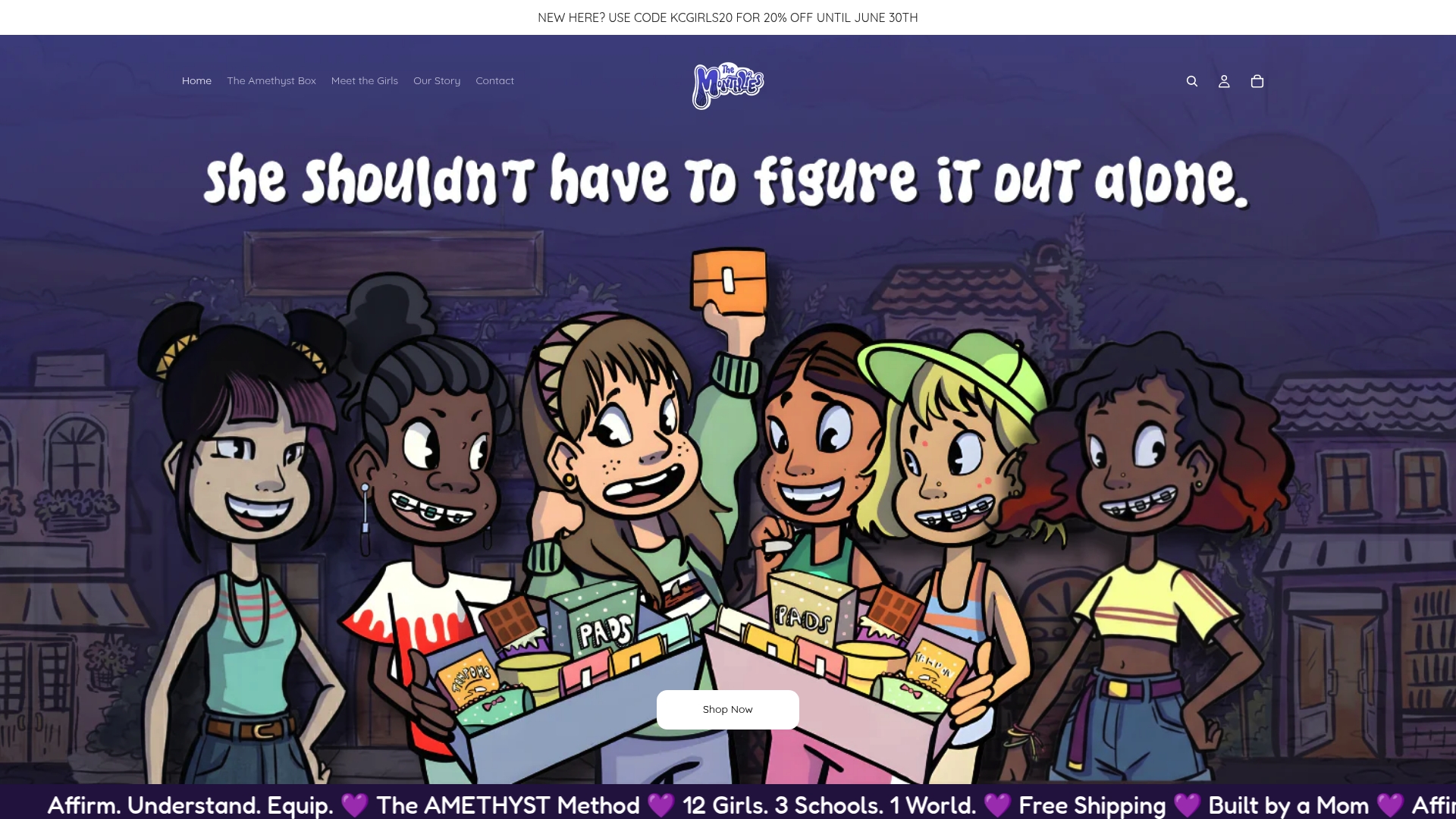
Whether you are preparing in advance or looking for a meaningful gift after the fact, the Amethyst Box brings together everything the Amethyst Method is built on: affirm, understand, and equip. For girls on the go, the On-The-Go Kit keeps her confident at school or anywhere life takes her. Because every girl deserves to feel ready, not rushed.
FAQ
Why should you celebrate a first period?
Celebrating a first period replaces shame and confusion with pride and confidence. Research shows that positive acknowledgment at menarche improves long-term attitudes toward menstrual health and supports emotional well-being.
What are some simple first period celebration ideas?
Simple ideas include creating a first period kit together, writing your daughter a letter, planning her favorite meal, or giving a meaningful gift like a journal or self-care item. The key is centering her comfort and preferences.
At what age should I start talking to my daughter about periods?
Start the conversation by age 8 or 9 at the latest, since periods can begin as early as age 8. Early, calm conversations reduce fear and prepare her before the moment arrives.
Do all cultures celebrate the first period?
Many cultures around the world mark menarche with ceremonies and rituals. Examples include the Navajo Kinaalda, South India’s Ruthu Sadangu, and Japanese sekihan traditions, all designed to honor the transition to womanhood.
What if my daughter does not want a celebration?
Respect her feelings completely. A quiet acknowledgment, a private conversation, or a small personal gift still communicates love and support. Consent-based celebration is the most effective approach for building positive menstrual attitudes.
0 comments