

Yes, tampons can be safe for teens when used correctly, and the core rule is simple: choose the lowest absorbency your daughter needs, and never leave a tampon in for more than eight hours. The bigger factor isn’t age. It’s whether she understands the wear-time rules and feels ready to follow them.
TL;DR:
- Use the lowest absorbency tampon needed for her flow and change it every eight hours or less to minimize TSS risk.
- Start with slender, applicator-style tampons and size up only if she soaks through quickly, avoiding reusable options that lack FDA clearance.
- Teach insertion on a heavier-flow day, reinforce handwashing and wiping front to back, and recognize early signs of TSS such as high fever or rash.
- Remind her that tampon use does not affect virginity or cause external body changes, and address any myths with plain facts.
- Keep practice supplies ready in a kit like the Amethyst Box to build confidence before her first period.
Table of Contents
- Are Tampons Safe for Teens? The Basics of Toxic Shock Syndrome
- How to Choose the Right Tampon Size and Absorbency
- How Do You Teach a Teen to Use a Tampon Safely?
- What Are the Warning Signs of TSS in Teens?
- Pads vs. Tampons vs. Cups: What Fits a Younger Teen?
- How the Amethyst Box Supports First Tampon Practice
- How Should Teens Dispose of Tampons Safely?
- Beyond Handwashing: Everyday Hygiene Habits That Matter
- Does Using a Tampon Affect Virginity? Separating Myth From Fact
- Where to Find Reliable Tampon Safety Information
- What Parents Get Wrong About Tampon Safety
- Get Ready for a First Tampon With Themonthliesbox
- Sources
Are Tampons Safe for Teens? The Basics of Toxic Shock Syndrome
Toxic Shock Syndrome, or TSS, is the reason tampon safety guidelines exist at all. It’s a rare but serious illness caused by toxins from certain bacteria, and it can develop faster than most parents expect. The risk climbs when a tampon sits in place too long, giving bacteria time to grow in a warm, moist environment.
Younger teens may face slightly higher risk here, since they’re less likely to have built up antibodies against the toxins linked to TSS. That’s not a reason to avoid tampons altogether. It’s a reason to be strict about the rules.
The FDA regulates tampons as medical devices and recommends a few non-negotiable habits:
- Change tampons regularly according to the labeled directions.
- Never wear one tampon for too long, especially not overnight.
- Use the lowest absorbency that handles her flow.
- Use tampons only during a period, never for other discharge.
- Wash hands before and after inserting or removing one.
One number matters more than any other here: 8 hours. That’s the FDA’s hard ceiling on wear time, and Healthychildren suggests switching to a pad overnight so nobody has to set an alarm to swap tampons at 3 a.m.
How to Choose the Right Tampon Size and Absorbency
Start small. Slender or “lite” applicator tampons with a rounded tip are the easiest entry point for a first-time user, mainly because they’re shorter and require less precision to insert correctly. A cardboard or plastic applicator does most of the guiding work, which takes pressure off her fingers and her nerves.
Absorbency labels aren’t marketing fluff. They tell you exactly how much fluid a tampon can hold, and using more absorbency than her flow requires is one of the more common mistakes teens make. A useful rule of thumb: if it’s hard to remove or feels dry coming out, it was too absorbent for that day.
Skip reusable tampons entirely. The FDA has not cleared reusable tampons as safe medical devices, and they carry more infection risk than single-use products designed for one wear.
- Start with slender, applicator-style, regular absorbency.
- Size up only if she’s soaking through in under 3 to 4 hours.
- Size down if removal feels difficult or uncomfortable.
- Stick to single-use products every time.
Pro Tip: Keep two absorbency levels on hand from the start. Flow often changes day to day during a cycle, and having options nearby means she won’t force a tampon that isn’t the right fit.
How Do You Teach a Teen to Use a Tampon Safely?
Pick a heavier-flow day for practice. Insertion is genuinely easier when there’s more natural lubrication, and KidsHealth notes that a heavier day cuts down on the friction and frustration that make first attempts feel harder than they need to be.
Before she tries anything, sit down together and read the package instructions out loud. Have a pad, some flushable wipes, and a spare tampon within reach so nothing derails the moment if the first one doesn’t go smoothly.
Here’s a simple sequence to walk through together:
- Wash hands and get into a comfortable position, standing with one foot up or sitting on the toilet.
- Unwrap the tampon and check the applicator is fully extended.
- Relax and insert at a slight upward angle, aiming toward the lower back rather than straight up.
- Push the plunger until it stops, then remove the applicator, leaving the string outside.
- If it feels comfortable and she can’t feel it at all, it’s in correctly. If it hurts, it likely needs repositioning or hasn’t gone in far enough.
If the string seems to disappear or she can’t find it, don’t panic. A tampon physically cannot travel past the cervix and get lost inside the body. The string usually just needs to be located by hand.
If insertion fails repeatedly despite good technique, stop pushing it. About 2% of teens have a naturally smaller hymenal opening that makes tampons uncomfortable or impossible, and that’s worth a conversation with her clinician rather than another try at home.
Pro Tip: Praise the attempt, not just the outcome. A teen who tries and struggles needs to hear “that was brave” more than she needs a step-by-step correction in the moment.
What Are the Warning Signs of TSS in Teens?
Some symptoms mean stop everything, remove the tampon, and call a doctor or go to urgent care immediately. Waiting to “see if it passes” is not the move with TSS, since symptoms can escalate within hours.
Watch for this combination especially during a period or shortly after:
- A sudden high fever, roughly 102°F or higher.
- Vomiting or diarrhea that comes on suddenly.
- Dizziness, fainting, or feeling lightheaded when standing.
- A rash that looks like a sunburn, especially on the torso.
Beyond TSS, a few other signals mean it’s time to stop tampon use and check in with a clinician: severe pain during wear, signs of an allergic reaction, or unusual discharge and odor that don’t resolve after removing the tampon.
Adverse reactions to a specific product, not just symptoms, are worth reporting. The FDA runs MedWatch specifically for this, and reporting helps regulators track patterns across brands and product types.
Pads vs. Tampons vs. Cups: What Fits a Younger Teen?
Not every teen needs to start with tampons, and that’s a completely legitimate choice, not a failure. Each option solves for something different.
- Pads require zero insertion skill and work well for very light flow, sleepovers, or a first period before anyone feels ready for tampons.
- Tampons offer more freedom for sports and swimming, but demand strict adherence to wear-time rules.
- Menstrual cups hold more volume and can be worn longer, but HealthyChildren.org notes they come with a real learning curve for insertion and removal.
- Period underwear needs no insertion at all and doubles as backup protection, though it typically handles lighter flow better than heavy days.
Lean toward alternatives when flow is very light, when insertion attempts cause real distress, after any prior TSS diagnosis, or when a tween simply isn’t emotionally ready yet. Reusable products also carry their own hygiene routine. Cups need sterilizing between cycles, and reusable tampons, as noted earlier, aren’t FDA-cleared for safety at all.
How the Amethyst Box Supports First Tampon Practice
Confidence matters as much as technique here, which is the whole idea behind the Amethyst Method built into The Amethyst Box: affirm how she’s feeling, help her understand what’s actually happening in her body, then equip her with real supplies to practice with.
| What she needs | How the Amethyst Box helps |
|---|---|
| Confidence before trying | Affirmation cards that normalize nerves and effort |
| Understanding of her body | Age-appropriate educational materials |
| Practical starter supplies | Slender tampons, pads, and comfort items included |
For deeper reading before that first practice session, our guides on first period hygiene basics and building a self-care routine walk through the emotional side parents often underestimate.
How Should Teens Dispose of Tampons Safely?
Never flush a tampon, even one labeled “flushable” packaging materials. Tampons and their applicators are designed to expand, and municipal pipes aren’t built to handle that. Plumbers report tampon-related clogs regularly, and on a larger scale, flushed period products contribute to the “flushable” debris that clogs sewage systems and washes up on beaches.
The correct method is simple: wrap the used tampon in its own wrapper or a small piece of toilet paper, then place it in a bathroom trash can. Public restrooms typically provide a small disposal bin inside the stall for exactly this reason, and most bathrooms at home benefit from a small covered trash can in reach of the toilet so there’s no temptation to flush out of convenience.
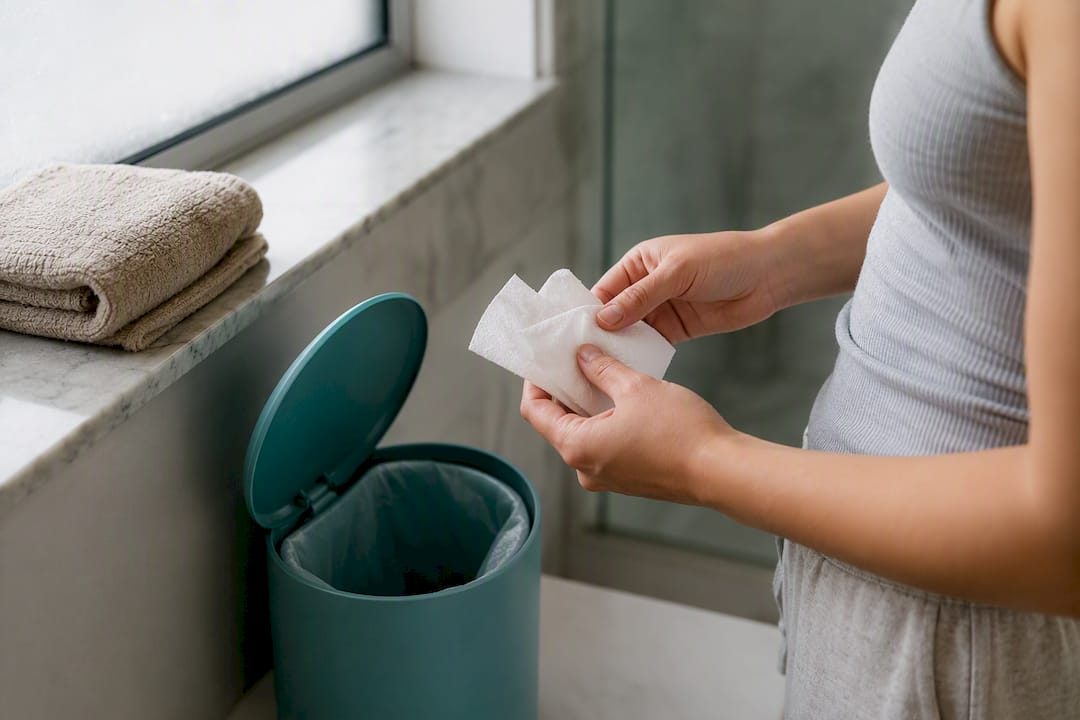
Cardboard applicators are somewhat more biodegradable than plastic ones, though neither should go in a recycling bin once used. If environmental impact is a concern for your family, that’s a legitimate reason to explore period underwear or a menstrual cup as a lower-waste option, since both generate far less disposable trash across a typical cycle. But for a teen who’s just starting with tampons, the priority is simply teaching the trash-can habit early so it becomes automatic, not an afterthought she has to remember mid-period.
Beyond Handwashing: Everyday Hygiene Habits That Matter
Handwashing before and after changing a tampon is step one, but it’s not the whole picture. The habit that gets overlooked most often is wiping direction. Teach her to always wipe front to back after using the bathroom, not back to front. This single habit significantly lowers the chance of transferring bacteria from the rectal area toward the urethra, which is a common cause of urinary tract infections in teens who are newly managing their own hygiene.
A few other habits worth building into a normal routine:
- Change tampons and pads at regular intervals, not just when they feel full.
- Avoid scented tampons, wipes, or sprays, since fragrance can irritate sensitive skin.
- Shower or wash the genital area with warm water only, no soap needed internally.
- Pack a small hygiene kit for school with a spare tampon, pad, and wipes.
None of this requires a lecture. Most of it sticks better as a quiet, repeated habit modeled at home than as a one-time conversation. If she sees a parent normalize these routines without shame or urgency, she’s far more likely to carry them into her own daily rhythm without needing constant reminders.
Does Using a Tampon Affect Virginity? Separating Myth From Fact
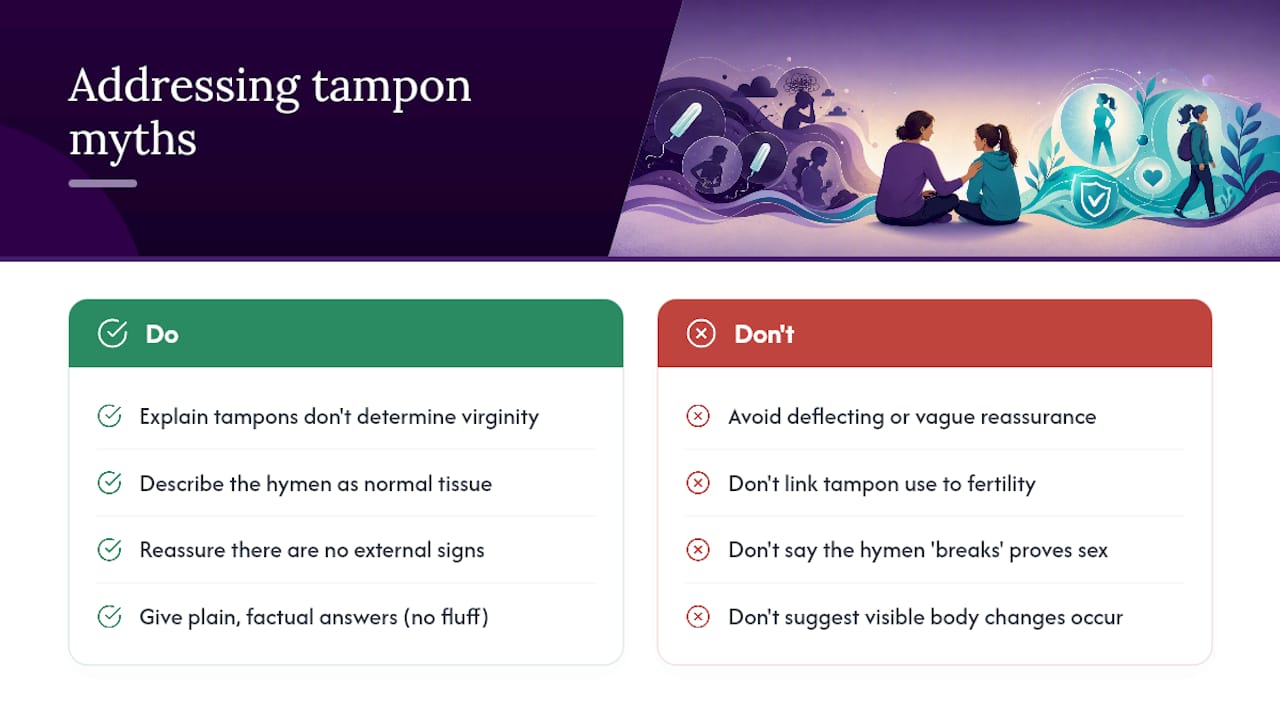
This is one of the most common worries teens don’t say out loud, so it’s worth addressing directly. Using a tampon has nothing to do with virginity. Virginity is a social and personal concept, not a medical or anatomical one, and no medical body defines it based on tampon use, hymen status, or any physical marker.
The hymen itself is often misunderstood. It’s a thin tissue that partially covers the vaginal opening, and it naturally has an opening already, since menstrual blood has to pass through it. Inserting a tampon can occasionally stretch or slightly change that tissue, similar to how it can change from exercise, stretching, or simply growing. It does not “break” in some dramatic, singular way, and it isn’t a reliable indicator of anything related to sexual history.
Some teens also worry that tampons will physically change their body in a way others can notice. They won’t. There’s no external sign, no lasting damage, and no connection between using a tampon and any future health outcome tied to reproduction or fertility. If your daughter brings up this concern, the most useful thing you can offer is a plain, factual answer rather than deflection, since vague reassurance tends to leave more room for lingering doubt than a straightforward explanation does.
Where to Find Reliable Tampon Safety Information
For technical or medical questions beyond this guide, a few sources are worth bookmarking: the FDA’s tampon safety page for regulatory guidance, HealthyChildren.org from the American Academy of Pediatrics, KidsHealth for teen-focused explanations, and the Center for Young Women’s Health for anatomy-specific concerns. When in doubt, her pediatrician has the full picture.
What Parents Get Wrong About Tampon Safety
Most advice on this topic treats tampon safety as a checklist problem: teach the wear-time rule, hand over a box, done. That undersells what’s actually happening. The real risk factor isn’t the product, it’s whether a teen feels rushed, embarrassed, or alone the first time she tries.
The clinical guidance from the FDA and pediatric sources is genuinely solid and worth following to the letter. Where conventional advice falls short is in treating the emotional side as optional or secondary. A teen who’s anxious and hurrying is more likely to misjudge wear time, skip handwashing, or avoid asking questions when something feels off, which is exactly where risk creeps in.
If there’s one thing to prioritize first, it’s this: normalize the awkwardness before you ever hand her a tampon. The technical rules matter, but they only stick when she’s calm enough to actually follow them. Confidence isn’t a nice add-on to safety education. It’s the delivery mechanism for it.
- — The*
Get Ready for a First Tampon With Themonthliesbox
You’ve got the safety rules down. What you might not have is the right starter supplies sitting in a drawer, ready when she is. That’s what The Amethyst Box is built for: a first-period preparedness kit with slender applicator tampons, pads, affirmation cards, and educational materials, so your daughter has real practice supplies instead of whatever happens to be in your bathroom cabinet.
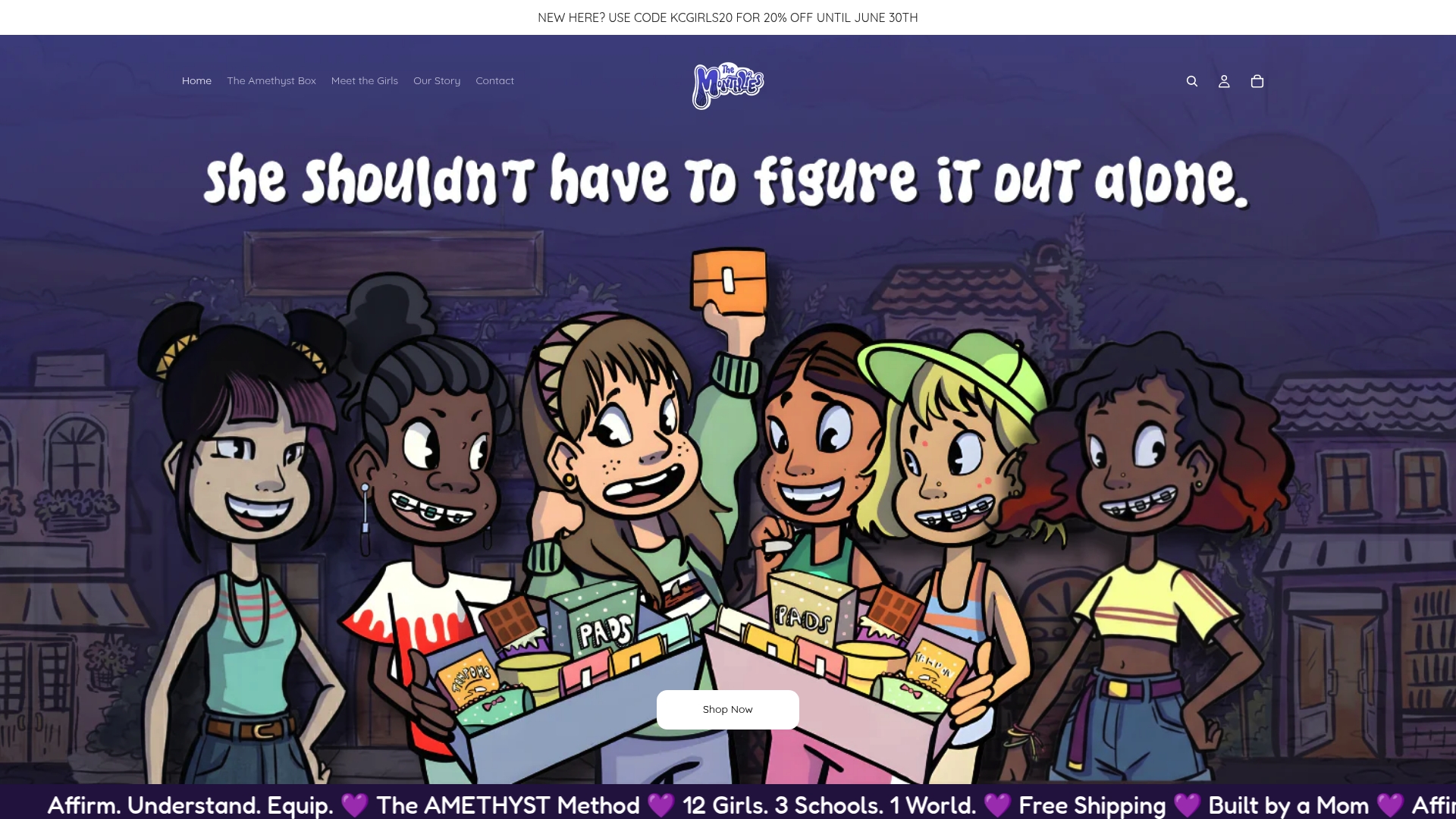
It’s designed specifically for tweens and younger teens approaching their first period, built around the Amethyst Method of affirming her feelings, helping her understand her body, and equipping her with practical tools she can actually use. If you’re planning that first at-home practice session, order the Amethyst Box now so you have the right supplies on hand before her period arrives, not after.
This article is general information, not a substitute for advice from a qualified doctor. Consult a qualified healthcare professional about your own circumstances before acting on anything here.
Sources
- Facts: Tampons and how to use them safely | FDA
- Tampons, Pads, and Other Period Supplies (for Teens) | Nemours KidsHealth
- Healthychildren
- Tampons | Center for Young Women’s Health
0 comments