

Staying calm during your first period means using simple, proven methods to manage both your emotions and physical sensations from the very start. Menstruation is a normal, healthy part of growing up, not a crisis. The first period, clinically called menarche, often brings a mix of surprise, anxiety, and new physical feelings. All of those reactions are valid. With the right preparation and a few calming techniques, both girls and their parents can move through this milestone feeling supported and steady.
How to stay calm during your first period: what to expect first
Understanding what is happening in your body is the fastest way to reduce fear. The first period typically arrives between ages 9 and 15, usually 2–5 years after the first signs of puberty. That wide window means there is no single “right” time, and arriving earlier or later than a friend is completely normal.
Hormonal shifts drive most of what you feel. Estrogen and progesterone rise and fall throughout the cycle, and those changes affect mood, energy, and physical comfort. Understanding the role of hormones in your daughter’s cycle helps parents explain these shifts without alarm.
Here is what many girls notice during their first period:
- Mood changes: Irritability, sadness, or sudden bursts of emotion are all linked to hormonal fluctuations, not personality.
- Cramps: A dull ache or tightening in the lower belly is the uterus doing its job. Most cramps are mild and manageable.
- Fatigue: Feeling more tired than usual is common, especially on the first day or two.
- Light spotting or heavier flow: The first period can look different from what you expect. Brown spotting is normal. So is a brighter red flow.
- Bloating or back aches: These are side effects of the same hormonal process causing cramps.
Framing menstruation as healthy rather than alarming reduces emotional fear and volatility in young girls. When a girl knows what to expect, the unfamiliar becomes manageable.
What should you pack to feel prepared and relaxed?
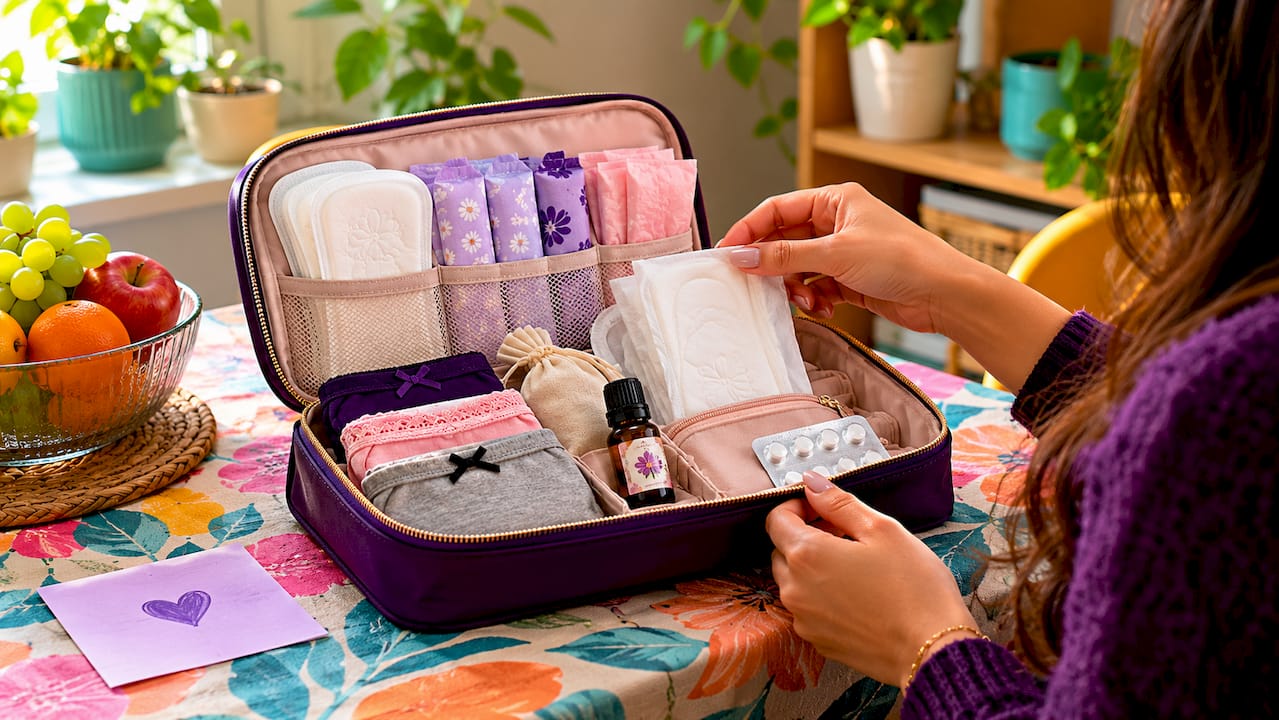
Preparation is the single most effective way to manage anxiety during your first period. Keeping a period kit ready prevents the fear of accidents and removes a major source of stress, especially at school.
A well-stocked period kit does not need to be complicated. Here is what to include:
- Pads in two absorbency levels (light and regular) to cover different flow days
- Spare underwear in a small zip pouch
- A wet bag for discreet disposal or storage
- Pain relief such as ibuprofen or acetaminophen, with a parent’s permission
- A small comfort item like a stress ball, a written affirmation card, or earbuds for calming music
Beyond the kit itself, setting up a “safe spot” matters. This is a physical or mental place a girl can return to when she feels overwhelmed. At school, that might be the nurse’s office or a trusted teacher’s classroom. At home, it might be a favorite chair with a heating pad nearby.
The table below shows the difference between essentials and optional calming additions:
| Item | Type | Why It Helps |
|---|---|---|
| Pads (light and regular) | Essential | Covers varying flow without panic |
| Spare underwear | Essential | Removes fear of visible accidents |
| Wet bag | Essential | Discreet and hygienic storage |
| Affirmation cards | Optional | Grounds emotions with positive self-talk |
| Calming playlist or earbuds | Optional | Activates relaxation response through sound |
| Fidget toy or stress ball | Optional | Redirects nervous energy physically |
| Heating patch | Optional | Soothes cramps without medication |
Pro Tip: Write one short, kind sentence on a notecard and tuck it into the period kit. Something like “My body knows what it is doing” takes three seconds to read and can shift the entire mood of a hard moment.
Letting a trusted adult at school know in advance is also worth doing. A quick, private conversation with a school nurse or counselor means there is already a plan in place if the first period arrives during class. That kind of proactive period preparation turns a potential surprise into a handled situation.
What calming techniques actually work at school or home?
Calming techniques for students work best when they are practiced before they are needed. Trying a breathing exercise for the first time while already anxious is harder than using one you already know. Start practicing these at home, then use them anywhere.
Step-by-step calming plan for the first period:
- Notice the feeling without judging it. Say to yourself: “I feel nervous. That is okay.” Naming the emotion reduces its intensity.
- Try box breathing. 1–3 minutes of focused deep breathing activates the parasympathetic nervous system and lowers cortisol. Breathe in for 4 counts, hold for 4, breathe out for 4, hold for 4. Repeat three times.
- Do a gentle body scan. Starting at your feet, notice where you feel tension. Consciously relax each area as you move upward. This takes about 60 seconds.
- Move gently. A short walk to the bathroom or a slow stretch at your desk shifts physical tension. Gentle movement is one of the most underrated calming techniques for students.
- Use your comfort item. Reach into your period kit for your affirmation card, fidget toy, or earbuds. Having a physical object to interact with gives your nervous system something concrete to focus on.
- Ask for help if you need it. Going to the nurse, texting a parent, or quietly telling a teacher is not weakness. It is the plan working exactly as it should.
For parents, co-regulation is the most powerful tool available. A calm, unhurried parental demeanor directly reduces a child’s anxiety and emotional escalation. When a parent responds to the first period with a steady voice and practical problem-solving, the child’s nervous system mirrors that calm.
One common mistake is pushing tampon or menstrual cup use too early. Switching to external products and trying again later without pressure is the right call if insertion feels stressful. There is no timeline that requires internal products on day one.
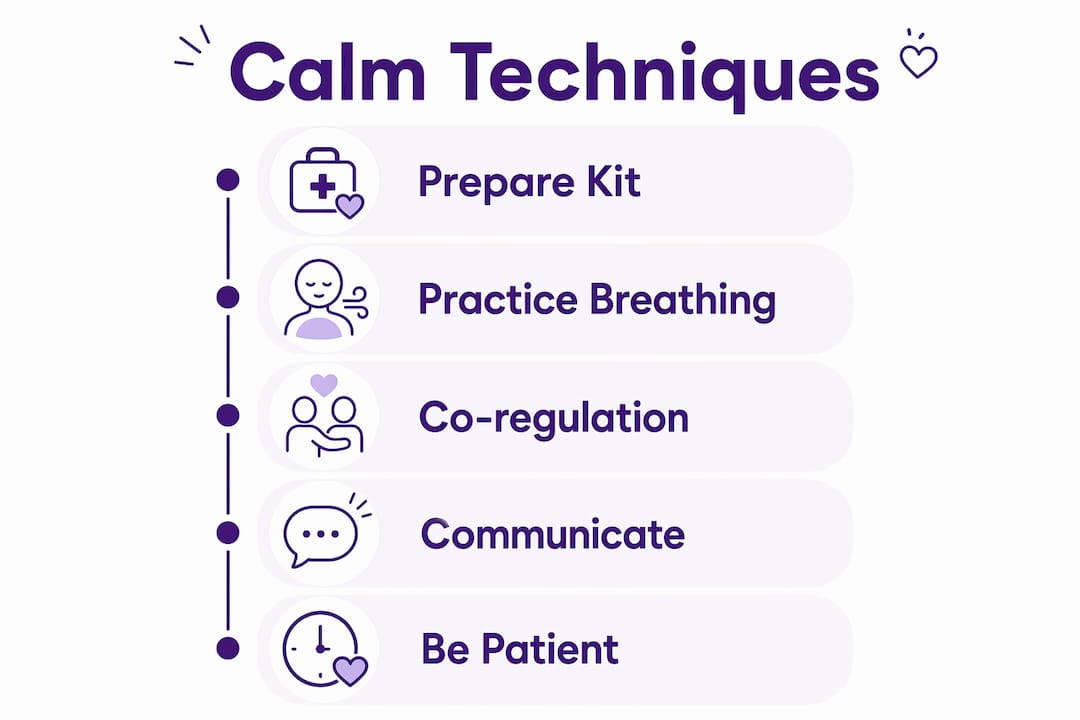
Pro Tip: Parents, practice the box breathing exercise with your daughter before her first period arrives. Doing it together makes it feel normal, not clinical, and she will remember it when she needs it most.
How do you handle unexpected feelings and physical discomfort?
Emotional variability during the first period is normal. Reactions range widely from scared to excited, relieved to completely indifferent. All of those responses are valid. Pressuring a girl to feel a certain way, whether that means celebrating or staying stoic, adds stress rather than removing it.
Here is how to handle the most common challenges:
- If she feels scared: Remind her that fear is a normal response to something new. Validate the feeling, then redirect to the practical plan already in place.
- If she feels sad or cries: Hormonal shifts cause real emotional swings. Crying is not overreacting. Sit with her, offer warmth, and avoid the urge to fix or minimize.
- If she feels nothing: Some girls feel completely neutral. That is equally normal and does not mean anything is wrong.
- If cramps are uncomfortable: Warm heat patches, hydration, and gentle movement relieve cramps effectively. A warm compress on the lower belly for 15–20 minutes works quickly.
Know the medical red flags. Seek a doctor’s guidance if the period lasts more than 7–8 days, if the pain is severe enough to prevent normal activity, or if bleeding is extremely heavy. These situations are uncommon but worth knowing.
“You do not have to feel any particular way about your first period. However you feel is the right way to feel.”
Open communication between parents and daughters makes the biggest difference here. A parent’s guide to emotional responses can help adults find the right words without overdramatizing the moment. The goal is not a perfect reaction. The goal is a supported one.
Encourage patience with the body’s adjustment process. The first few cycles are often irregular and unpredictable. That is not a problem. It is the body finding its rhythm.
Key takeaways
Staying calm during the first period comes down to preparation, practiced breathing techniques, and a parent’s steady, low-pressure presence.
| Point | Details |
|---|---|
| Preparation reduces anxiety | A period kit with pads, spare underwear, and comfort items removes the fear of accidents. |
| Box breathing works fast | Four counts in, hold, out, hold activates calm within 1–3 minutes. |
| All emotional reactions are valid | Girls may feel scared, excited, or indifferent; none of these responses need correcting. |
| Parental calm is contagious | A steady, practical parental response directly lowers a child’s stress response. |
| Know the red flags | Seek medical advice if the period lasts more than 7–8 days or pain is severe. |
What i’ve learned about calm and the first period
Here is something I have seen over and over: the families who handle the first period with the least drama are not the ones who prepared the most elaborate celebration. They are the ones who made it feel ordinary. Not dismissive. Just steady and safe.
The pressure to make menarche a big, meaningful moment can actually backfire. When a girl senses that the adults around her are anxious or overly focused on her reaction, she picks up on that energy. A calm, simple parental response with direct problem-solving is what anchors safety for a child. That is not a small thing. That is everything.
What I also believe deeply is that confidence comes from practice, not from a single perfect moment. A girl who has practiced box breathing, who knows where her period kit is, and who has talked openly with a trusted adult is already prepared. She does not need to be fearless. She just needs to know she is not alone.
Every girl’s experience is her own. Some will cry. Some will shrug. Some will want to call their best friend immediately. Honor whatever that looks like for your daughter, without steering her toward a particular feeling. That kind of low-pressure, open support is the most powerful calming technique of all.
— Themonthliesbox
How Themonthliesbox helps girls feel ready and calm
Feeling prepared is the foundation of feeling calm. Themonthliesbox created the Amethyst Box specifically for girls approaching their first period. It combines practical period supplies with affirmation cards, educational materials, and comfort items, all built around the Amethyst Method: Affirm, Understand, and Equip.
The Amethyst Box removes the guesswork. Instead of scrambling to assemble a period kit from scratch, everything a girl needs to feel supported and steady is already there. For parents who want to share the experience with a friend or sibling, the Bestie Bundle offers two boxes at a meaningful savings. Welcome to LavenHaven. We have been waiting for you.
FAQ
What is the best way to stay calm during the first period?
The most effective approach combines preparation and breathing. Keep a period kit ready and practice box breathing (4 counts in, hold, out, hold) before the first period arrives so the technique feels familiar when you need it.
How can i help my daughter manage anxiety during her first period?
Co-regulation by parents is the most direct tool. Respond with a calm, practical demeanor, avoid dramatizing the moment, and focus on simple problem-solving to anchor your daughter’s sense of safety.
Is it normal to feel scared or sad during the first period?
Yes. Emotional reactions to menarche range from scared to excited to completely neutral, and all are normal. Avoid pressuring any particular emotional response.
How do i stay relaxed in class if my period starts unexpectedly?
Use your period kit, take three rounds of box breathing, and quietly inform a trusted adult such as a school nurse or teacher. Having a plan in place before it happens makes overcoming classroom nerves much easier.
When should i see a doctor about first period symptoms?
Seek medical advice if the period lasts more than 7–8 days, if pain is severe enough to stop normal activity, or if bleeding is unusually heavy. These situations are uncommon but warrant a pediatric care visit to rule out underlying causes.
0 comments