

To use a menstrual pad correctly, center an unscented pad adhesive-side down in your underwear, smooth it flat, fold the wings under if your pad has them, and change it every few hours or sooner if it feels damp. That’s the short version. Everything below helps you do it with confidence.
- Light days or spotting: a pantyliner or regular pad works well; save the thicker pads for heavier flow days.
- Disposal rule: always wrap and trash your used pad. Flushing pads can clog plumbing, so the toilet is never the right option.
- Hygiene habit: wash your hands before and after every pad change to keep things clean and comfortable.
Key Takeaways
Using a menstrual pad correctly means centering it adhesive-side down, using wings when available, changing it every 4 hours, and always disposing of it in the trash, never the toilet.
| Point | Details |
|---|---|
| Correct placement | Center the pad adhesive-side down in your underwear, thinner end toward the front, and press firmly flat. |
| Change every 4 hours | Cleveland Clinic recommends this as a standard habit; change sooner on heavy days or when the pad feels damp. |
| Never flush | Always wrap used pads in toilet paper or a spare wrapper and place them in the trash. |
| Seek care for heavy bleeding | Soaking a regular pad in an hour or less is a red flag worth discussing with a healthcare provider. |
| Themonthliesbox starter kits | The Amethyst Box and On-The-Go Kit give beginners curated supplies, education, and disposal tools in one place. |
Table of Contents
- How do you use a menstrual pad correctly, step by step?
- Which pad type and absorbency should you choose?
- How do you keep a pad in place and prevent leaks?
- When should you change a pad, and how do you dispose of it?
- Safety tips and when to call a doctor
- A note from us at Themonthliesbox
- Ready for a first-period kit that has everything in one place?
- Sources
How do you use a menstrual pad correctly, step by step?
Planned Parenthood describes the process simply: unwrap, peel the backing, press the sticky side onto your underwear, and change it every few hours or when it’s soaked. Here’s what that looks like in practice.
- Wash your hands. Before you touch anything, clean your hands with soap and water. This keeps bacteria away from a sensitive area.
- Gather your supplies. Grab a fresh pad, and have a small piece of toilet paper or a spare wrapper nearby for disposal.
- Unwrap the pad. Peel off the paper backing from the adhesive strip on the bottom of the pad.
- Position it correctly. The thinner, narrower end of the pad faces the front of your underwear. Center the pad along the gusset (the narrow fabric panel in the crotch of your underwear) so it sits flat.
- Press it firmly down. Press the sticky side onto the inside of your underwear. Run your fingers along the full length to make sure it’s smooth with no lifted edges.
- Attach the wings. If your pad has wings, fold them around the outside edges of the gusset and press them firmly against the underside of the fabric. Wings hold the pad in place and protect the sides of your underwear.
- Check the fit. Pull your underwear up and do a quick check. The pad should feel snug and flat, not bunched or shifted to one side. Snug-fitting underwear (not too loose) keeps everything in place.
- Dispose of the used pad. When changing, roll the used pad from front to back, wrap it in toilet paper, and place it in the trash or a sanitary bin.
Pro Tip: When you open a new pad, save the wrapper. Roll your used pad inside it for a discreet, no-mess disposal bag, especially useful in school or public bathrooms.
If your pad bunches or shifts during the day, the most common fix is switching to a pad with wings or choosing a slightly longer size. Loose underwear is the other frequent culprit.
Which pad type and absorbency should you choose?
Pads come in several categories, and matching the right one to your flow makes a real difference in comfort. Planned Parenthood notes that you can choose whichever feels most comfortable for your flow by checking the length and absorbency labels.
- Pantyliner: ultra-thin, designed for spotting, very light flow, or the last days of a period.
- Regular: the everyday option for light to moderate flow. Good starting point for most people.
- Super/Maxi: thicker and more absorbent for moderate to heavy days.
- Overnight: longer with extra coverage toward the back, built for lying down. A great choice for managing your first period overnight.
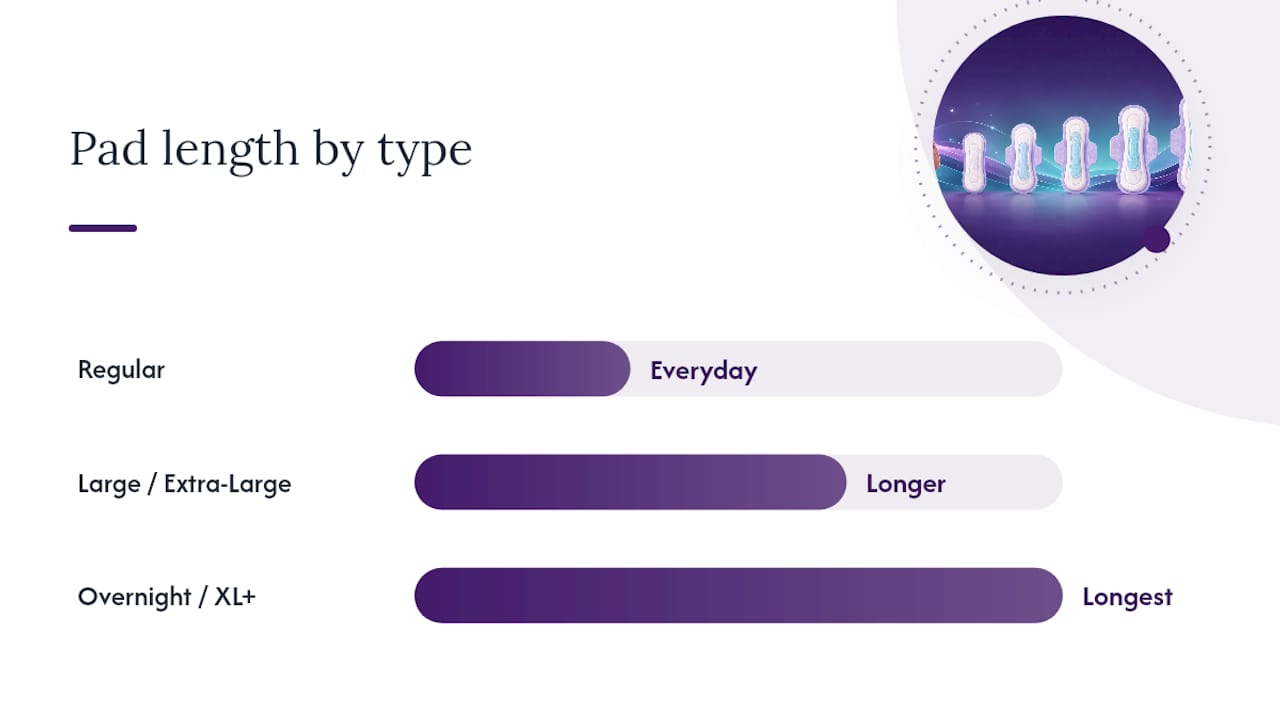
For sizing, Pee Safe’s size guide offers these approximate reference ranges as a shopping cue:
| Pad Type | Approximate Length |
|---|---|
| Regular | Typically about the length of a regular size pad. |
| Large or extra-large | Usually longer than regular pads. |
| Overnight or extra-large plus | Typically the longest sizes available. |
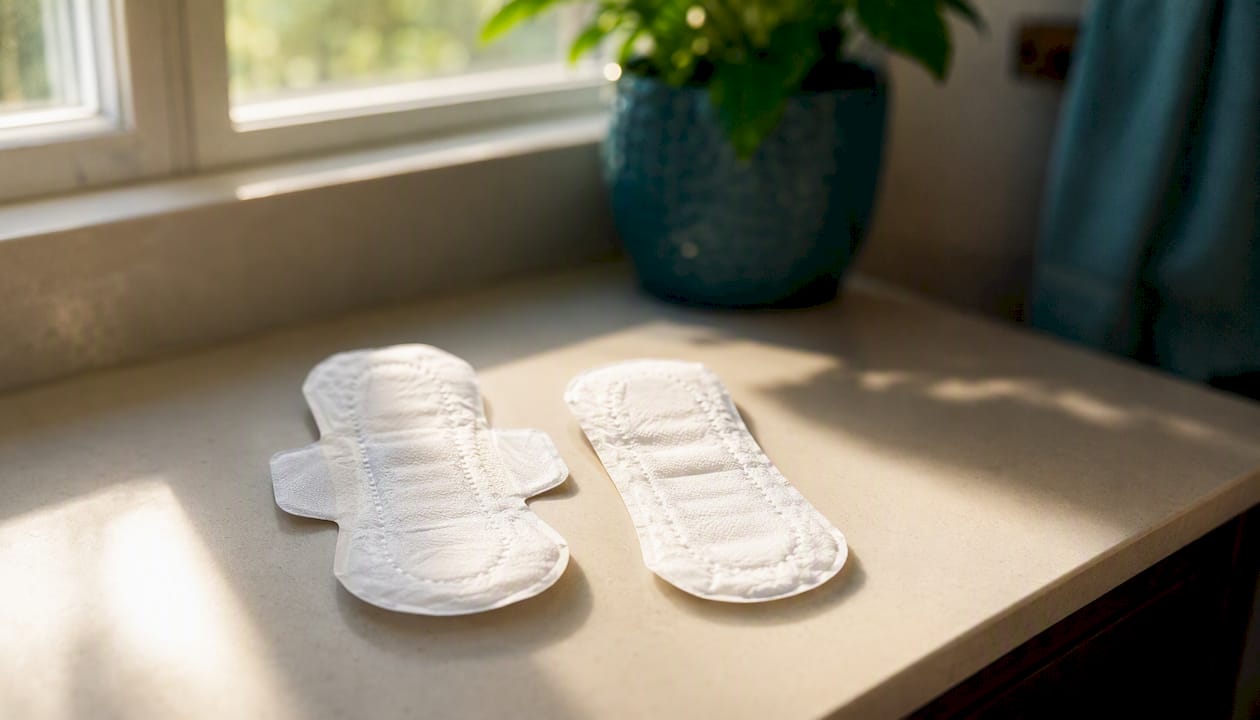
Wings vs. no wings: winged pads grip the gusset on both sides and are worth choosing if you move around a lot or find your pad shifting. Non-winged pads are simpler and fine for lighter days or shorter wear times.
Scented vs. unscented: always choose unscented. Girlshealth that scented pads are not needed for odor control and can irritate sensitive skin. Frequent changes handle odor far better than fragrance does.
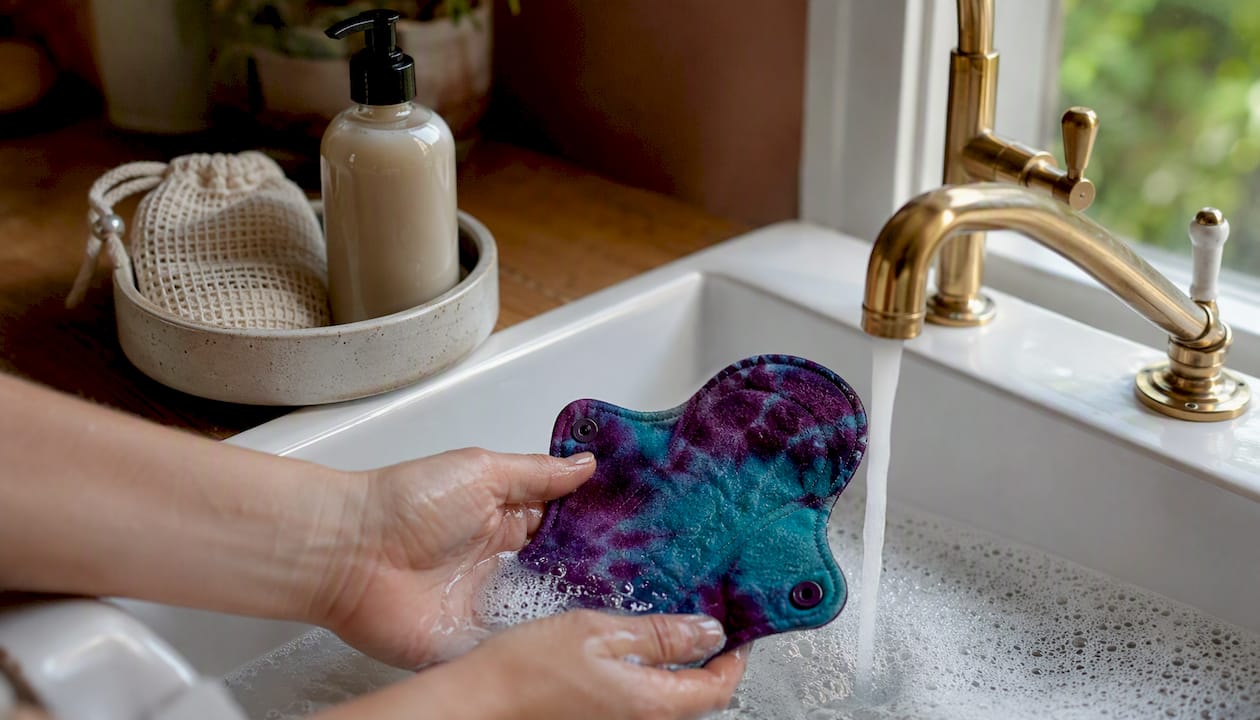
Reusable cloth pads are another option worth knowing about. They attach with snaps and are washed after use, making them a more sustainable period care choice. They do require carrying a small wet bag and following the manufacturer’s washing instructions.
Pro Tip: On your first few cycles, pack a small mix of absorbencies in your bag. You’ll quickly learn which ones work best for your flow on different days.
How do you keep a pad in place and prevent leaks?
Leaks usually come down to placement or fit, not just absorbency. Before assuming you need a thicker pad, check these basics first.
- Center the pad every time. A pad that’s shifted forward or backward won’t catch flow where it needs to.
- Use wings. They hold the pad against the gusset and protect the sides of your underwear. If you’re skipping wings and leaking, try a winged pad before going up in absorbency.
- Wear snug-fitting underwear. Loose underwear lets the pad slide. Briefs or boyshorts tend to hold pads more securely than thongs or low-rise cuts.
- Check before and after activity. Movement can shift a pad. A quick check after gym class or sports keeps you ahead of any problem.
- Skip pads for swimming. Pads absorb water, become heavy, and leak when you get out of the pool. A period swimwear option or menstrual cup works better in water.
For overnight protection: choose an overnight pad with extra back coverage. Change your pad right before bed and again first thing in the morning. Sleeping on your back or side (rather than your stomach) can also reduce the chance of leaks. More detail on overnight period confidence is worth reading before your first overnight experience.
If you notice odor, the cause is almost always wearing a pad too long. A fresh pad and a quick rinse with warm water solve it. Scented products won’t help and may make irritation worse.
When should you change a pad, and how do you dispose of it?
Cleveland Clinic recommends changing a pad every four hours as a helpful habit for most people. That timing fits naturally with school bathroom breaks and keeps the area clean and comfortable.
On heavy days, change more often. If the pad feels damp or full before four hours are up, change it then. Waiting until a pad is completely soaked increases the risk of leaks and skin irritation.
How to dispose of a pad safely:
- Peel the pad away from your underwear, starting from the back.
- Roll it from front to back so the used surface is on the inside.
- Wrap it in toilet paper or the new pad’s wrapper.
- Place it in the trash can or sanitary bin. Never flush it.
For school or public bathrooms, tuck a small zip bag or a few spare wrappers into your backpack. That way you always have a discreet disposal option, even when the bin is far from the stall.
Safety tips and when to call a doctor
Keeping your skin comfortable during your period comes down to a few simple habits.
- Wash the genital area with warm water only. Soap inside the vagina disrupts natural balance.
- Change pads frequently. Sitting in a damp pad is the most common cause of irritation and redness.
- Choose unscented pads. Fragrance is the leading pad-related skin irritant for most people.
- Check out first period hygiene basics for a fuller picture of what good period care looks like.
When to contact a healthcare provider: If you soak through a regular-absorbency pad in an hour or less, that’s a signal worth discussing with a doctor. Cleveland Clinic notes this threshold as a reason to seek clinical evaluation, as it can indicate an underlying issue. Other red flags include fever alongside heavy bleeding, passing large clots, dizziness or lightheadedness, or a sudden increase in flow that feels very different from your usual pattern.
A note from us at Themonthliesbox
Nobody gets pads perfectly right on the first try. You might try three different sizes before finding the one that fits your body and your flow. That’s completely normal, and it doesn’t mean you’re doing anything wrong.
At Themonthliesbox, we built our Amethyst Method around three ideas: affirm, understand, and equip. We want every girl to feel confident before her first period arrives, not caught off guard. That means having the right supplies, yes, but also knowing how to use them and feeling good about asking questions.
If you’re a parent reading this alongside your daughter, this is exactly the kind of conversation that makes a difference. And if you’re a young person reading on your own, you’re already doing the work. That counts for a lot.
Ready for a first-period kit that has everything in one place?
The Amethyst Box from Themonthliesbox is built specifically for beginners. It includes period supplies sized for tweens, affirmation cards, educational materials, and comfort items, all curated around the Amethyst Method so nothing feels like a surprise. For girls who need something portable right now, the On-The-Go Kit fits in a backpack and includes pads and discreet disposal supplies for school or travel.

Both options ship across the United States. Browse the kits and find the one that fits where you are right now.
Sources
- Sanitary (Period) Pads: Function, Types and Hygiene
- How to Use Menstrual Hygiene Products
- Pads and other ways to take care of your period
- How to Use a Sanitary Pad: Step-by-Step + Size Guide – Pee Safe
This article is general information, not a substitute for advice from a qualified doctor. Consult a qualified healthcare professional about your own circumstances before acting on anything here.
0 comments